Transportation in San Pedro de Atacama: Complete Getting Around Guide
Getting around San Pedro de Atacama is easy—walk the 1–2 km town, use tour shuttles to sights, or rent bikes or cars. See costs, airport transfers, and when a car makes sense.
Last updated: May 13, 2026
TL;DR
San Pedro de Atacama has NO public transportation system – the compact 1-2km town center is entirely walkable within 10-20 minutes between accommodations, restaurants, tour offices, and shops. Most tourists never need vehicles since tour packages include transportation to attractions (Valle de la Luna, El Tati Geysers, Altiplanic Lagoons) in operator minibuses. Walking handles 90% of tourist needs covering downtown, churches, markets, and dining. Bicycle rentals cost $10-20 daily enabling exploration of nearby sites (Pukará de Quitor 3km, Valle de la Muerte 5km, Tulor ruins 9km) though unpaved dusty roads and 2,400m altitude creating moderate challenge. Rental cars cost $50-100 daily making sense only for groups 4+ splitting costs ($12-25 each), DIY adventurers visiting remote locations, or those needing flexibility beyond standard tours. Taxis virtually nonexistent with occasional $15-30 rides arranged through accommodations for airport transfers or emergencies. Calama Airport (CJC) sits 100km away requiring transfer buses ($15-25, 90 minutes, multiple daily), private transfers ($60-120 for 1-4 people), or rental cars. Most visitors arrive via transfer, take walking-only approach in town, and rely on tour transportation to attractions. International borders: Argentina (Paso de Jama 160km, occasional buses $30-50) and Bolivia (Hito Cajón 45km, tour-arranged only). Parking free throughout town on dusty streets. Essential: comfortable walking shoes for unpaved roads, sun protection for exposed walking, and acceptance that slow-paced walking is primary transportation matching desert town atmosphere.
Walk In Town, Book The Journey That Needs It
Choose what you want and the time you can give it. The result explains the trade-off before you open the booking page.
What Are Your Transportation Options in San Pedro de Atacama?
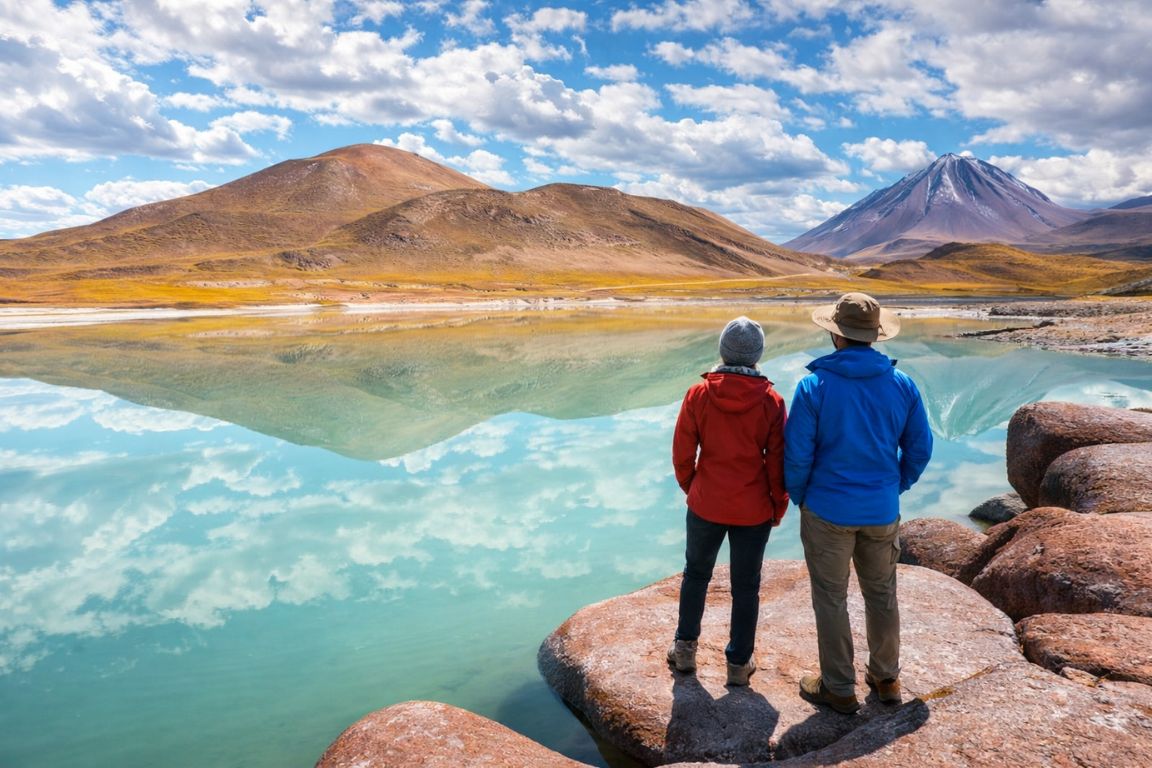
Walking serves as primary transportation for 90% of tourist needs with San Pedro’s compact 1-2km town center enabling 10-20 minute walks between any two points including accommodations, restaurants, shops, and tour offices.
Tour operator transportation handles all attraction visits with Valle de la Luna, El Tatio Geysers and other destinations including round-trip transport in package prices ($25-80 per tour).
Bicycle rentals ($10-20 daily) extend range to nearby sites within 3-10km radius including Pukará de Quitor ruins, Valle de la Muerte, and Tulor archaeological site though unpaved roads creating dusty conditions.
Rental cars ($50-100 daily) make sense only for specific situations including groups 4+ splitting costs, DIY adventurers, photographers needing flexibility, or those visiting remote locations beyond standard tours.
Table: San Pedro de Atacama Transportation Options Overview
| Option | Cost | Best For | Range/Coverage | Pros | Cons | % Tourists Using | Essential? |
|---|---|---|---|---|---|---|---|
| Walking | Free | Everyone, town exploration | 1-2km town center | Free, healthy, authentic experience | Limited to town, hot sun exposure | 100% | Yes |
| Tour Transportation (Included) | Included in $25-80 tours | All major attractions | 5-100km+ to sites | Included, professional, comfortable | Fixed schedules, group pacing | 95% | Yes for attractions |
| Bicycle Rental | $10-20/day | Nearby sites, adventurous | 3-10km comfortable range | Affordable, flexible, exercise | Dusty unpaved roads, altitude challenge | 20-30% | No |
| Rental Car | $50-100/day | Groups 4+, DIY explorers | Unlimited range | Complete freedom, split costs | Expensive solo, unpaved roads, navigation | 10-15% | No |
| Taxi/Private Transfer | $15-30 per trip | Airport transfer, emergencies | On-demand anywhere | Convenient when needed | Rare availability, must arrange ahead | 5-10% | No |
| Shuttle to Calama | $15-25 | Airport connection | 100km to CJC airport | Reliable, affordable, multiple daily | Fixed schedule, 90-min journey | 70-80% arrivals | Yes for airport |
Walking dominance shows 100% of tourists using foot transportation daily with town layout designed for pedestrian access and vehicle traffic being minimal on dusty streets.
The tour transportation inclusion means visitors paying $45-60 El Tatio or $60-80 Altiplanic Lagoons receiving round-trip transport automatically eliminating need for personal vehicles to attractions.
Bicycle rental appeal shows 20-30% of tourists renting at least one day for Valle de la Muerte exploration or Pukará de Quitor ruins though most finding walking sufficient.
Rental car limitation demonstrates only 10-15% of visitors renting with majority being photographers needing pre-dawn positioning, DIY adventurers, or groups 4+ making economics favorable.
The taxi scarcity reflects tiny town size (5,000 residents) lacking commercial taxi services though accommodations arranging private transfers $15-30 for specific needs.
Shuttle bus necessity shows 70-80% of arriving tourists using Calama airport transfers versus 15-20% rental cars and 5-10% private transfers making shuttles primary arrival method.
Walking requirement means 100% of tourists walking regardless of other transportation used, making comfortable shoes and sun protection essential not optional gear.
Tour transportation quality shows professional minibuses with air conditioning, reclining seats, and 12-20 passenger capacity providing comfortable long-distance travel (2-hour El Tatio drive).
The complete transportation freedom exists without vehicles since tour packages reaching Valle de la Luna (15km), El Tatio (95km), Altiplanic Lagoons (150km roundtrip), and all attractions.
If you want attraction transport included, compare the multi-day San Pedro itinerary with hotel pickup.
How Walkable Is San Pedro de Atacama Town?
San Pedro town center spans approximately 1-2km radius with everything tourists need (accommodations, restaurants, tour offices, shops, ATMs, pharmacies) within 10-20 minute walks from any point.
Caracoles street serves as main tourist pedestrian area concentrating 80% of restaurants, bars, tour agencies, and shops in 4-block stretch enabling 5-minute exploration.
Unlicensed or informal pedestrian infrastructure shows unpaved dusty streets, minimal sidewalks, and uneven surfaces requiring attention though traffic being light and vehicle speeds slow.
Flat terrain throughout town center eliminates hills or climbing with 2,400m altitude being only elevation concern causing mild breathlessness in newly-arrived visitors.
While safety in San Pedro itself is generally excellent, venture 30km out on unmarked dirt roads in a rental car and you’re in a completely different safety scenario – no cell coverage, no passersby, just you and poor decisions.
Table: San Pedro de Atacama Walking Distances and Times
| From/To | Distance | Walking Time | Route Difficulty | Shade Available | What You’ll Find |
|---|---|---|---|---|---|
| Town Center to Church | 0.1-0.3km | 2-5 min | Very Easy (paved plaza) | Minimal | Historic church, plaza, views |
| Caracoles St End-to-End | 0.4km | 5-8 min | Easy (some paved) | Minimal (midday) | Restaurants, tour offices, shops |
| Center to Typical Accommodation | 0.2-0.8km | 3-12 min | Easy-Moderate (unpaved) | None | Residential streets, hostels, hotels |
| Center to Supermarket (Ayllu) | 0.3-0.5km | 5-10 min | Easy (mostly paved) | Minimal | Groceries, supplies |
| Center to Bus Terminal | 0.5-0.7km | 8-12 min | Easy (unpaved) | None | Shuttle buses to Calama |
| Center to Pukará de Quitor | 3km | 45-60 min | Moderate (dirt road, sun) | None | Pre-Incan ruins, views |
| Center to Valle de la Muerte | 5km | 75-90 min | Moderate-Hard (desert, altitude) | None | Rock formations, valley views |
| Accommodation to Accommodation | 0.1-1.5km | 2-20 min | Easy-Moderate | Minimal | Variable unpaved streets |
Town compactness enables staying anywhere in San Pedro and walking to dinner, tour pickup points, shops, and attractions within 10-15 minutes maximum.
The Caracoles pedestrian zone concentration shows 80% of tourist services along 4-block main street making tourism infrastructure extremely accessible and convenient.
Unpaved street reality means dusty conditions with fine Atacama sand covering streets creating dirty shoes and occasional ankle-turning on uneven surfaces.
Church plaza serves as central landmark with most accommodations, restaurants, and tour offices radiating 200-500m from this recognizable reference point.
The altitude impact shows 2,400m elevation causing mild breathlessness in first 24-48 hours though flat terrain preventing serious exertion beyond initial acclimatization.
Shade scarcity along streets means midday walking exposing to intense sun with 30-35°C summer temperatures (December-February) making morning/evening walks more comfortable.
Night walking safety remains excellent with virtually zero crime though streets being poorly lit requiring flashlight or phone light navigating unpaved areas after dark.
Street naming system uses Spanish names (Caracoles, Tocopilla, Licancabur) though most locals providing directions via landmarks (“near the church,” “past Ayllu supermarket”) versus street addresses.
The walking duration calculation shows maximum 20 minutes reaching any town destination from any accommodation making vehicles genuinely unnecessary for in-town mobility.
Should You Rent a Bicycle in San Pedro de Atacama?
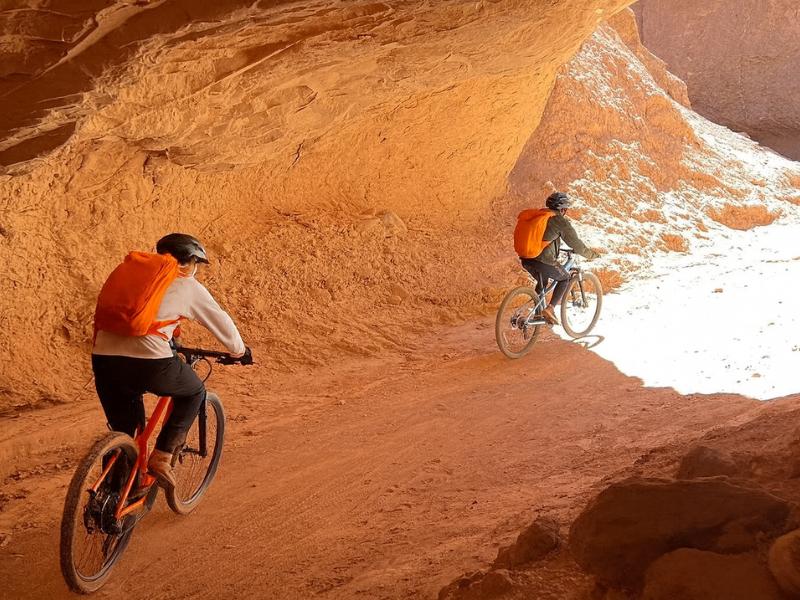
Bicycle rental costs $10-20 daily extending exploration range to 3-10km radius sites including Pukará de Quitor ruins (3km), Valle de la Muerte (5km), and Tulor archaeological ruins (9km).
Unpaved dusty roads throughout region create challenging conditions with fine sand, washboard surfaces, and occasional loose gravel requiring mountain bikes versus road bikes.
Altitude at 2,400m increases exertion 30-40% versus sea-level cycling making 5km ride feel like 7-8km elsewhere and requiring more water/rest breaks.
Limited shade anywhere outside town means direct sun exposure entire ride with proper sun protection (SPF 50, hat, sunglasses) being essential preventing sunburn and heat exhaustion.
Table: San Pedro de Atacama Bicycle Rental Analysis
| Factor | Details | Cost/Difficulty | Realistic Range | Best Destinations | Worth It? | Considerations |
|---|---|---|---|---|---|---|
| Daily Rental Cost | $10-20 for basic mountain bike | Budget-friendly | N/A | N/A | Good value if using | Half-day options sometimes available |
| Road Conditions | Unpaved, dusty, washboard, sand | Moderate-Hard | 3-10km comfortable | Nearby ruins, valleys | Challenging | Mountain bike essential |
| Altitude Impact (2,400m) | 30-40% more exertion | Moderate challenge | Shorter than sea level | Short trips better | Significant | Acclimatize first 24-48 hrs |
| Sun Exposure | Direct intense sun, no shade | Health concern | 1-2 hrs max recommended | Early morning/late afternoon | Serious issue | SPF 50, hat, sunglasses essential |
| Water Needs | 2-3 liters for 2-3 hour ride | Carry sufficient | Plan for double normal | Plan water sources | Critical | Dehydration risk high |
| Pukará de Quitor (3km) | Easy ride, ruins entry $3 | Easy-Moderate | Round trip 6km | Popular choice | Yes, good option | 45-60 min round trip |
| Valle de la Muerte (5km) | Moderate ride, free entry | Moderate | Round trip 10km | Scenic, photos | Yes, if fit | 90-120 min round trip |
| Tulor Ruins (9km) | Long ride, entry $3-5 | Hard | Round trip 18km | Archaeological interest | Marginal | 2-3 hours, quite tough |
| Valle de la Luna (15km) | Too far for most cyclists | Very Hard | Round trip 30km | Take tour instead | No | Tour better option $25-35 |
Bicycle advantage shows extending range to nearby sites (3-5km) being impractical walking though easily reachable pedaling versus distant Valle de la Luna (15km) requiring tours.
The Pukará de Quitor cycling suitability demonstrates 3km distance being perfect with moderate uphill approach manageable, ruins viewpoint rewarding, and 45-60 minute round trip fitting morning activity.
C5km ride provides excellent valley views and rock formations with moderate difficulty though 10km round trip requiring fitness and proper hydration (2-3 liters).
Tulor ruins 9km distance tests limits with 18km round trip taking 2-3 hours, full sun exposure, and substantial exertion making tour option ($30-40 half-day) more comfortable.
The altitude exertion increase means 5km sea-level comfortable ride becoming 30-40% harder at 2,400m with breathlessness and leg fatigue appearing sooner requiring slower pacing.
Road condition challenge shows washboard surfaces jarring, loose sand causing tire sliding, and dust coating rider creating less enjoyable experience versus paved cycling elsewhere.
Water calculation requires 2-3 liters for 2-3 hour ride versus normal 1 liter due to extreme aridity (<1% humidity), altitude, and sun exposure creating accelerated dehydration.
Rental shop quality varies with some providing well-maintained mountain bikes with good brakes and gears versus others offering basic bikes needing inspection before accepting.
The timing consideration shows early morning (7-9am) or late afternoon (5-7pm) being optimal avoiding midday sun versus 11am-3pm rides creating heat exhaustion risk.
Bike lock necessity shows bringing lock or requesting from rental shop since leaving unattended at ruins/sites requires security against theft.
What Each Booking Adds
Calama Airport ↔ San Pedro Transfer
Choose a shared or private airport transfer between Calama and San Pedro. Put the airport-to-hotel leg in place before fitting sightseeing around it.
Select the correct direction. Spanish-speaking driver; luggage allowance applies. Not wheelchair accessible.
Book on GetYourGuideArrange My Airport Transfer ↗
Atacama: 4 Tours In 3 Days
Spend your planning time on the rest of the trip. This package brings four outings into a three-day schedule, with accommodation pickup and a bilingual guide.
Entrance charges vary; accommodation is not included.
Book on GetYourGuideSee The 3-Day Tour Plan ↗Catarpe Valley And Devil’s Throat By Bike
Follow a guided cycling route through Catarpe and Devil’s Throat, with a bicycle and safety equipment provided. Pay for the route knowledge as well as the bike.
Meeting point in central San Pedro. Off-road riding; entry charges are separate.
Book on ViatorRide Devil’s Throat ↗Do You Need a Rental Car in San Pedro de Atacama?
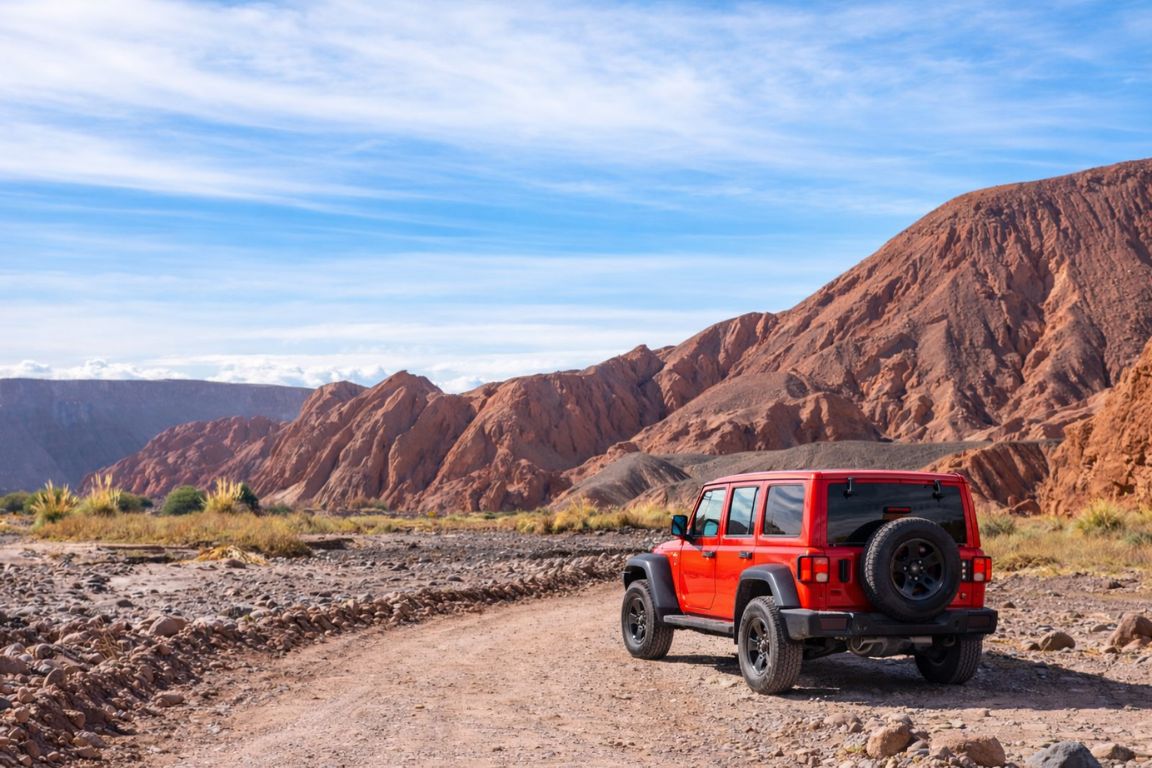
Rental cars prove unnecessary for 85-90% of tourists since tour packages include transportation to all major attractions and town being completely walkable.
Groups of 4+ people splitting $50-100 daily rental costs ($12-25 per person) can justify vehicles for flexibility though tours often being similar or cheaper per person.
DIY adventurers and photographers requiring specific timing (pre-dawn positioning, golden hour waits, off-trail exploration) benefit from rental freedom versus fixed tour schedules.
Remote locations beyond standard tours (Salar de Tara, Ojos del Salar, backcountry photography spots) become accessible with vehicles though navigation and road conditions challenging.
Table: Rental Car Decision Matrix for San Pedro de Atacama
| Situation | Need Car? | Cost Analysis | Better Alternative | Why Car Works/Doesn’t | Group Size Impact |
|---|---|---|---|---|---|
| Solo Tourist, Standard Attractions | No | $50-100 rental + gas vs $25-80 tours | Take tours | Tours cheaper, no navigation/driving | Solo = expensive |
| Couple, Standard Attractions | No | $50-100 + gas vs $50-160 tours | Take tours | Similar costs, tours more convenient | Couple = marginal |
| Group 4+, Standard Attractions | Maybe | $12-25 each + gas vs $25-80 each tours | Tours still easier | Economics improve but tours convenient | Group = reasonable economics |
| DIY Adventurer, Remote Locations | Yes | $50-100 enables access | Limited alternatives | Remote spots tour-inaccessible | Solo/any = worthwhile |
| Photographer, Specific Timing | Yes | $50-100 enables pre-dawn/golden hour | Tours fixed schedule | Flexibility essential photography | Solo/any = justified |
| Calama Airport Only | No | $50-100 daily vs $15-25 shuttle | Take shuttle | 100km one-way, return logistics complex | Any = shuttle better |
| Multi-Day Uyuni Route | Yes | $50-100 daily Bolivia OK | Organized tour package | Independence vs logistics hassle | Group = split costs |
| Mobility Issues | Maybe | $50-100 + private transfers | Private transfers case-by-case | Depends on specific limitations | Evaluate individually |
Solo traveler economics show $50-100 daily rental being expensive versus $45-60 El Tatio or $60-80 Altiplanic Lagoons tours providing equivalent or cheaper access with guide expertise.
The group 4+ calculation demonstrates $50 daily rental splitting to $12.50 each plus $20-30 gas becoming competitive with $45-60 per person tours though navigation and driving effort remaining.
DIY adventurer justification shows accessing Salar de Tara (120km), backcountry thermal pools, or lesser-known photography spots impossible via standard tours requiring vehicle independence.
Photographer necessity involves pre-dawn Valle de la Luna positioning (4-5am), golden hour timing flexibility, and waiting for optimal light versus tour fixed 5pm departures and 8pm returns.
The Calama airport scenario shows rental car making no sense for 100km one-way transfer when $15-25 shuttles operating multiple daily runs without return logistics hassles.
Border crossing potential enables driving to Argentina (Paso de Jama 160km) or Bolivia (Uyuni 350km) though requiring specific rental agreements permitting international travel ($10-30 daily supplements).
Parking throughout San Pedro being free on dusty streets with zero enforcement, time limits, or fees making vehicle storage effortless versus cities requiring paid parking.
Road condition reality shows paved highway to Calama (100km) being excellent versus attraction roads being unpaved dirt/gravel requiring high-clearance vehicles (standard sedans work but challenging).
The navigation challenge involves no GPS coverage some remote areas, minimal signage, and reliance on paper maps or downloaded offline maps versus tours providing guaranteed routing.
Fuel availability shows San Pedro having 2-3 gas stations with regular hours though premium fuel sometimes unavailable and prices being 20-30% higher than Santiago reflecting remote location.
How Do You Get From Calama Airport to San Pedro de Atacama?
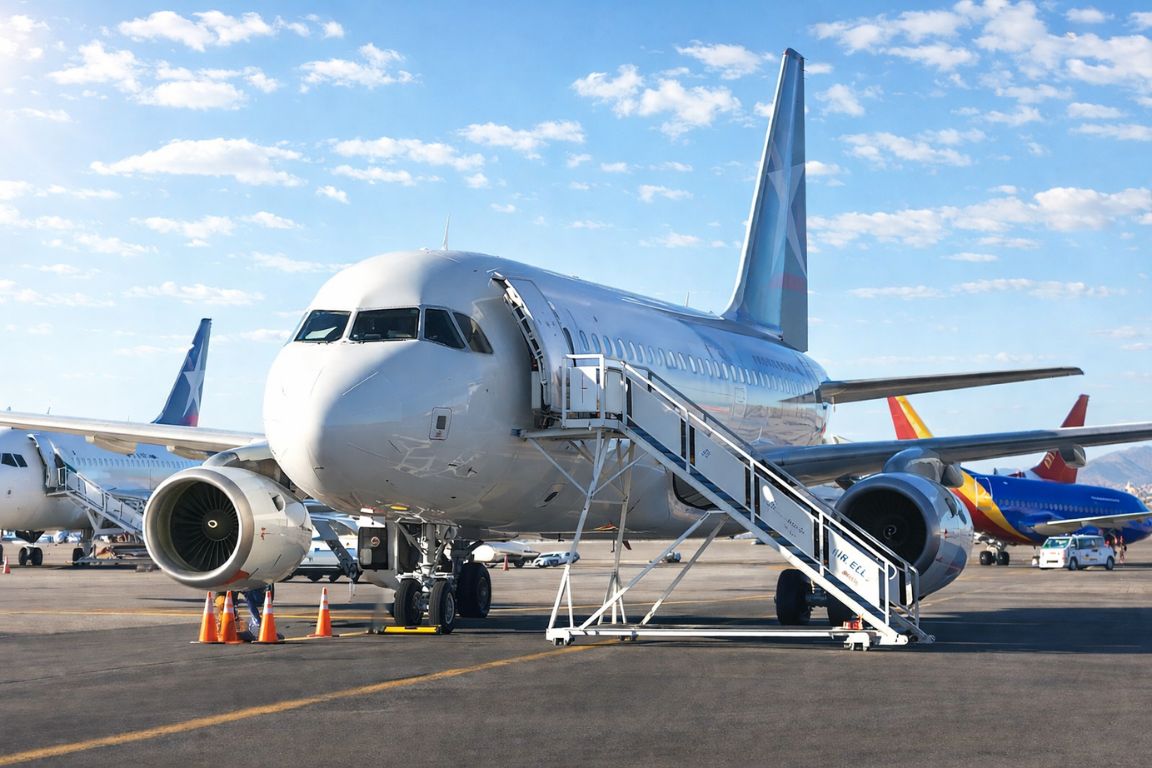
Calama Airport (CJC) sits 100km from San Pedro requiring 90-minute transfer via shuttle buses ($15-25), private transfers ($60-120), or rental cars (pickup at airport, $50-100 daily).
Shuttle buses operate multiple daily runs (typically 6-8 departures) coordinating with flight arrivals providing affordable reliable transportation for 70-80% of tourists.
Private transfers offer door-to-door service for 1-4 people at $60-120 total providing comfort and flexibility though being expensive for solo travelers ($60 versus $15-25 shuttle).
Rental car pickup at Calama airport enables immediate departure to San Pedro though requiring international driver’s license (sometimes), age 21-25+ (depending on company), and credit card deposit $500-1,000.
Table: Calama Airport to San Pedro de Atacama Transfer Options
| Option | Cost | Duration | Schedule | Capacity | Booking | Pros | Cons | Best For |
|---|---|---|---|---|---|---|---|---|
| Shuttle Bus | $15-25 per person | 90 min | 6-8 daily (flight-coordinated) | 15-20 passengers | Walk-up or online | Affordable, reliable, multiple times | Fixed schedule, shared | Most tourists, budget |
| Private Transfer (1-2 people) | $60-90 total | 90 min | On-demand your flight | 1-4 passengers | Must book ahead | Door-to-door, comfortable, flexible | Expensive for solo/couple | Groups 3-4, luxury preference |
| Private Transfer (3-4 people) | $90-120 total | 90 min | On-demand | Up to 4 | Must book ahead | Split $22-40 each, convenient | Still premium cost | Groups wanting comfort |
| Rental Car Pickup | $50-100/day (3-day min usually) | 90 min | Business hours pickup | Your vehicle | Reserve ahead | Have car entire stay | Expensive if not needed, navigation | DIY adventurers, photographers |
| Shared Taxi | $30-50 per person | 90 min | Negotiate on arrival | 3-4 passengers | On-site negotiation | Faster than shuttle sometimes | Unreliable, variable pricing | Not recommended |
| Uber/Lyft | Not available | N/A | N/A | N/A | N/A | N/A | Doesn’t exist | Not an option |
Shuttle bus dominance shows 70-80% of tourists using this method with operators Atacama2000, Transfer Atacama, and Turbus providing reliable service coordinating with arriving flights.
The private transfer advantage for groups demonstrates $90-120 total for 3-4 people ($22-40 each) approaching shuttle costs while gaining door-to-door convenience and baggage handling.
Solo traveler calculation shows shuttle $15-25 being dramatically cheaper than private transfer $60-90, with only luxury preference or odd-hour flights justifying premium.
Rental car consideration requires evaluating entire stay needs since airport pickup making sense only if using vehicle in San Pedro versus needing only for transfer creating wasted cost.
The shuttle schedule reliability shows operators waiting for delayed flights adjusting departure times versus requiring passengers to make preset times creating low-stress experience.
Booking requirement varies with shuttles accepting walk-up purchases though online reservations ($15-25) securing seats versus potential sellout busy periods (December-February).
Luggage handling shows shuttles storing bags in dedicated cargo area while private transfers loading into vehicle trunk with both accommodating standard tourist luggage without issues.
Shared taxi negotiation involves approaching drivers outside airport though pricing being variable $30-50, quality inconsistent, and stress higher than booking legitimate shuttle in advance.
The return journey to airport uses same options with hotels/hostels coordinating shuttle pickups 2-3 hours before flights ensuring timely arrivals for check-in.
Timing considerations show morning arrivals being most common with shuttles operating 10am-8pm roughly though evening/night arrivals requiring advance private transfer booking.
What About Taxis and Private Transfers in San Pedro?
Taxis are virtually nonexistent in San Pedro with no commercial taxi stands, apps (Uber/Lyft unavailable), or street-hailable cabs reflecting tiny 5,000-resident town size.
Private transfers arranged through accommodations or tour agencies cost $15-30 for local trips (within 20km radius) serving emergency transportation or specific mobility needs.
Airport transfers from San Pedro to Calama represent most common private transfer use at $60-90 for 1-2 people though shuttle buses ($15-25) being more economical choice.
Chilean rideshare apps (Cabify, Beat) don’t operate in San Pedro’s remote location with nearest service being Calama (100km away) creating complete absence of app-based transportation.
Before committing to a rental car headache, consider the private tours vs group Atacama tours decision instead – you might find that private tours give you the flexibility you want without the navigation stress.
Table: San Pedro de Atacama Private Transportation Reality
| Service Type | Availability | Cost | How to Arrange | Use Cases | Alternatives | Recommendation |
|---|---|---|---|---|---|---|
| Street Taxis | None | N/A | Doesn’t exist | N/A | Walking, tours | Forget about it |
| Uber/Lyft/Apps | None | N/A | Not in region | N/A | Arrange through accommodation | Not available |
| Hotel-Arranged Transfer | Limited | $15-30 local, $60-90 airport | Ask accommodation reception | Emergency, mobility needs, airport | Shuttle bus cheaper | Use if necessary |
| Tour Agency Transfer | Limited | $20-40 depending on distance | Visit tour office | Specific needs | Include in tour package | Okay for specific situations |
| Emergency Transport | Rare | Variable $30-60+ | 112 emergency or accommodation | Medical emergencies | Medical services in town | Hospital in Calama if serious |
| Airport Shuttle | Excellent | $15-25 | Online or walk-up | Standard airport connection | Only alternative: private $60-90 | Recommended for most |
Taxi absence reality means tourists arriving expecting taxi stands finding literally zero commercial taxi services operating in San Pedro unlike typical tourist destinations.
The accommodation-arranged transfer option shows hotels/hostels having contacts with local drivers providing occasional private rides $15-30 though not immediate hailable service.
Emergency transportation for medical situations uses ambulance services (dial 112 Chile emergency) with serious cases requiring transfer to Calama hospital (100km) since San Pedro having only basic clinic.
Walking necessity due to taxi absence means every tourist walking 100% of in-town mobility making comfortable shoes essential and sun protection critical for exposed street crossing.
Private transfer pricing variability shows $15-30 local San Pedro trips versus $60-90 Calama airport versus $100-150 remote locations reflecting negotiated versus standardized rates.
The booking advance requirement for private transfers shows no “call and they arrive in 5 minutes” option requiring 2-24 hours advance arrangement through accommodation creating planning necessity.
Airport transfer economics demonstrate solo/couple travelers strongly favoring shuttle ($15-25 each) versus private ($60-90 total) though groups 3-4 finding private ($22-30 each split) competitive with comfort gain.
Remote location impact shows San Pedro’s isolation (100km from nearest city) and tiny size preventing commercial taxi service viability unlike larger tourist destinations worldwide.
Chilean app-based rideshare limitation extends throughout northern Chile deserts with Cabify/Beat/Uber operating only Santiago, Valparaíso, and major cities excluding remote Atacama.
How Do Tour Operator Pickups and Transportation Work?
Tour packages include round-trip transportation with operators picking up at accommodations, driving to attractions (Valle de la Luna 15km, El Tatio 95km, etc.), and returning to accommodations.
Pickup times vary by tour with El Tatio departing 4-4:30am (pre-dawn for sunrise), Valle de la Luna 5-6pm (sunset timing), and Altiplanic Lagoons 7-8am (full-day adventure).
Minibus capacity ranges 12-20 passengers with modern vehicles featuring air conditioning, reclining seats, and storage for cameras/backpacks creating comfortable long-distance travel.
Pickup coordination requires confirming accommodation location when booking with operators collecting from 3-8 different properties over 15-30 minute pickup window before departing San Pedro.
Table: San Pedro de Atacama Tour Transportation Details
| Tour Type | Typical Departure | Pickup Window | Vehicle Type | Drive Time to Site | Total Tour Duration | Return Time | Transportation Quality |
|---|---|---|---|---|---|---|---|
| Valle de la Luna Sunset | 5-6pm (varies seasonally) | 4:45-6pm | Minibus 15-20 pax | 20 min (15km) | 3 hours | 8-9pm | Good, modern, AC |
| El Tatio Geysers | 4-4:30am | 3:45-4:30am | Minibus 15-20 pax | 2 hours (95km) | 7-8 hours | 11am-12pm | Comfortable, heated |
| Altiplanic Lagoons | 7-8am | 6:45-8am | Minibus 15-20 pax | 1.5-2.5 hours (various stops) | 10-12 hours | 5-7pm | Good, long day |
| Stargazing Tour | 8:30-9pm | 8:15-9pm | Minibus 15-25 pax | 15-30 min | 2-3 hours | 11pm-12am | Basic adequate |
| Rainbow Valley | 7-8am | 6:45-8am | Minibus 12-20 pax | 1 hour (60km) | 4-5 hours | 11am-1pm | Good standard |
| Cejar Lagoon | 3-4pm or 9am | 30 min before | Minibus 12-20 pax | 30 min (18km) | 4 hours | 7-8pm or 1pm | Standard good |
Pickup timing importance shows El Tatio 4am departures requiring being ready at accommodation entrance 3:45-4am with late passengers delaying entire group creating social pressure punctuality.
The vehicle quality consistency across operators shows most using modern 2015-2020 Mercedes Sprinter or similar minibuses with comfortable seats, AC/heating, and good road condition handling.
Tour transportation value demonstrates $45-60 El Tatio including 4-hour roundtrip driving (190km total) plus guide expertise making personal vehicle rental ($50-100 daily) economically unfavorable.
Pickup window variability shows operators collecting from multiple accommodations over 15-30 minutes meaning first pickups waiting 15-30 minutes before final pickups boarding and departure occurring.
The seating assignment shows most tours being first-come-first-served seating though some premium operators assigning by booking order or rotating front seats during multi-day packages.
Road condition handling shows professional drivers navigating unpaved attraction roads (Valle de la Luna dirt roads, El Tatio mountain switchbacks) with experience and appropriate speeds versus tourist drivers struggling.
Return flexibility varies with Valle de la Luna offering town dropoff anywhere convenient versus El Tatio returning to exact pickup locations for baggage/convenience.
Tour transportation included benefit eliminates navigation stress, driving fatigue, vehicle damage risk, and fuel costs making professional operator transportation superior to DIY rental for standard attractions.
The bathroom stop consideration shows El Tatio 2-hour drive including one stop (45-60 minutes into journey) at small settlement with basic facilities versus Valle de la Luna lacking enroute stops.
Can You Drive to Attractions from San Pedro de Atacama?
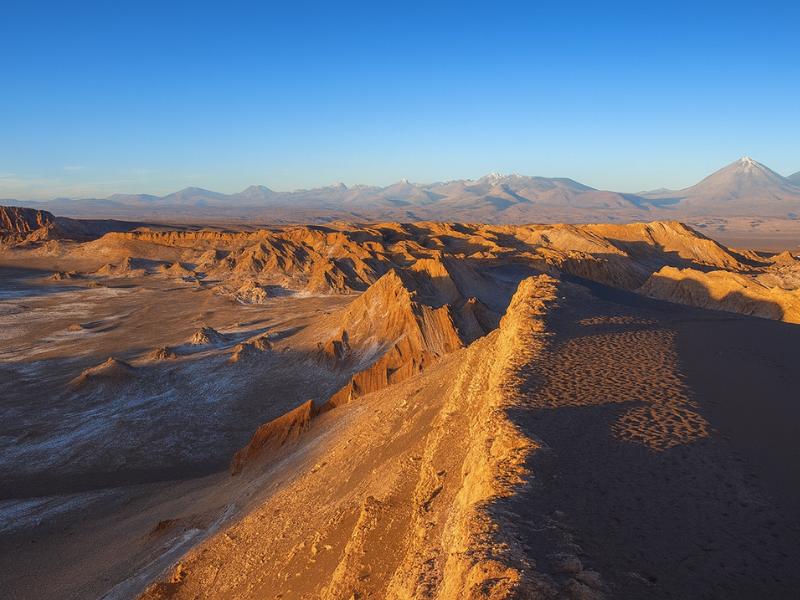
Valle de la Luna sits 15km from San Pedro via paved then dirt roads with standard sedans handling approach though park entry requiring $10-15 per person plus vehicle fee $5-10.
El Tatio Geysers requires 95km pre-dawn drive gaining 1,900m elevation (2,400m to 4,300m) via paved highway then gravel mountain road with 4am departure for 6:30am sunrise optimal viewing.
Altiplanic Lagoons route covers 150-200km roundtrip visiting Miscanti-Meñiques lakes (130km southeast) via combination paved highways and gravel roads requiring full day and high-clearance vehicle preferable.
Remote locations like Salar de Tara (120km), (60km), and backcountry sites use unpaved roads requiring navigation skills, offline maps, and preparation for breakdowns or getting stuck.
Table: Driving to Major Atacama Attractions from San Pedro
| Attraction | Distance | Drive Time | Road Condition | Vehicle Needs | Navigation Difficulty | Fuel Availability | Tour vs DIY Cost | DIY Feasibility |
|---|---|---|---|---|---|---|---|---|
| Valle de la Luna | 15km | 25 min | Paved then dirt | Sedan OK, clearance helps | Easy (main road) | Return to San Pedro | $10-15 entry vs $25-35 tour | Feasible, but tour better value |
| El Tatio Geysers | 95km one-way | 2 hours | Paved + gravel mountain | Sedan works, 4WD better | Moderate (mountain, dark) | San Pedro only | DIY $30-40 gas+entry vs $45-60 tour | Hard 4am departure, tour better |
| Altiplanic Lagoons | 130km to Miscanti | 2-2.5 hours | Paved + rough gravel | High clearance recommended | Moderate-Hard | San Pedro, maybe Socaire | DIY $40-60 vs $60-80 tour | Possible but tour easier |
| Salar de Atacama/Chaxa | 60km roundtrip | 45 min | Mostly paved | Sedan fine | Easy | San Pedro | DIY $15-20 vs $30-40 tour | Very feasible |
| Rainbow Valley | 70km roundtrip | 1 hour | Dirt/gravel | High clearance better | Moderate | San Pedro | DIY $20-30 vs $35-50 tour | Feasible |
| Salar de Tara | 120km one-way | 3-3.5 hours | Rough gravel 4×4 recommended | 4WD highly recommended | Hard (remote, navigation) | San Pedro only, carry extra | No standard tour, DIY only | Hard, experienced only |
| Bolivia Border/Uyuni | 350km to Uyuni | 6-8 hours | Variable paved/gravel | Any, border-approved rental | Moderate | Sparse, carry extra | Organized tour $200-400 vs DIY $100-200 | Possible, logistics complex |
Valle de la Luna DIY economics show $10-15 entry, $5-10 vehicle fee, $5-10 fuel totaling $20-35 versus tour $25-35 making tour marginally more expensive but including guide expertise and sunset timing.
The El Tatio DIY challenge involves 4am departure navigating dark mountain roads, gaining 1,900m altitude potentially causing car sickness, and arriving without guide explanation versus tour $45-60 handling everything.
Altiplanic Lagoons DIY navigation requires offline maps since cell service being nonexistent beyond San Pedro, with wrong turns adding 1-2 hours and getting stuck creating serious problems.
Salar de Tara remote location (120km) shows most difficult DIY option requiring 4WD vehicle, full fuel tank, emergency supplies, offline GPS, and mechanical competence for breakdowns given isolation.
The road condition variability means paved highway to Calama being excellent versus attraction dirt roads creating dust, washboard, and occasional deep sand requiring high-clearance vehicles ideally.
Park entry fees advantage tours show some including entrance in package price versus DIY paying $10-15 per person plus vehicle fees separately inflating DIY costs.
Fuel range calculation shows San Pedro to El Tatio to San Pedro (190km) using ~15-20 liters ($20-30) within any rental car’s range though Altiplanic Lagoons (200km+) requiring consideration.
Navigation technology shows Google Maps offline download covering San Pedro region though accuracy varying and cell service ending 5-10km from town requiring prepared offline solutions.
The breakdown risk in remote locations shows no towing services, limited passing traffic (maybe 5-10 vehicles daily remote roads), and self-rescue necessity versus tour buses having support networks.
Choose A Date For Your Outing
Calama Airport ↔ San Pedro Transfer
Select your date and party on GetYourGuide for the current price and departure options.
Arrange My Airport Transfer ↗FAQs
Is there public transportation in San Pedro de Atacama?
No, San Pedro has zero public transportation with no buses, taxis, or any commercial transit services. The 1-2km town center is completely walkable (10-20 minutes) and tour packages include transportation to all attractions.
How do you get around San Pedro de Atacama?
Walking handles 100% of in-town needs (1-2km center, 10-20 minutes), tour operators provide transportation to attractions (Valle de la Luna, El Tatio, etc.), and optional bicycles ($10-20) extend range to nearby ruins (3-5km).
Do you need a rental car in San Pedro de Atacama?
No for 85-90% of tourists since tours include transportation and town is walkable. Rental cars ($50-100 daily) make sense only for groups 4+ splitting costs, DIY adventurers, or photographers needing flexibility.
How do you get from Calama Airport to San Pedro?
Shuttle buses cost $15-25 (90 minutes, 6-8 daily), private transfers $60-120 (door-to-door), or rental car pickup at airport. Shuttles serve 70-80% of tourists being most economical reliable option.
Are there taxis in San Pedro de Atacama?
Virtually none – San Pedro has no commercial taxi services, no Uber/Lyft, and no street-hailable cabs. Accommodations can arrange occasional private transfers $15-30 for specific needs, but walking is the standard.
Can you bicycle around San Pedro de Atacama?
Yes, rentals cost $10-20 daily for visiting nearby sites (Pukará ruins 3km, Valle de la Muerte 5km) though unpaved dusty roads, 2,400m altitude, and intense sun create moderate challenges requiring fitness and preparation.
How to Plan Your San Pedro de Atacama Transportation
Accept walking as primary transportation with comfortable closed-toe shoes, sun protection (SPF 50, hat, sunglasses), and water bottle being essential for daily 1-2km town center navigation.
Book Calama airport shuttle in advance ($15-25) versus attempting taxi or expensive private transfer, with operators providing multiple daily departures coordinating with flight arrivals.
Skip rental car unless having specific needs (groups 4+, DIY remote locations, photography pre-dawn positioning) since tours including transportation and town being walkable eliminate necessity.
Consider bicycle rental one day ($10-20) for visiting nearby Pukará ruins (3km) or Valle de la Muerte (5km) though starting short for altitude acclimatization and carrying 2-3 liters water.
Pack appropriate footwear with closed-toe comfortable shoes for unpaved dusty streets versus flip-flops or dress shoes creating discomfort and dirty feet.
Confirm tour pickup times and locations when booking with operators collecting from accommodations over 15-30 minute windows before departing San Pedro.
Arrange airport return shuttle 2-3 hours before flights through accommodation reception providing stress-free departure logistics versus last-minute scrambling.
Budget $0 daily transportation in San Pedro (walking free, tours include transport) versus rental car $50-100 or private transfers $15-90 creating significant cost differences.
For the far sites without a rental car, see the Piedras Rojas, altiplanic lagoons and Chaxa full-day tour, which includes hotel pickup.
Glossary
- Caracoles Street: Main tourist pedestrian street concentrating 80% of restaurants, bars, tour agencies, and shops in 4-block compact area.
- Shuttle Transfer: Shared minibus service between Calama Airport and San Pedro ($15-25, 90 minutes) used by 70-80% of arriving tourists.
- Tour Transportation: Round-trip vehicle transport included in tour packages (Valle de la Luna, El Tati, Altiplanic Lagoons) eliminating personal vehicle needs.
- Paso de Jama: Argentina border crossing 160km east of San Pedro at 4,200m elevation enabling overland travel to Jujuy/Salta region.
- Unpaved Streets: Dusty dirt roads throughout San Pedro lacking pavement creating dusty conditions and uneven walking surfaces requiring appropriate footwear.
Key Takeaways
- San Pedro de Atacama has NO public transportation – compact 1-2km town center entirely walkable in 10-20 minutes between accommodations, restaurants, tour offices, shops. Walking serves 100% of in-town needs requiring comfortable closed-toe shoes, sun protection (SPF 50, hat, sunglasses), water bottle for unpaved dusty streets.
- Tour operator transportation included in packages ($25-80) providing round-trip minibus service to all attractions (Valle de la Luna 15km, El Tati Geysers 95km, Altiplanic Lagoons 150km+ roundtrip) with pickups from accommodations.
- Taxis virtually nonexistent – zero commercial taxi services, no Uber/Lyft, no street-hailable cabs, though accommodations arranging occasional private transfers $15-30. Bicycle rentals $10-20 daily extending range to Pukará ruins 3km, Valle de la Muerte 5km, Tulor ruins 9km though unpaved dusty roads, 2,400m altitude creating 30-40% increased exertion, intense sun exposure requiring 2-3 liters water.
- Rental cars $50-100 daily unnecessary for 85-90% tourists though justified for groups 4+ ($12-25 each splitting), DIY adventurers accessing remote locations, photographers needing pre-dawn positioning flexibility.
- Calama Airport (CJC) 100km requiring shuttle buses $15-25 (90 minutes, 6-8 daily, 70-80% tourists use), private transfers $60-120 (door-to-door, groups 3-4 making $22-40 each reasonable), or rental car pickup. International borders: Argentina via Paso de Jama 160km (buses $30-50, rental cars with international permission), Bolivia via Hito Cajón 45km serving Uyuni tours $200-400 (3-4 days).
- Common mistakes: expecting taxis (zero exist), renting unnecessary car ($50-100 wasted), inadequate sun protection causing sunburn, flip-flops on dusty streets, DIY drives without preparation.
- Town layout: Caracoles Street 4-block main tourist area, church plaza central landmark, everything within 0.2-1.5km radius. Parking free throughout town, fuel available 2-3 stations.
- Transportation budget: $0 daily (walking free, tours include transport), versus rental $50-100 or private transfers $15-90. Essential gear: comfortable closed-toe shoes, SPF 50 sunscreen, hat, sunglasses, water bottle.
- Tour pickups: El Tatio 4am, Valle de la Luna 5-6pm, Altiplanic Lagoons 7-8am with operators collecting from accommodations over 15-30 minutes windows. Compare dates on the Valley of the Moon tour if you want the 15 km transfer included.
Written by experienced San Pedro de Atacama guide specializing in visitor logistics, transportation planning, and optimizing mobility for desert town exploration without personal vehicles. Date: December 29, 2025.
Make It Part Of Your Trip
Select the right direction and shared or private option for this specific airport journey.
Calama Airport ↔ San Pedro Transfer
Choose a shared or private airport transfer between Calama and San Pedro. Put the airport-to-hotel leg in place before fitting sightseeing around it.
Arrange My Airport Transfer ↗