Do-It-Yourself Tour: Atacama Desert by Rental Car
DIY Atacama by rental car—freedom vs risk. See real costs, 4WD requirements, what you can (and can’t) visit solo, and when guided tours are smarter. Before committing to the car, compare which outings you would prefer an operator to arrange.
Last updated: May 15, 2026
TL;DR
DIY Atacama touring by rental car provides independence and flexibility (departing whenever you want, controlling pace and stops, spontaneous itinerary changes, multi-day vehicle access) though being complex, expensive, and requiring serious preparation with many limitations. Rental feasibility depends heavily on which attractions you want visiting, with some being independently accessible (Valle de la Luna, Laguna Tebinquinche, San Pedro town area, Moon Valley surrounding landscapes), others being technically possible but challenging (Laguna Cejar requiring navigation skills and off-road capability, Rainbow Valley needing detailed directions, Puritama Hot Springs following unmarked roads), and several being legally restricted or practically impossible (El Tatio Geysers requiring mandatory guide by law, Altiplanic Lagoons being protected areas with guide requirements, remote Piedras Rojas/Salar de Tara requiring extreme off-road expertise and emergency equipment). Vehicle requirements absolutely essential show needing proper 4WD (not AWD sedan, requiring high-clearance SUV with low-range transfer case like Toyota Land Cruiser, Mitsubishi Montero, Jeep Wrangler), costing $80-200 per day depending on vehicle type and rental duration, plus mandatory comprehensive insurance $30-50 daily, fuel costs $80-150 for 5-7 days, creating total transportation costs $570-1,750 for week rental comparable to or exceeding equivalent guided tours ($400-650 for essential tours plus transport). Major advantages demonstrate being unlimited flexibility (visiting Valle Luna sunrise and sunset same day, spending 3 hours versus tour’s 2 hours, returning favorite locations multiple times), independence from group schedules (no 4am El Tatio wake if doing other activities, no waiting for slow tour members, controlling exact timing), cost efficiency for groups 4+ people (single rental serving family versus $200-320 per person tours = $800-1,280 family versus $700-1,400 rental week), ability to explore lesser-known spots (unmarked viewpoints, dirt roads to quiet locations, discovering hidden gems), multi-day convenience (vehicle available all days versus arranging daily tour pickups), and combining attractions creatively (visiting Valle Luna then Puritama same day, flexible routing). Major disadvantages include navigation extremely challenging (limited road signage, GPS often inaccurate, paper maps essential, wrong turns causing hours of delays, getting lost in remote areas being dangerous), missing educational content (no professional guide explanations about geology, archaeology, ecology, wildlife, history creating pure sightseeing versus learning), altitude driving risks (reduced oxygen affecting judgment and reaction time, extreme fatigue at 4,000-4,300m making driving dangerous), breakdown/emergency exposure (remote locations without cell service, limited roadside assistance, expensive towing $500-2,000 if stuck, emergency medical evacuation extremely expensive), legal restrictions excluding major attractions (El Tatio, Altiplanic Lagoons, some salt flat areas requiring guides), hidden costs accumulating (fuel expensive $1.50-2.00 per liter, parking fees $5-10 some attractions, wrong turns wasting fuel, potential fines for restricted areas $200-500, emergency assistance costs), and safety considerations alone in harsh environment (extreme altitude without support, weather changes rapidly, limited water/food supplies if delayed, communication blackout zones). Realistic DIY itinerary limited scope shows Day 1 arrival and rest, Day 2 self-drive Valle de la Luna full day (sunrise and sunset visits, extended exploration, multiple viewpoints, 6-8 hours total with breaks), Day 3 guided El Tatio tour (legally required, worth the guide education and safety), Day 4 guided Altiplanic Lagoons (protected area requiring guide), Day 5 self-drive Laguna Tebinquinche and Cejar attempts (navigation challenging, possible with good directions), Day 6 self-drive Puritama Hot Springs (unmarked roads but feasible), creating hybrid approach combining DIY flexibility for accessible attractions with necessary guided tours for restricted or dangerous areas. Cost comparison complex demonstrates rental appearing cheaper superficially ($700-1,400 week transportation) versus guided tours ($400-650 essential tours) but hidden costs (navigation time wasted, wrong turns burning expensive fuel, missing educational value, stress and safety risks, inability to access restricted attractions) creating questionable value unless traveling as larger group 4-6 people enabling cost distribution. Best candidates for DIY show being experienced off-road drivers with 4WD expertise, those comfortable navigating without signage using paper maps and compass, travelers with previous Atacama visit knowing geography, Spanish speakers able to ask directions from locals, groups 4+ people distributing costs, travelers with unlimited time tolerating navigation delays and exploration, and those prioritizing absolute independence over efficiency and learning. Poor candidates include first-time Atacama visitors (getting lost wastes precious vacation time, missing context without guides, underestimating challenges), inexperienced off-road drivers (getting stuck, damaging vehicle, endangering safety), solo travelers or couples on budget (rental costs exceeding guided tour savings), time-constrained visitors (navigation delays eating into limited days), altitude-inexperienced individuals (driving at 4,000-4,300m being cognitively and physically demanding), and those wanting comprehensive educational experience (self-drive providing scenery without understanding).
Before committing to the rental, compare the three-day guided combo. Prefer to stay independent? Book individual outings where the equipment or organized route adds value.
See The 3-Day Tour Plan ↗Which Outing Should You Book?
Choose what matters to you. See a relevant experience and why it fits.
Rental Car Feasibility: What’s Actually Possible in Atacama
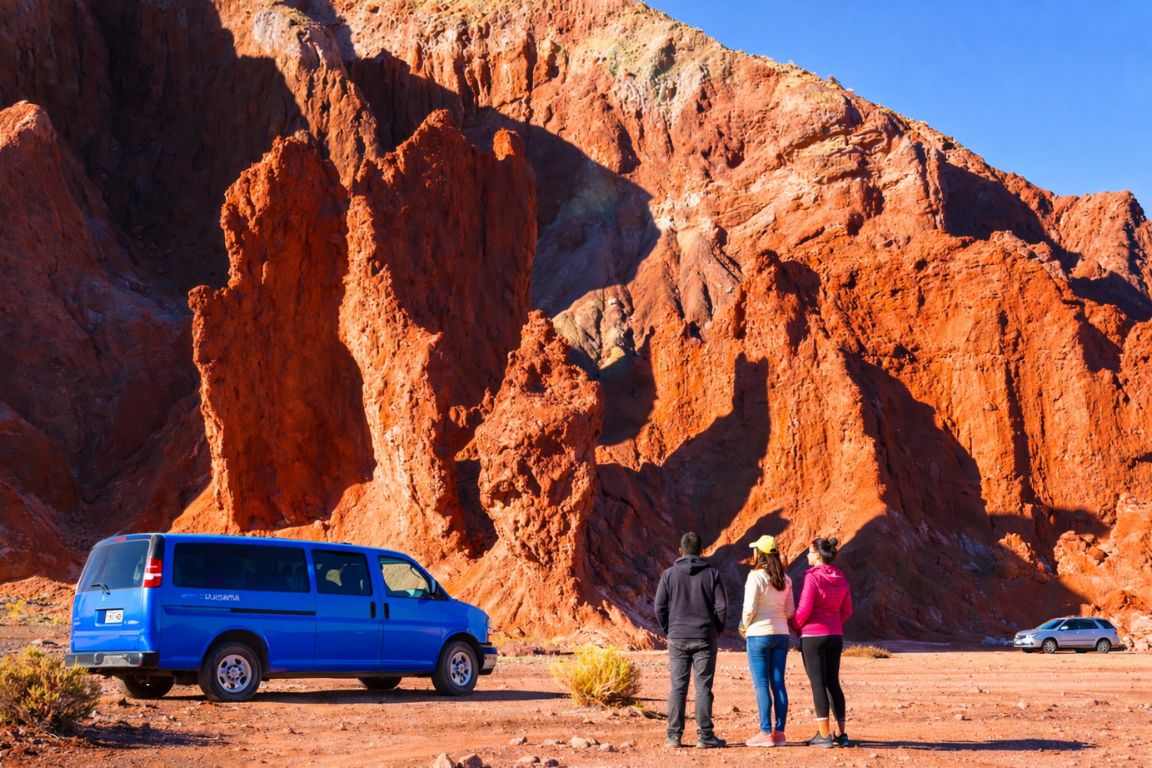
DIY Atacama touring being partially feasible though severely limited by legal restrictions (many major attractions requiring mandatory guides by Chilean law), terrain challenges (true off-road 4WD capability essential, not tourist-grade AWD), navigation difficulties (minimal signage, GPS unreliable, paper maps and navigation skills essential), and safety considerations (extreme altitude, remote locations, limited emergency support).
Independently accessible attractions show Valle de la Luna being easiest self-drive destination (well-marked paved road from San Pedro, clear signage at entrance, established trails with markers, cell phone coverage adequate for emergencies, $3,000 CLP entrance fee ~$3 paid at gate), Laguna Tebinquinche being moderately accessible (dirt road requiring 4WD, limited signage though major route, navigation challenging but possible with detailed directions), San Pedro town surroundings being freely explorable (paved roads to nearby villages like Toconao, Peine, viewing Licancabur Volcano from various angles).
Challenging but possible destinations demonstrate Laguna Cejar requiring navigation skills (dirt roads with minimal signage, multiple forks requiring correct choices, high-clearance 4WD essential for rough sections, entrance fee $15,000 CLP ~$15), Puritama Hot Springs being technically accessible (30km north of San Pedro on unmarked dirt roads, requiring detailed directions and landmarks, entrance fee $7,000 CLP ~$7), Rainbow Valley needing off-road experience (dirt tracks with multiple confusing intersections, possible to get lost adding hours, 4WD mandatory).
Legally restricted or practically impossible attractions include El Tatio Geysers requiring mandatory guide by law (government regulation, area being monitored, solo vehicles turned away at checkpoints, fines $200-500 if attempting without permit), Altiplanic Lagoons being protected national reserve (CONAF protected areas requiring authorized guides, permits not issued to individuals, accessing without authorization illegal), Piedras Rojas/Salar de Tara being extremely remote (requiring expedition-level preparation, multiple days, emergency equipment, satellite communication, experienced guides recommended), Salar de Atacama interior requiring permits (most areas being protected flamingo habitat, unauthorized entry prohibited).
Table: Attraction Accessibility for DIY Rental Car Complete Assessment
| Attraction | DIY Accessible? | Difficulty Level | Vehicle Required | Road Type | Navigation Challenge | Legal Status | Realistic? | Better with Guide? | Why Guide Better (or Required) |
|---|---|---|---|---|---|---|---|---|---|
| Valle de la Luna | YES | Easy | 2WD OK (though 4WD safer) | Paved + established dirt | Easy (clear signage) | Legally allowed | YES – recommended DIY | Optional | Guide adds geology/archaeology education, but self-drive totally feasible |
| El Tatio Geysers | NO | N/A (restricted) | N/A | N/A | N/A | LEGALLY REQUIRES GUIDE | NO – prohibited | REQUIRED | Government regulation, checkpoints enforce, fines for violations |
| Altiplanic Lagoons | NO | N/A (restricted) | N/A | N/A | N/A | CONAF protected area, guide required | NO – prohibited | REQUIRED | Protected national reserve, permits only issued to authorized operators |
| Laguna Cejar | MAYBE | Moderate-Hard | 4WD high-clearance essential | Dirt rough sections | Difficult (minimal signage, multiple forks) | Legally allowed | Challenging | Highly recommended | Navigation very difficult, getting lost common, guide ensures finding it |
| Laguna Tebinquinche | YES | Moderate | 4WD recommended | Dirt maintained | Moderate (limited signage) | Legally allowed | YES – feasible with prep | Optional | Navigation manageable with directions, guide adds context |
| Puritama Hot Springs | MAYBE | Moderate-Hard | 4WD essential | Dirt unmarked | Difficult (no signage, landmarks only) | Legally allowed | Challenging | Recommended | Finding entrance challenging, guide ensures not getting lost |
| Rainbow Valley | MAYBE | Hard | 4WD essential | Dirt tracks multiple | Very difficult (confusing forks) | Legally allowed | Difficult | Highly recommended | Easy to get lost, multiple wrong turns common, guide navigates efficiently |
| Piedras Rojas/Salar Tara | NO (practically) | Extreme | 4WD expedition | Extreme off-road | Extreme (no markers) | Technically allowed but permits complex | NO – dangerous | REQUIRED | Extremely remote, expedition-level, dangerous without experience and equipment |
| Laguna Chaxa (Flamingos) | MAYBE | Easy-Moderate | 2WD OK | Paved then dirt maintained | Easy (well-marked route) | CONAF reserve (fee required) | YES – feasible | Optional | Easy access, guide adds wildlife education |
| Stargazing Sites | YES | Easy | 2WD OK | Paved or dirt easy | Easy (finding dark spot) | Allowed | YES | HIGHLY recommended | Finding dark location easy, but professional telescopes and astronomy guide create completely different experience |
| Toconao Village | YES | Very Easy | 2WD OK | Paved | Very easy (highway) | Allowed | YES – recommended | Optional | Simple drive, self-explore town, guide adds cultural context |
Valle Luna easy demonstrates being perfect DIY destination with clear signage from San Pedro (“Valle de la Luna” signs at major intersections), paved road for 15km then well-maintained dirt road final 2km, entrance gate collecting $3,000 CLP (~$3) fee, established parking area, marked trails to main viewpoints (though hiring guide at entrance $5,000-10,000 CLP optional for enhanced geological/archaeological explanations creating good value), sunset viewpoint being obvious (other visitors and tour buses congregating), creating virtually impossible-to-get-lost straightforward experience.
The El Tatio restricted demonstrates being absolute non-negotiable with government establishing mandatory guide requirement (following tourist incidents including fatalities from people falling into boiling pools, getting lost in extreme altitude, suffering altitude sickness without support), checkpoints at 60km from San Pedro turning away solo vehicles, heavy fines $200-500 for violations, creating legal impossibility for DIY attempts.
Altiplanic protected reserve shows CONAF (Chilean National Forest Corporation) managing Laguna Miscanti, Miñiques, Chaxa flamingo areas as protected reserves requiring authorized tour operators having proper permits, individual visitors not receiving permits regardless of vehicle or preparation, creating legal barrier versus safety concern.
Laguna Cejar challenging demonstrates dirt roads from San Pedro south requiring multiple correct fork choices (wrong turns leading to dead ends, salt flat impassable areas, adding 1-2 hours navigating back), minimal signage (occasional small markers easily missed), high-clearance 4WD essential for rough sections (deep sand, washboard, occasional water crossings), entrance being manned gate collecting $15,000 CLP (~$15) though finding gate being challenge itself, creating frustrating experience for inexperienced navigators though technically possible with preparation.
Vehicle Requirements: 4WD Essential Not Optional
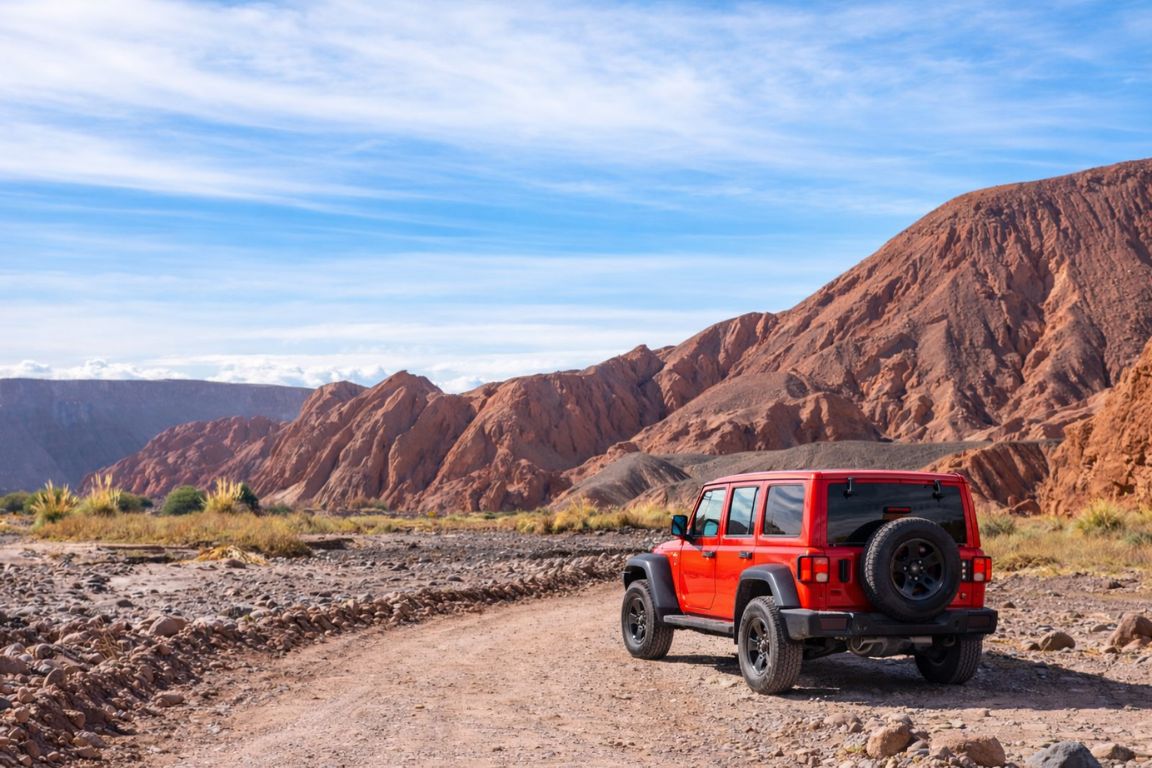 Rental vehicle requirements absolutely critical show needing proper 4WD with high clearance, not tourist-grade AWD or crossover SUV, with appropriate vehicles including Toyota Land Cruiser (ideal, excellent capability, high clearance, reliable), Mitsubishi Montero/Pajero (very good, capable, comfortable), Jeep Wrangler (capable though less comfortable), Nissan Patrol (capable alternative), Toyota 4Runner/Hilux (adequate pickup option).
Inadequate vehicles commonly rented by tourists include Suzuki Vitara (insufficient clearance, underpowered altitude), Hyundai Tucson AWD (not true 4WD, insufficient capability), Kia Sportage (similar limitations), any 2WD sedan or hatchback (completely impossible for dirt roads, dangerous if attempting).
Table: Vehicle Capability Assessment for Atacama DIY
| Vehicle Type | 4WD Capability | Ground Clearance | Suitability | Rental Cost per Day | Can Access | Cannot Access | Recommendation | Common Tourist Mistake |
|---|---|---|---|---|---|---|---|---|
| Toyota Land Cruiser | Excellent true 4WD low-range | 220mm+ high | Ideal – everything accessible | $150-250 | All DIY-legal attractions | Nothing (capability-wise) | HIGHLY RECOMMENDED | Expensive but worth it |
| Mitsubishi Montero | Excellent true 4WD | 215mm+ high | Excellent – full capability | $120-200 | All DIY-legal attractions | Nothing (capability-wise) | HIGHLY RECOMMENDED | N/A – good choice |
| Jeep Wrangler | Excellent true 4WD | 240mm+ very high | Excellent capability, less comfort | $130-220 | All DIY-legal attractions | Nothing (capability-wise) | RECOMMENDED | Less comfortable long drives |
| Toyota 4Runner/Hilux | Very good 4WD | 230mm+ high | Very good | $110-180 | All DIY-legal attractions | Extreme Piedras Rojas | RECOMMENDED | Pickup bed vs SUV comfort |
| Nissan Patrol | Very good 4WD | 210mm+ high | Very good | $120-200 | All DIY-legal attractions | Extreme Piedras Rojas | RECOMMENDED | Less common availability |
| Suzuki Vitara (tourist grade) | Marginal 4WD, low clearance | 185mm insufficient | INADEQUATE | $70-120 | Valle Luna only (struggle) | Cejar, Puritama, Rainbow Valley | NOT RECOMMENDED | Tourist mistake – too cheap |
| Hyundai Tucson AWD | Not true 4WD (AWD only) | 170mm very low | INADEQUATE | $60-100 | Valle Luna paved only | Most dirt roads | NOT RECOMMENDED | Major tourist mistake – looks capable but isn’t |
| Compact Sedan/Hatchback | None (2WD) | 140-160mm low | COMPLETELY UNSUITABLE | $40-70 | Paved roads only (town) | All attractions | NEVER RENT | Dangerous if attempting dirt roads |
Land Cruiser ideal demonstrates being gold standard for Atacama exploration with superior 4WD capability (low-range transfer case for steep climbs and deep sand, locking differentials for traction), excellent ground clearance (220mm+ handling rocks, ruts, water crossings), powerful engine managing altitude (naturally aspirated or turbo maintaining power at 2,400-4,300m), comfortable interior (air conditioning critical for hot days, heating for cold mornings), large fuel tank (enabling 400-500km range between fill-ups), proven reliability (least likely to break down remote locations), creating peace of mind justifying $150-250 daily premium.
The tourist-grade Vitara mistake shows being extremely common with tourists booking “4WD” based on marketing without understanding capability differences, Vitara having marginal part-time 4WD (insufficient power and traction for challenging sections), inadequate 185mm clearance (scraping undercarriage on rocks, getting stuck in ruts), underpowered 1.6L engine struggling at altitude, creating frustrating dangerous situations attempting Cejar or Rainbow Valley (book tour here) dirt roads (getting stuck, damaging oil pan, requiring expensive towing $500-1,000).
AWD versus 4WD critical distinction shows AWD (all-wheel-drive) being electronic system primarily for paved roads with some grip assistance (Tucson, Santa Fe, crossovers having this) being completely different from true 4WD (four-wheel-drive with mechanical transfer case, low-range gearing, designed for off-road) creating capabilities gap, with AWD vehicles being unsuitable for Atacama dirt roads despite appearing rugged.
Where to Rent and Cost Realities in Atacama Desert
Rental availability shows San Pedro having limited local options (2-3 small agencies offering $80-150 daily for basic 4WD though vehicle quality variable, limited insurance coverage, basic English) versus Calama airport having major international brands (Hertz, Avis, Budget, Europcar offering $120-250 daily for premium 4WD, comprehensive insurance, English-speaking staff, reliable vehicles) creating trade-off between convenience and quality.
Our complete Atacama trip costs and budgeting guide breaks down exactly why rental cars rarely deliver the savings people expect – those hidden costs add up faster than most budgets can absorb.
Table: Complete Rental Cost Breakdown and Hidden Expenses
| Cost Category | Budget Option | Mid-Range | Premium | Notes | Hidden Costs Often Missed | Realistic Total |
|---|---|---|---|---|---|---|
| Base Vehicle Rental (per day) | $80-120 (Vitara/basic 4WD San Pedro) | $120-180 (Montero/4Runner major brands) | $180-250 (Land Cruiser premium) | 7-day minimum typical | Age surcharge under 25 (+$20-40/day), single driver vs multiple | See total below |
| Mandatory Insurance (per day) | $20-35 (basic collision) | $30-45 (comprehensive) | $40-60 (zero deductible) | ALWAYS get comprehensive | Deductible $800-2,000 even with insurance (if fault), many declining thinking basic adequate | Budget: $140-245, Mid: $210-315, Premium: $280-420 (7 days) |
| Additional Driver | $10-20 per day | $10-20 per day | $10-20 per day | If multiple drivers needed | Often forgetting to add, driving without authorized = insurance void | $70-140 (7 days) |
| Fuel Total (7 days typical) | $80-120 (conservative driving) | $100-140 (moderate exploration) | $120-180 (extensive driving, wrong turns) | Fuel expensive $1.50-2.00/liter, tank 60-80L | Wrong turns burning extra fuel ($30-50), conservative estimates inadequate | Realistic: $120-180 |
| GPS Rental | $8-15 per day | $8-15 per day | Usually included | GPS often inaccurate Atacama | Relying on GPS = getting lost, need paper maps backup | $50-100 or included |
| Parking Fees | $0-5 per attraction | $0-5 per attraction | $0-5 per attraction | Most free, some charge | Valle Luna no parking fee, but some private lots $3-5 | $10-30 total |
| Attraction Entrance Fees | $20-40 (Valle Luna, Chaxa, few attractions) | $40-70 (adding Puritama, Cejar) | $70-100 (all accessible attractions) | Per person, multiply by group size | Forgetting to budget, Cejar $15, Puritama $7, Valle Luna $3 | Budget × group size |
| Emergency/Contingency | $100 minimum reserve | $200 recommended | $500 comfortable | Towing $500-2,000, fines $200-500, unexpected | Most not budgeting, breakdowns extremely expensive | Essential buffer |
| 7-Day Rental TOTAL (Vehicle + insurance + fuel) | $700-1,120 | $1,050-1,575 | $1,400-2,310 | Base transportation only | Thinking “$80/day = $560” without insurance, fuel, extras | Realistic: $1,000-1,800 |
| Per Person (4 people) | $175-280 | $263-394 | $350-578 | Divided by group | Solo or couple paying full amount (terrible value) | Group distribution critical |
Base rental deceptive demonstrates tourists seeing “$80/day” San Pedro agencies calculating “$560 week” being shocked by actual costs with mandatory comprehensive insurance $30-45 daily (adding $210-315 week), fuel costs $100-150 (depending on distance and wrong turns), GPS rental $50-100 (or relying on phone being dangerous), emergency reserve $100-500 (towing being extremely expensive remote areas), creating realistic $1,000-1,500 minimum versus perceived $560.
The insurance essential demonstrates comprehensive coverage being absolutely mandatory (not optional luxury) with basic collision having high $1,500-2,000 deductibles (paying significant costs even with insurance if accident), comprehensive reducing deductible to $200-500 or zero, covering undercarriage damage (extremely common on rough roads, often excluded basic insurance), windshield cracks (frequent from flying rocks dirt roads, $300-600 replacement), tire damage (punctures common, $150-300 replacement), creating peace of mind justifying $30-45 daily premium versus potential $2,000-5,000 costs if something happens.
Fuel costs underestimated shows Chilean fuel prices being expensive ($1.50-2.00 per liter = $5.70-7.60 per gallon US equivalent), typical 4WD getting 8-12 L/100km (19-29 mpg), exploring Atacama requiring 400-700km driving over week (San Pedro to Valle Luna 17km each way, to Cejar 40km, to Puritama 30km, exploring adds quickly), calculating 600km ÷ 10 L/100km = 60 liters × $1.75/liter = $105, plus wrong turns adding 20-40% ($20-40 additional), totaling realistic $120-180 fuel week.
Emergency contingency critical demonstrates breakdown towing being extremely expensive (San Pedro to Calama 100km tow costing $500-1,000, remote locations like halfway to Cejar requiring specialized recovery $1,000-2,000), fines for restricted areas being substantial ($200-500 attempting El Tatio without guide), medical emergencies requiring evacuation (helicopter $5,000-15,000), creating importance of $200-500 buffer beyond base rental costs.
Three Ways To Make More Of Your Trip
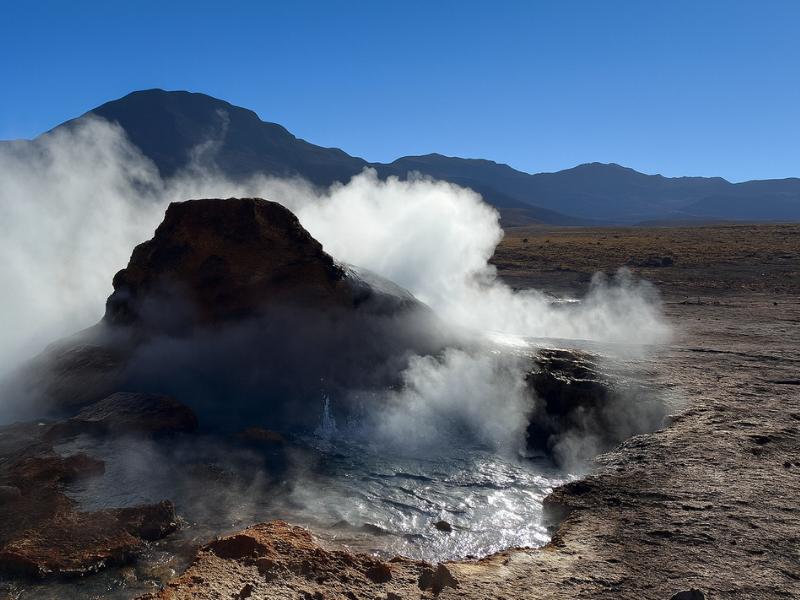
El Tatio Geysers Experience
An organized geyser outing lets you make the visit the focus instead of planning the drive. Start with the departure that fits your itinerary.
An early outing. Pack warm layers and check pickup arrangements.
Book on ViatorSee El Tatio Departures ↗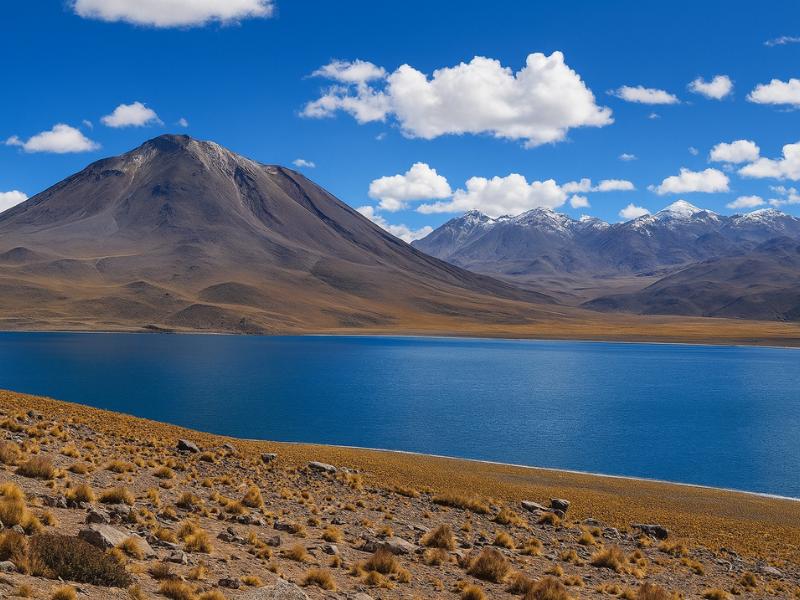
Piedras Rojas And Highland Lagoons
Give a full day to red rocks and highland lagoons without organizing the driving yourself. A connected circuit makes more sense than treating every stop as a separate trip.
A long, high-altitude outing; check participation requirements.
Book on ViatorSee The Piedras Rojas Route ↗
The Roofless Stargazing Experience
Make the sky part of your trip: telescope observation, an astronomy talk and a professional photo to take home.
Hot drinks and blankets provided. Dress warmly; pickup coverage is limited.
Book on ViatorChoose My Stargazing Night ↗Find A Date For Your Experience
Atacama: 4 Tours In 3 Days
Choose your date on the booking platform to see current prices and availability.
See The 3-Day Tour Plan ↗Where A Tour Earns Its Place
Keep The Car For Freedom
Your own stops, your own pace and independent days. Best when the driving itself is part of the trip you want.
Book The Long Landscape Day
Choose Piedras Rojas when you want the circuit without coordinating the route and driving. Your job becomes enjoying the stops.
See The Piedras Rojas Route ↗Add What A Car Cannot Provide
For stargazing, the added value is telescope observation and an astronomy talk. Keep your daytime independence and book the evening experience.
Choose My Stargazing Night ↗Already Have Quotes? Compare In Three Fields
Use group totals in the same currency, including the extras you expect to pay. You do not need quotes to use the tour selector.
Get The Combo Price ↗Cost Comparison: Rental vs Guided Tours Reality Check
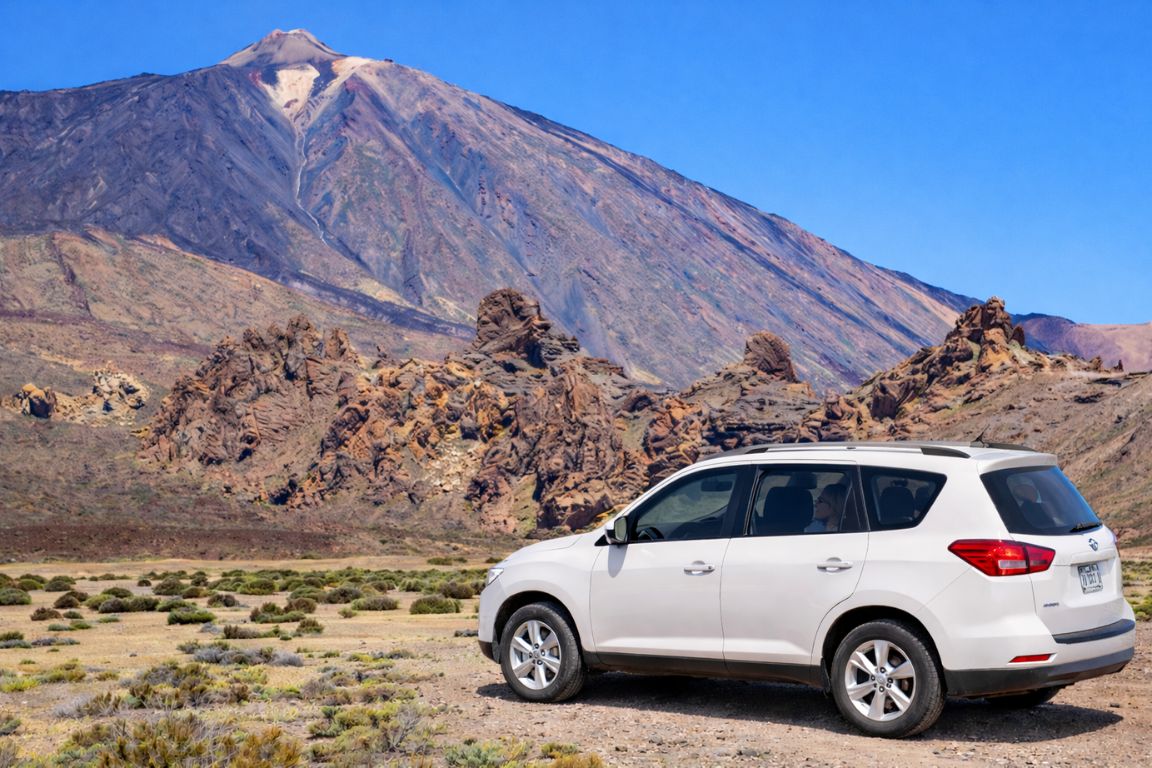 Surface-level comparison shows rental appearing cheaper ($1,000-1,500 week) versus guided tours ($400-650 for essential tours = Valle Luna $28-40 + El Tatio $45-60 + Altiplanic $60-80 + Cejar $40-55 = $173-235 per person × 2 people couple = $346-470), creating perception of “$500-1,000 savings” renting.
Reality-adjusted comparison demonstrates rental accessing only subset of attractions (Valle Luna DIY, El Tatio prohibited requiring paid tour anyway $90-120 couple, Altiplanic prohibited requiring tour $120-160 couple, Cejar technically possible though challenging), calculating rental $1,000-1,500 + required guided tours $210-280 = $1,210-1,780 total versus complete guided tour package $346-470, creating actually more expensive rental option.
Hidden value losses show rental missing professional guide education (not understanding geological formations, archaeological significance, wildlife behaviors, historical context creating pure sightseeing versus learning), navigation time wasted (wrong turns, getting lost, asking directions consuming 3-6 hours cumulative over week versus guided efficiency), stress and anxiety (worrying about getting lost, vehicle damage, restricted areas, safety creating mental exhaustion versus relaxed guided experience), safety risks (driving at altitude while adjusting, remote emergencies, no support system).
Before committing to a rental car headache, consider the Atacama private tours vs group tours decision instead – you might find that private tours give you the flexibility you want without the navigation stress.
Table: Complete Cost-Value Comparison Rental DIY vs Guided Tours
| Factor | DIY Rental (Couple) | Guided Tours (Couple) | DIY Advantage/Disadvantage | When DIY Makes Sense |
|---|---|---|---|---|
| Transportation Cost | $1,000-1,500 (7 days) | $60-100 (airport shuttles + taxis) | DIS: 10-15x more expensive transport | Groups 4+ distributing cost |
| Accessible Attractions DIY | Valle Luna, Tebinquinche, Chaxa, Puritama (challenging), town areas | N/A | ADV: Can visit anytime, multiple times | Wanting repeated visits same location |
| Prohibited Attractions (must guide) | El Tatio $90-120 couple, Altiplanic $120-160 couple = $210-280 required guided anyway | Included in guided package | DIS: Paying for both rental and required guided | Can’t avoid guided for major attractions |
| TOTAL Cost | $1,210-1,780 (rental + required guided + fuel + misc) | $406-570 (all tours + transport) | DIS: 2-3x more expensive couple | Groups 4+ making rental competitive |
| Time Efficiency | Lose 3-6 hours navigating, wrong turns | Zero navigation time | DIS: Wasted vacation time | Have unlimited time, enjoy exploring |
| Educational Value | Zero guide context, pure sightseeing | Professional guide comprehensive | DIS: Miss understanding what you’re seeing | Don’t care about learning, just photos |
| Stress Level | High (navigation, vehicle, rules, safety) | Low (relaxed, driver-guide handled) | DIS: Mental exhaustion, anxiety | Enjoy adventure challenge |
| Flexibility | High (depart anytime, pace control, repeat visits) | Low (fixed schedules, group pace) | ADV: Complete control timing | Priority is flexibility |
| Safety/Support | Alone if breakdown, emergency, lost | Guide support, radio communication, group | DIS: Isolated if problems | Experienced, confident, prepared |
| Weather Contingency | Can delay/reschedule freely | Must coordinate tour operator | ADV: Spontaneous changes | Weather-dependent activities planned |
Couple cost reality demonstrates $1,210-1,780 rental scenario (including required guided tours for restricted attractions, fuel, insurance, hidden costs) versus $406-570 complete guided package being 2-3x more expensive rental, with “savings” being illusion from incomplete cost accounting (forgetting insurance, fuel, required tours, hidden fees, wasted time).
The family 4 transformation shows rental $1,210-1,780 / 4 people = $303-445 per person becoming comparable to guided tours $406-570 individual pricing, though rental still requiring guided tours for El Tatio and Altiplanic adding $210-280 / 4 = $53-70 per person creating closer parity, making rental potentially worthwhile for families if prioritizing flexibility (controlling children’s pace, bathroom timing, avoiding 4am wake) justifying modest cost premium.
Families traveling with kids in Atacama often assume rental cars solve the “bathroom anytime” problem, but they create bigger issues – try navigating confusing dirt roads while refereeing sibling arguments in the backseat.
Groups 5-6 people advantage demonstrates rental $1,400-1,800 / 6 people = $233-300 per person becoming cheaper than guided tours $406-570 per person creating genuine savings, with single rental serving entire group versus individual tour costs multiplying, making DIY financially sensible for larger groups having appropriate vehicle and capable driver.
Time-value calculation shows couple losing 4 hours navigating (getting lost finding Cejar, wrong turn Rainbow Valley, confusion finding Puritama) × $50-100 hourly vacation value = $200-400 implicit cost, plus stress and reduced enjoyment, adding to explicit rental costs creating total-cost-of-ownership exceeding guided tours.
Navigation and Wayfinding: The Major Challenge
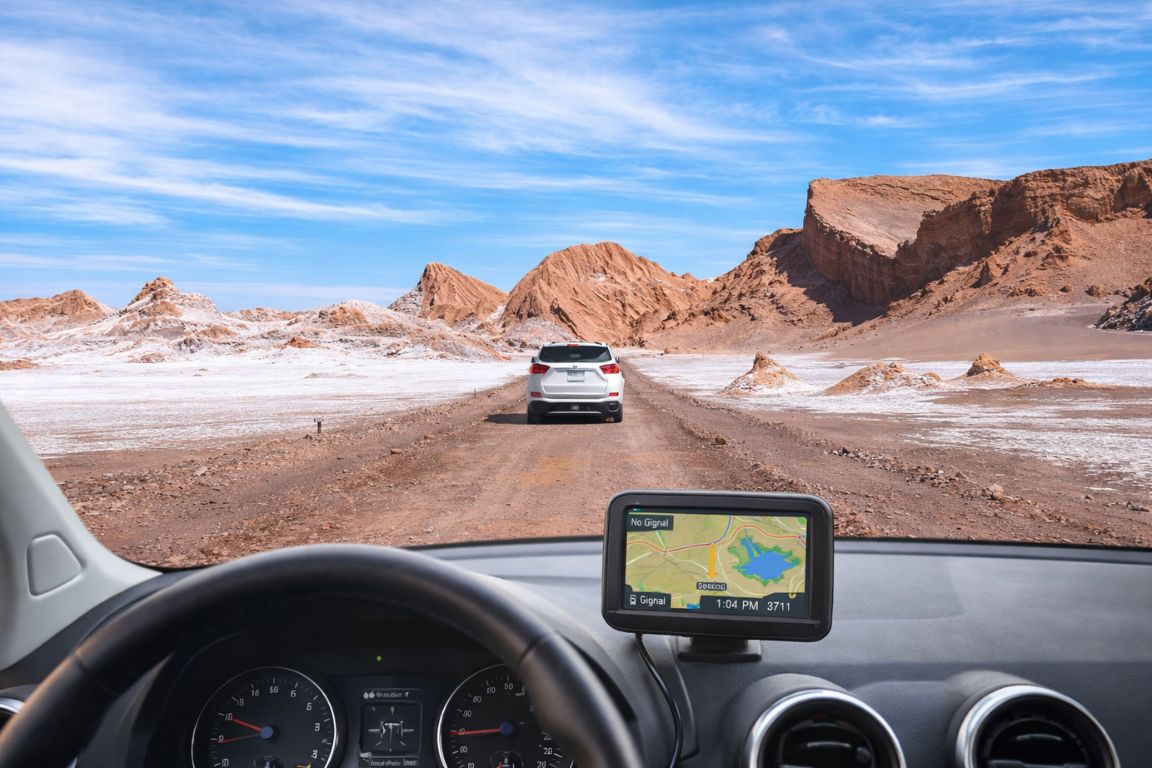
Navigation difficulty extreme demonstrates Atacama having minimal road signage (dirt roads having zero markers, intersections having no signs indicating directions, landmarks being non-obvious), GPS being often inaccurate (Atacama remote location having outdated maps, dirt roads not shown on Google Maps, coordinates sometimes incorrect by kilometers), cellular coverage being spotty (leaving San Pedro quickly losing signal, remote attractions having zero coverage, unable to call for help or check online maps).
Table: Navigation Tools and Effectiveness Atacama
| Navigation Method | Effectiveness | Cost | Availability | Limitations | Recommendation | Why It Fails (or Works) |
|---|---|---|---|---|---|---|
| Google Maps (phone) | Poor 3/10 | Free | Phone required | Dirt roads not shown, inaccurate, requires cell signal (no signal most attractions) | NOT SUFFICIENT alone | Fails once leaving paved roads, major attractions not mapped accurately |
| Offline GPS App (Maps.me, Gaia) | Moderate 5/10 | Free-$30 | Phone + downloaded maps | Dirt roads approximate, no updates, attraction markers sometimes wrong | SUPPLEMENTARY useful | Better than Google but still limited accuracy |
| Rental Car GPS Device | Poor-Moderate 4/10 | $8-15/day rental | Rent from agency | Outdated Atacama maps, frustrating interface, slow updates | SUPPLEMENTARY at best | Often outdated, missing new routes, frustrating |
| Paper Maps (Chilean road atlas) | Moderate-Good 7/10 | $10-20 purchase San Pedro | Buy local stores | Dirt roads approximate, scale limitations, interpretation skill needed | ESSENTIAL backup | Shows general routing though not precise |
| Tour Operator Directions (written) | Good 8/10 | Free (ask operators) | Request from tour companies | Specific to their routes, may not cover all alternatives | HIGHLY RECOMMENDED | Operators know exact turns, landmarks, distances |
| Local Asking Directions | Variable 4/10 | Free | Need Spanish, find locals | Finding someone remote difficult, Spanish essential, may get conflicting info | SUPPLEMENTARY | Locals know roads but communication challenging |
| Waypoints/Coordinates List | Excellent 9/10 | Free (compile online) | Research advance | Requires GPS device interpreting coordinates | HIGHLY RECOMMENDED | Precise coordinates work even when roads not shown |
| Guided First Visit | Excellent 10/10 | Tour cost | Book tour first | Expensive doing twice (guided then DIY return) | IDEAL if planning returns | See route with guide, then self-drive later already knowing way |
Google Maps failure demonstrates being utterly inadequate Atacama (works fine San Pedro town streets, fails completely once leaving paved roads) with Valle Luna appearing on map though dirt road routing being approximate, Laguna Cejar being shown wrong location (coordinates being 5-8km off), Puritama Hot Springs not appearing at all, dirt road intersections having no guidance creating dangerous reliance on inaccurate tool.
The offline GPS apps improvement shows Maps.me or Gaia GPS having better OpenStreetMap data (community-contributed dirt roads, some attraction waypoints, offline functionality without cell signal) though still being approximate not precise (roads shown being general routing, actual track varying significantly, forks and intersections not detailed).
Paper maps essential demonstrates Chilean road atlas or Atacama-specific maps bought San Pedro bookstores/tourist shops ($10-20) showing general routing (major dirt roads indicated, key intersections marked, scale enabling distance estimation) though lacking precision (exact turns not shown, minor forks not indicated, landmarks not detailed), being critical backup when electronics fail and providing overview understanding enabling orientation.
Tour operator directions gold standard shows asking tour companies (even if not booking) for written directions to specific attractions (detailed turn-by-turn: “At km 38 after San Pedro, turn right at blue sign; drive 12km to fork, take left; continue 8km to gate”) being far superior to any GPS, operators knowing exact routes from daily experience, being willing to share creating free invaluable resource.
Waypoints strategy demonstrates compiling exact GPS coordinates for destinations and key intersections (Valle Luna entrance: -22.917917, -68.275278; Laguna Cejar parking: -23.146667, -68.221111; critical fork Cejar route: -23.089444, -68.248611) enabling GPS device guidance even when roads not mapped, typing coordinates manually into GPS navigating precisely to waypoints, being most reliable method though requiring advance research.
Realistic DIY Itinerary: What’s Actually Feasible
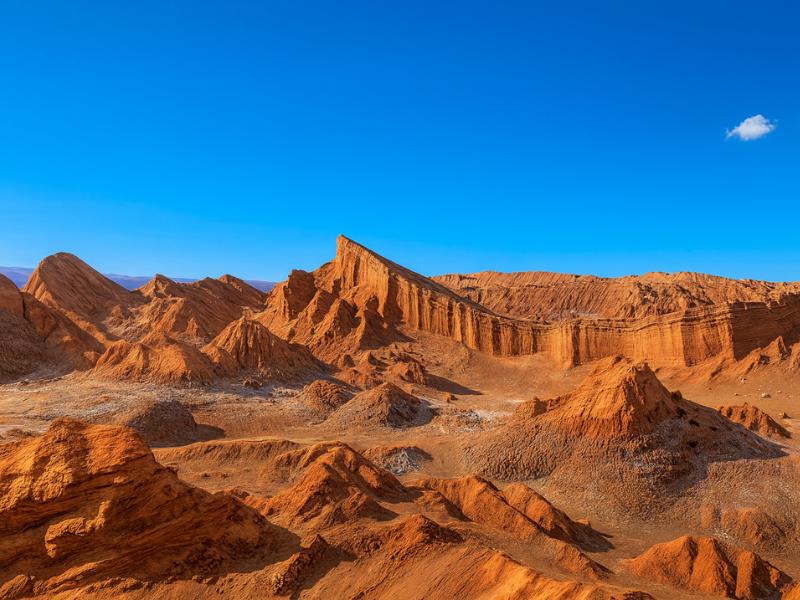
Practical 5-day DIY+Guided hybrid demonstrates optimal approach combining rental car flexibility for accessible attractions with necessary guided tours for restricted areas, creating best-of-both-worlds experience.
Day 1: Arrival and Rest
- Arrive Calama, collect rental car airport (or shuttle San Pedro then rent locally), check accommodation, complete rest and acclimatization (critical 2,400m altitude), no driving activities Day 1
Day 2: Valle de la Luna DIY Full Day
- Self-drive Valle Luna multiple visits maximizing rental flexibility
- Morning departure 8am San Pedro, drive 17km Valle Luna (30 minutes), arrive 8:30am
- Morning exploration 8:30am-12pm (salt caves, dunes, rock formations, quiet without tour crowds, photography extended time)
- Return San Pedro 12:30pm, lunch and afternoon rest 1-5pm
- Evening return Valle Luna 5pm, sunset viewing 6:30-7:30pm (prime location no crowds), return San Pedro 8pm
- Advantage: Seeing sunrise and sunset same day impossible with tours, extended photography time, flexibility
Day 3: El Tatio Geysers GUIDED (Legally Required)
- Mandatory guided tour 4am-12pm (rental car sitting unused this day, no DIY option)
- Pay guided tour $45-60 per person accepting legal requirement
- Afternoon rest post-El Tatio, vehicle available if wanting drive to town or relaxation
Day 4: Altiplanic Lagoons GUIDED (Protected Area Required)
- Mandatory guided tour 7am-6pm (rental car unused, no DIY option)
- Pay guided tour $60-80 per person accessing protected CONAF reserves
- Evening free, vehicle available if wanted
Day 5: Laguna Tebinquinche and Cejar DIY Attempts
- Morning Laguna Tebinquinche 9am-12pm (moderate difficulty navigation, beautiful salt flat viewpoint, achievable with preparation)
- Afternoon Laguna Cejar attempt 3-7pm (challenging navigation, may get lost adding time, floating if successful)
- Flexibility: If getting lost or frustrated, return San Pedro and book guided tour next day instead
Day 6: Puritama Hot Springs DIY or Rest
- Drive to Puritama 10am (30km north, unmarked dirt roads, challenging but achievable with directions)
- Relax thermal pools 11am-2pm if finding it, or frustrated searching giving up
- Alternative: Rest day if exhausted from previous days’ driving stress
Day 7: Departure
- Return rental car Calama airport or San Pedro agency, depart
If you’re committing to 5+ days in Atacama and genuinely want that DIY flexibility, at least you’ll have time to recover from inevitable wrong-turn adventures.
Table: Realistic Day-by-Day DIY vs Guided Efficiency Comparison
| Day | DIY Rental Approach | Guided Tour Approach | Time Efficiency | Cost Efficiency | Stress Level | Learning Value | Verdict |
|---|---|---|---|---|---|---|---|
| Day 1: Arrival | Collect rental, drive to accommodation, rest | Shuttle to accommodation, rest | Equal | Rental more expensive | Equal low | Equal none | Neutral |
| Day 2: Valle Luna | Multiple visits (sunrise+sunset), extended time | Single tour 3 hours sunset | DIY better (6+ hours vs 3) | DIY better (included rental vs $28-40) | DIY moderate (navigation easy) | Guided better (geology explained) | DIY WINS for flexibility |
| Day 3: El Tatio | Prohibited – must book guided tour | Guided tour professional | Equal (both guided) | Equal (both pay tour) | Equal moderate | Equal excellent | TIE – no DIY option |
| Day 4: Altiplanic | Prohibited – must book guided tour | Guided tour comprehensive | Equal (both guided) | Equal (both pay tour) | Equal moderate | Equal excellent | TIE – no DIY option |
| Day 5: Cejar attempt | 4-6 hours including getting lost | 3-4 hour efficient guided | Guided better (no wrong turns) | DIY better (included rental) | DIY high (frustration getting lost) | Guided better (ecosystem explained) | GUIDED WINS for efficiency |
| Day 6: Puritama DIY | 3-5 hours including searching | 2-3 hour efficient guided | Guided better (direct route) | DIY better (included rental) | DIY moderate-high (challenging finding) | Equal (thermal pools self-explanatory) | SLIGHT DIY EDGE (if finding it) |
| Total Week | Rental always present, 2 days guided required | All guided tours, no rental | Mixed | Rental more expensive couple | DIY higher (navigation stress) | Guided better (comprehensive) | GUIDED WINS for most travelers |
Day 2 Valle Luna DIY advantage demonstrates genuine benefit with morning visit 8:30am-12pm having zero crowds (tour buses not arriving until afternoon), golden morning light (different quality from sunset), extended exploration time (4 hours versus tour’s 2-3 hours), returning sunset 5-8pm being second visit same location (impossible with tours, seeing different light and colors), creating flexibility justifying rental for this attraction alone.
The Day 3-4 reality check shows rental sitting unused (parked at accommodation, paying $120-180 per day insurance and amortized cost though not driving), while being forced to book and pay guided tours ($45-60 El Tatio, $60-80 Altiplanic per person) accessing restricted attractions, creating double-cost inefficiency (paying rental not using, plus paying tours could have booked without rental).
Day 5 navigation frustration demonstrates attempting Laguna Cejar independently creating 2-3 hour challenge (wrong turns at multiple forks, backtracking when reaching dead ends, burning fuel, getting frustrated, possibly giving up and booking guided tour next day anyway) versus guided tour’s 30-minute direct efficient drive, questioning whether rental “savings” being worthwhile when consuming entire afternoon navigating rather than enjoying.
This is why the 3-4 day classic itinerary has become the sweet spot for Atacama – it covers all the major attractions you legally can’t DIY anyway, costs less than renting, and doesn’t turn your vacation into a navigation exercise.
When DIY Makes Sense vs When It Doesn’t in Atacama
 Strong DIY candidates show having specific circumstances making rental worthwhile despite costs and challenges: experienced 4WD off-road drivers comfortable without signage (previous Baja Mexico driving, African safari self-drive experience, Australian outback navigation), Spanish speakers able to ask directions from locals (critical when GPS fails, locals being helpful though requiring Spanish conversation), previous Atacama visitors knowing geography (having done guided tours prior trip, now wanting flexibility to revisit favorite spots extended time), photographers requiring absolute flexibility (returning locations multiple times for optimal light, extended composition time, sunrise and sunset same day impossible with tours), groups 4-6 people distributing rental costs ($1,400 / 5 people = $280 per person becoming competitive with guided $400-570 per person), travelers with unlimited time tolerating navigation delays (not stressed by getting lost 2-3 hours, viewing it as adventure rather than frustration), those wanting to explore lesser-known spots (driving random dirt roads discovering unmarked viewpoints, enjoying journey versus destination efficiency).
Poor DIY candidates demonstrate situations where rental being terrible idea creating frustration, danger, and wasted money: first-time Atacama visitors unfamiliar with geography (getting lost wasting precious vacation days, navigation difficulty underestimated, stress overshadowing enjoyment), inexperienced off-road drivers (never driven 4WD, uncomfortable rough roads, getting stuck or damaging vehicle, endangering safety), solo travelers or couples on budget (rental full cost being 2-4x guided tour expenses, terrible value proposition), time-constrained visitors (5-7 day trip not tolerating navigation delays consuming entire days, efficiency critical), non-Spanish speakers unable to ask directions (stuck when GPS fails, unable to communicate with locals, increased getting-lost risk), altitude-inexperienced individuals (driving at 2,400-4,300m affecting judgment, reaction time, and decision-making, dangerous when navigating challenging roads), those wanting comprehensive educational experience (self-drive providing scenery without understanding, missing professional guide context about geology, ecology, archaeology, wildlife, creating shallow versus deep experience).
Table: Should You Rent Car DIY Atacama? Complete Decision Framework
| Your Situation | Rent Car DIY? | Why / Why Not | Alternative Recommendation | Risk Assessment |
|---|---|---|---|---|
| First-Time Atacama Visitor | NO | Navigation extremely challenging, geography unknown, wasted time getting lost, stress ruins vacation | Book guided tours all attractions, focus on enjoyment | High – likely getting lost, frustration |
| Experienced Off-Road Driver (Baja, Africa, Australia) | MAYBE | Have skills, but unfamiliar Atacama specifically, first-visit still challenging | Guided tours first visit, DIY return visit if loving it | Moderate – capable but unfamiliar terrain |
| Previous Atacama Visitor (Guided) | YES | Know geography, want flexibility revisiting favorites extended time, navigation easier second time | Hybrid: rental plus guided for new restricted areas | Low – experienced, know routes |
| Serious Photographer | YES | Absolute flexibility essential (sunrise+sunset same location, extended composition time, creative control), costs justified | Accept premium, focus priority locations DIY, guided for restricted | Low-Moderate – capable, motivated |
| Solo Traveler or Couple (Budget) | NO | Rental 2-4x more expensive than guided ($1,200-1,800 vs $400-600), terrible value, stress not worth savings | Book all guided tours, save $600-1,200, enjoy relaxed experience | High – financial and stress |
| Family 4+ People | MAYBE | Costs becoming comparable per person, flexibility valuable (children pace, bathrooms), justified if needing control | Hybrid: rental accessible attractions, guided restricted | Moderate – costs reasonable, added complexity |
| Group Friends 5-6 People | YES | Cost per person becoming cheaper than guided ($230-300 vs $400-570), group distributing responsibilities | Designate driver(s), share navigation, split costs | Low-Moderate – economical, shared burden |
| Spanish Speaker | SLIGHT YES | Can ask directions locals when GPS fails, reduced getting-lost risk, cultural interaction | Still get written directions and waypoints, don’t rely solely on asking | Moderate – advantage but not foolproof |
| Non-Spanish Speaker | SLIGHT NO | Stuck when GPS fails, unable to ask directions, increased isolation risk | Learn basic Spanish directions phrases or bring translator device | Higher – communication barrier dangerous |
| Time-Constrained (5-7 days total) | NO | Navigation delays consuming limited vacation days, efficiency critical, stress outweighs flexibility | Guided tours maximizing limited time, zero navigation waste | High – can’t afford getting lost |
| Unlimited Time (2-3 weeks) | YES | Can tolerate getting lost as adventure, not stressed by delays, exploring mentality | Enjoy journey, view wrong turns as discovery, bring plenty of supplies | Low – time buffer enables relaxed approach |
| Altitude-Inexperienced | NO | Driving at altitude affecting judgment (2,400-4,300m = cognitive impairment), dangerous when navigating challenging roads | Guided tours with professional drivers managing altitude, focus on acclimatization | High – safety concern, judgment impaired |
| Want Educational Depth | NO | Self-drive = scenery without context, miss geology/ecology/archaeology explanations, shallow experience | Guided tours with professional naturalist guides, comprehensive learning | Moderate – missing major value component |
First-time visitor prohibition demonstrates being absolute recommendation with unfamiliar geography creating guaranteed getting-lost experiences (wrong turns at unmarked forks, confusion distinguishing similar-looking dirt roads, lack of visual landmarks creating disorientation), consuming 4-8 hours cumulative over week (entire days wasted navigating rather than enjoying), creating stress and frustration (anxiety about being lost, couple arguments over navigation, exhaustion from mental strain), ruining vacation quality versus relaxed guided experience.
The photographer exception shows serious photography requirements justifying rental premium (needing Valle Luna sunrise and sunset same day for different light quality and colors, returning locations multiple days for weather variations, extended 1-2 hour composition time single location versus tour’s 20-30 minute rush, creative freedom experimenting angles without group pressure) creating value despite higher costs and challenges.
Family flexibility trade-off demonstrates children’s needs (bathroom anytime versus scheduled group stops, controlling 4am El Tatio wake versus tour requiring kids waking, nap timing flexibility, snack breaks as needed, energy-level pace matching) potentially justifying rental costs and navigation stress, with $1,400 rental / 4 people = $350 per person versus $500-650 guided per person being comparable, though adding required guided tours El Tatio and Altiplanic narrowing gap.
Solo traveler prohibition absolute shows single person paying full rental cost $1,400-1,800 versus guided tours $400-650 being 2.2-2.8x more expensive creating terrible value, plus bearing entire navigation stress alone (no co-pilot helping, all decisions solo, getting lost being lonely and scary), creating financial and psychological burden making guided tours vastly superior option.
Safety Considerations and Emergency Preparedness in Atacama
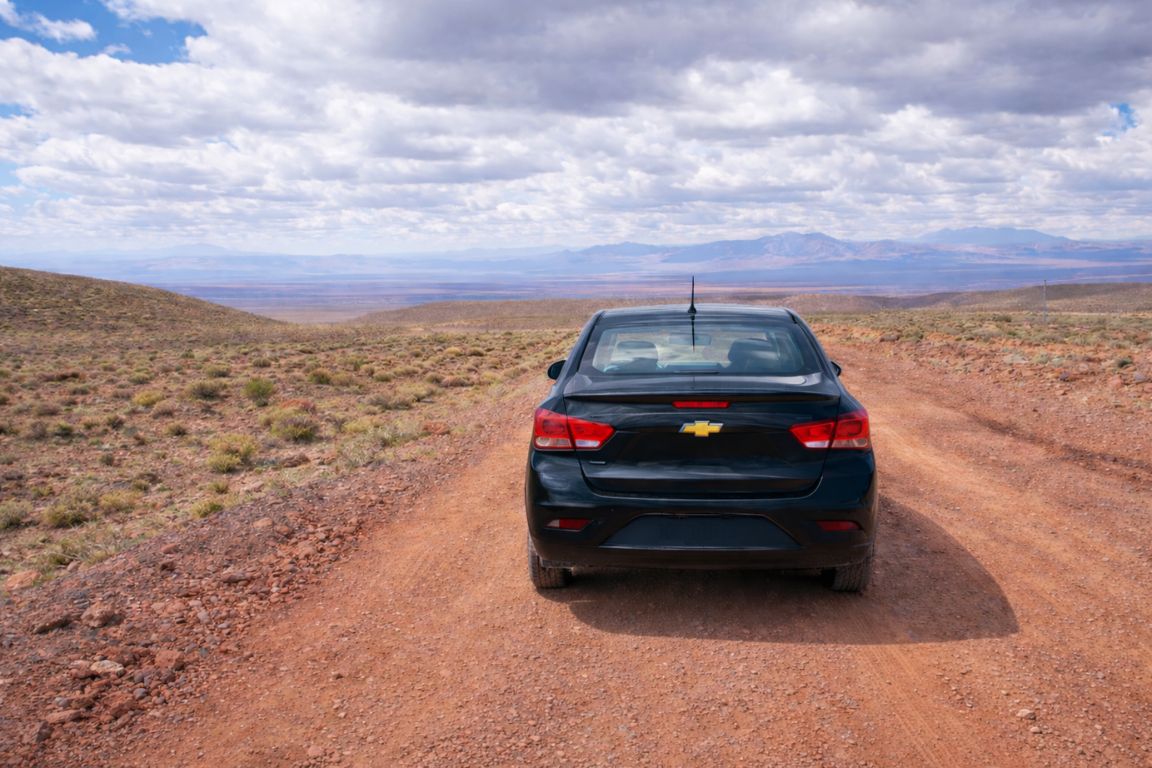
Safety risks significant demonstrate altitude driving being cognitively impaired (2,400m San Pedro = 75% sea-level oxygen affecting judgment, 4,000-4,300m back roads = 62% oxygen creating serious impairment), remote locations having zero cell coverage (30+ minutes from help if breaking down, unable to call for assistance, relying on passing vehicles rare on obscure dirt roads), extreme weather changing rapidly (afternoon storms appearing suddenly, flash floods dangerous in dry riverbeds, temperature drops 20-30°C night creating hypothermia risk if stranded), limited water and supplies dangerous (getting lost adding hours without adequate water, 3-4L daily requirement at altitude, dehydration causing emergency medical issues).
Before renting, understand that safety in San Pedro comes from infrastructure and community – neither of which help you when you’re stuck 40km away on a road that doesn’t appear on any map.
Table: Safety Requirements and Emergency Preparedness DIY Atacama
| Safety Category | Absolute Essentials | Highly Recommended | Nice to Have | Why Critical | What Happens If You Don’t | Cost |
|---|---|---|---|---|---|---|
| Water Supply | 6-8 liters per person minimum | 10+ liters per person | Portable water filter | Altitude dehydration 3-4L daily, getting lost adds hours without access | Severe dehydration, altitude sickness, medical emergency | $10-30 water bottles |
| Emergency Communication | Charged phone + car charger | Satellite communicator (Garmin inReach) | Two-way radio | Cell signal rare beyond San Pedro, breakdown requiring rescue | Unable to call for help, waiting hours/days for passing vehicle | Phone free, satellite $300-400 device + $15-50/month |
| Navigation Backup | Paper maps + compass | Offline GPS (Maps.me downloaded) | Multiple GPS devices | Electronics fail, batteries die, GPS inaccurate | Getting hopelessly lost, wrong turns for hours, missing attractions | $10-20 maps, free app |
| Vehicle Emergency Kit | Spare tire inflated + jack + lug wrench (check rental includes) | Second spare tire + tire repair kit | Portable air compressor | Punctures extremely common dirt roads, remote areas | Stuck if second puncture, $500-2,000 towing if both spares used | Usually included, check |
| First Aid Comprehensive | Basic first aid kit + altitude sickness medication (Diamox) | Advanced first aid + emergency blanket | Full wilderness medical kit | Cuts, burns, altitude sickness common, hospitals 100km+ away | Minor injuries becoming major without treatment, altitude sickness worsening | $30-80 |
| Food/Energy | Energy bars, nuts, dried fruit (2 days supply) | Full meal provisions (3 days) | Camping stove | Getting lost for 6-12 hours without food, low blood sugar at altitude | Weakness, poor judgment, dangerous decisions from hunger | $20-50 |
| Warm Clothing | Fleece, down jacket, hat, gloves | Sleeping bag | Tent | Cold nights 0-10°C, stranded overnight if breakdown | Hypothermia if stuck overnight, cold exposure dangerous | $100-300 if buying, bring from home |
| Tools Basic | Shovel (for sand/mud), tow strap | Hi-lift jack, sand tracks | Full tool kit | Getting stuck sand/mud common, self-recovery possible | Needing expensive rescue for simple stuck, $500-2,000 recovery | $50-150 basic tools |
| Fuel Reserve | Full tank + 10L jerry can | 20L extra fuel | Two 20L cans | Fuel stations rare (only San Pedro, Toconao), wrong turns consuming extra | Running out of fuel remote, expensive fuel delivery $200-500 | $30-50 jerry can + fuel |
| Flashlight/Headlamp | LED flashlight + spare batteries | Headlamp (hands-free) | Multiple lights | Breakdowns may happen night, tire changes requiring light | Changing tire darkness dangerous, increased injury risk | $15-50 |
Water supply critical demonstrates altitude requiring 3-4L daily per person, getting lost adding 2-4 hours = additional 1-2L needed, calculating couple needing 6-8L daily minimum, getting lost requiring 10-12L daily, with dehydration causing severe altitude sickness (headache, nausea, confusion, dangerous judgment), creating essential 10+ liter supply for any substantial dirt road driving.
The satellite communication importance shows cell signal being non-existent beyond 5-10km from San Pedro (Valle Luna having marginal coverage, Cejar zero coverage, Puritama zero, any breakdown being communications blackout), satellite devices like Garmin inReach ($300-400 device, $15-50 monthly subscription) enabling emergency SOS anywhere creating peace of mind, rental agencies sometimes offering satellite phones ($15-25 daily) being worthwhile investment.
Vehicle emergency tools demonstrate dirt roads causing frequent punctures (sharp volcanic rocks, thorny desert plants, rough washboard vibrations weakening tires), rental cars including one spare tire standard though second puncture being catastrophic (stranded until towing arriving, expensive $500-2,000 recovery from remote locations), tire repair kit (plugs and portable compressor) enabling field repairs extending range.
Fuel reserve essential shows San Pedro being only reliable fuel station (Toconao 35km south having small station though sometimes closed), driving Valle Luna + Cejar + Puritama = 100-150km plus wrong turns adding 40-80km = 180-230km total, consuming 18-23 liters (typical 4WD), leaving minimal margin on 60-80L tank, with 10L jerry can providing emergency reserve if wrong turns consuming more than expected or encountering closed fuel stations.
FAQs
Can I visit El Tatio independently by rental car? No – El Tatio requires mandatory guide by Chilean law. Government regulation prohibits individual vehicles, checkpoints turn away unauthorized visitors, and fines are $200-500 for violations. This is strictly enforced following tourist fatalities from falling into boiling pools, getting lost at extreme altitude, and suffering altitude sickness without support. You must book guided tour ($45-60 per person). There are no legal exceptions.
Is 2WD or AWD sufficient for Atacama? No – proper 4WD with high clearance is absolutely essential for any dirt road attractions (Cejar, Puritama, Rainbow Valley). Tourist-grade AWD crossovers (Hyundai Tucson, Kia Sportage) are completely inadequate with insufficient ground clearance (170-185mm vs required 215mm+) and lack true off-road capability. These vehicles get stuck, sustain damage, and void insurance. Valle Luna is possible with 2WD on paved sections only. Rent proper 4WD (Toyota Land Cruiser, Mitsubishi Montero) or don’t attempt dirt roads.
How much does gas/fuel cost and where can I fill up? Fuel costs $1.50-2.00 per liter ($5.70-7.60 per US gallon), expensive by US standards. San Pedro is the primary fuel station (reliable, always open), Toconao 35km south has small station (sometimes closed or limited hours). Expect to spend $100-180 on fuel for a 5-7 day rental driving 400-700km including wrong turns. Always fill up in San Pedro before any dirt road excursions – running out of fuel remotely requires expensive delivery ($200-500).
Will my GPS or Google Maps work in Atacama? GPS is unreliable and Google Maps is inadequate. Dirt roads aren’t shown accurately, coordinates are sometimes wrong by kilometers, and cell signal disappears quickly outside San Pedro. You need multiple navigation methods: offline GPS app (Maps.me), paper maps from San Pedro shops, written turn-by-turn directions from tour operators, and GPS waypoints for key locations. Don’t rely solely on electronics – bring paper backup and expect to get lost despite best efforts.
What happens if I break down or get stuck? Towing and recovery are extremely expensive in remote locations: $500-1,000 for San Pedro-area recovery, $1,000-2,000 from Cejar or Puritama area, potentially $2,000-5,000 from extreme remote locations. Cell phone coverage is non-existent beyond San Pedro, so you can’t call for help. You’ll need to wait for passing vehicles (rare on obscure dirt roads), walk back to main roads (potentially hours), or have satellite communication device (Garmin inReach). Comprehensive insurance covers some costs but has high deductibles.
Is renting a car cheaper than booking guided tours? No for couples, maybe for families 4+. Rental costs $1,000-1,800 for a week (vehicle + insurance + fuel + hidden costs), plus you still must pay for required guided tours for El Tatio ($90-120 couple) and Altiplanic ($120-160 couple) since these are legally restricted. Total: $1,210-2,080. Complete guided tour package costs $400-600 per person ($800-1,200 couple). Rental is 2x more expensive for couples, similar for families of 4 when splitting costs. Add in navigation time wasted (4-6 hours over week) and stress – rental rarely makes financial sense unless you’re group of 5-6 people.
Can I drive to Bolivia (Uyuni) from Atacama? Technically possible but extremely inadvisable and potentially prohibited by rental agreement. Most Chilean rental agencies prohibit crossing into Bolivia (vehicle not insured, different driving regulations, theft risk), with significant fines if discovered. The route is 200km+ of extreme off-road driving at 4,000-5,000m altitude requiring expedition preparation. Border crossing requires specific paperwork, vehicle permits, and potentially guide requirements. Instead, book organized border-crossing tour from San Pedro to Uyuni ($200-350 per person, 3-4 days, all logistics handled).
Glossary
- True 4WD vs AWD: True 4WD (four-wheel-drive) has mechanical transfer case with low-range gearing specifically designed for off-road use (Land Cruiser, Montero, Wrangler), whereas AWD (all-wheel-drive) is electronic system primarily for paved road grip enhancement (Tucson, Santa Fe, crossovers) being inadequate for Atacama dirt roads despite appearing capable; critical distinction affecting off-road capability, vehicle damage risk, and insurance coverage validity.
- CONAF Protected Areas: Chilean National Forest Corporation (Corporación Nacional Forestal) manages protected national reserves including Los Flamencos Reserve containing Laguna Miscanti, Miñiques, Chaxa flamingo areas requiring authorized tour operators with proper permits, individual visitors not receiving permits regardless of vehicle or preparation creating legal barrier versus safety concern for Altiplanic Lagoons access.
- Mandatory Guide Requirement: Chilean government regulation prohibiting independent vehicle access to certain attractions (El Tatio Geysers primary example) requiring professional tour guide accompaniment with checkpoints enforcing compliance, fines $200-500 for violations, established following tourist fatalities and environmental damage from unsupervised visitors creating absolute legal restriction not optional safety recommendation.
- Navigation Waypoints: Precise GPS coordinates (latitude/longitude) for specific destinations and critical route intersections, enabling GPS device guidance even when roads not mapped on standard GPS databases, compiled from online resources and tour operator information, manually entered into GPS unit creating most reliable navigation method for unmarked Atacama dirt roads.
- Comprehensive CDW Insurance: Collision Damage Waiver reducing rental vehicle deductible from standard $1,500-2,000 to reduced $200-500 or zero, critical for Atacama where vehicle damage from rough roads is extremely common (undercarriage scraping, tire punctures, windshield cracks), with basic collision coverage having high deductibles creating significant out-of-pocket costs if damage occurs.
- Hybrid DIY-Guided Approach: Strategic combination renting vehicle for easily accessible attractions manageable independently (Valle Luna multiple visits, town surroundings exploration) while booking professional guided tours for legally restricted areas (El Tatio, Altiplanic) and challenging navigation destinations (Cejar, Puritama, Rainbow Valley), creating optimal balance flexibility benefits without extreme costs, navigation stress, or legal violations.
Key Takeaways
- DIY Atacama touring by rental car provides theoretical independence and flexibility (custom departure timing, pace control, spontaneous itinerary changes, unlimited attraction revisits, multi-day vehicle access enabling creative routing) though being complex, expensive, and severely limited in practical reality with many major restrictions, hidden costs, safety risks, and navigation challenges typically creating questionable value versus straightforward guided tours for most travelers especially couples and first-time visitors.
- Rental feasibility heavily dependent on specific attractions with some being independently accessible (Valle de la Luna having well-marked paved approach and clear signage creating easy 2/10 difficulty DIY option ideal for extended sunrise and sunset visits same day, Laguna Tebinquinche being moderately accessible via dirt roads with limited signage requiring 4WD and preparation though feasible with detailed directions, San Pedro town surroundings and nearby villages like Toconao being freely explorable on paved routes), others being technically possible but extremely challenging (Laguna Cejar requiring off-road navigation through multiple unsigned dirt road forks creating 7/10 difficulty with most DIY attempts experiencing 2-3 hour getting-lost frustrations and wrong turns, Puritama Hot Springs following 30km unmarked dirt roads with confusing intersections creating 9/10 difficulty and high failure rates, Rainbow Valley having multiple confusing track forks and challenging navigation), and several being legally restricted or practically impossible (El Tatio Geysers requiring mandatory professional guide by Chilean government law with checkpoints enforcing compliance and $200-500 fines for violations established after tourist fatalities, Altiplanic Lagoons being CONAF protected national reserve areas requiring authorized operator permits not issued to individual visitors, remote Piedras Rojas/Salar de Tara requiring expedition-level extreme off-road expertise with emergency equipment and satellite communication being dangerous without professional guidance).
- Vehicle requirements absolutely non-negotiable show needing proper high-clearance 4WD (not tourist-grade AWD sedan, requiring true four-wheel-drive SUV with low-range transfer case like Toyota Land Cruiser being ideal $150-250 daily, Mitsubishi Montero excellent $120-200 daily, Jeep Wrangler capable though less comfortable $130-220 daily), with inadequate vehicles like Suzuki Vitara tourist-grade 4WD having insufficient 185mm clearance and marginal capability ($70-120 daily being false economy), Hyundai Tucson AWD not being true 4WD at all ($60-100 daily being completely unsuitable), compact sedans being dangerous if attempting dirt roads, creating vehicle selection being critical safety and capability factor.
- Complete rental costs demonstrate surface appearance of cheap transportation ($80-120 base daily rate) being deceptive illusion with mandatory comprehensive insurance $30-45 daily (essential for undercarriage damage, tire punctures, windshield cracks being extremely common rough roads), fuel costs $100-180 week (expensive $1.50-2.00 per liter, 400-700km typical driving plus wrong turns adding 20-40% consumption), GPS rental or offline preparation $50-100, attraction entrance fees $40-100 depending on destinations, emergency contingency reserve $200-500 (breakdown towing $500-2,000 remote locations, fines $200-500 restricted areas, unexpected costs), creating realistic total $1,000-1,800 seven-day rental transportation alone, with hidden costs including navigation time wasted 4-6 hours cumulative over week (wrong turns, getting lost, asking directions consuming precious vacation time), stress and anxiety (constant worry about navigation, restricted areas, vehicle damage, safety creating mental exhaustion), missing educational value (no professional guide explanations about geology, archaeology, ecology, wildlife, history making experiences purely visual without intellectual depth), inability to access major attractions (El Tatio and Altiplanic being absolutely prohibited requiring booking separate guided tours $210-320 couple anyway), creating double-cost scenario paying both rental unused those days plus required guided tours.
- Cost comparison reality check demonstrates rental appearing cheaper superficially ($1,000-1,500 transportation) versus guided tours ($400-650 essential package per person) though complete accounting showing rental $1,000-1,800 plus required guided El Tatio and Altiplanic tours $210-320 couple = $1,210-2,120 total versus complete guided package $400-650 per person = $800-1,300 couple being actually cheaper, more efficient, stress-free, educational, and comprehensive, with rental only making financial sense for larger groups 4-6 people enabling cost distribution ($1,400 rental / 5 people = $280 per person becoming competitive with $400-650 guided individual pricing though still requiring prohibited-attraction guided additions).
- Major advantages limited demonstrate being real but modest: unlimited flexibility visiting Valle Luna sunrise and sunset same day enabling different light quality and extended photography time (impossible with single afternoon guided tour), independence from rigid group schedules (no brutal 4am El Tatio wake if choosing to skip and do other activities, no waiting for slow tour members at stops, controlling exact timing and duration each location), cost efficiency specifically for groups 4+ people (single $1,400 rental serving family of 4 = $350 per person versus $800-1,280 family guided tour costs though advantage disappearing when adding required guided tours), ability discovering lesser-known spots (driving random unmarked dirt roads finding quiet viewpoints, exploring at own pace without tour pressure, spontaneous detours following curiosity), multi-day convenience (vehicle parked at accommodation available all days versus coordinating daily tour operator pickups and timing), and creative attraction combinations (visiting Valle Luna then Puritama same day, flexible routing between destinations).
- Major disadvantages substantial demonstrate being severe and unavoidable: navigation extremely challenging (minimal road signage, GPS often wildly inaccurate, dirt road forks unsigned, wrong turns adding 1-3 hours per excursion, getting lost being common frustrating dangerous experience, paper maps and detailed waypoints essential but still inadequate), missing professional educational content (no guide explanations about geological formations, archaeological significance, ecological relationships, wildlife behaviors, historical context reducing experiences to pure sightseeing versus deep learning), altitude driving risks (2,400m San Pedro = 75% sea-level oxygen, 4,000-4,300m back roads = 62% oxygen causing cognitive impairment affecting judgment and reaction time, extreme fatigue making driving dangerous, altitude sickness affecting motor skills), breakdown and emergency exposure (remote locations without cell coverage, limited roadside assistance, expensive recovery towing $500-2,000 if stuck or breaking down, emergency medical evacuation being extremely expensive $5,000-15,000 if severe altitude sickness or accident), legal restrictions excluding major attractions (El Tatio absolute prohibition, Altiplanic protected areas, some salt flat interior prohibited flamingo habitat, attempting without authorization creating $200-1,000 fines plus potential vehicle impound), hidden costs accumulating (fuel expensive, parking fees some attractions, wrong turns wasting fuel adding 20-40% consumption, potential fines restricted areas, emergency assistance costs if needed, navigation delays consuming vacation time having implicit value), and safety considerations harsh environment (extreme altitude without support system, weather changes rapidly, limited water and food supplies if delayed by getting lost, communication blackout zones unable calling for help, solo responsibility for all decisions and problems).
- Realistic hybrid DIY-guided itinerary optimal demonstrates balanced approach: Day 1 arrival rest and altitude acclimatization, Day 2 self-drive Valle Luna full day visiting sunrise 8:30am-12pm and sunset 5-8pm maximizing rental flexibility and extended time impossible with tours, Day 3 mandatory guided El Tatio tour 4am-12pm (legally required, accepting restriction and paying $45-60 per person), Day 4 mandatory guided Altiplanic Lagoons 7am-6pm (protected area requiring professional operator, paying $60-80 per person), Day 5 challenging self-drive Laguna Tebinquinche and Cejar attempts with detailed directions and GPS waypoints though accepting possible frustration getting lost, Day 6 difficult self-drive Puritama Hot Springs with comprehensive route information or alternative complete rest day if exhausted from navigation stress, creating strategic combination DIY for accessible straightforward attractions while accepting professional guided necessity for restricted challenging areas.
- Best DIY candidates limited demonstrate being: experienced off-road 4WD drivers with proven capability (previous Baja Mexico, African safari, Australian outback driving managing unmarked routes and rough terrain without guidance), those comfortable navigating without signage using paper maps, compass, and waypoint coordinates (orienteering skills, map reading proficiency, comfort with uncertainty), travelers with previous Atacama visit already knowing geography (having done guided tours prior trip creating familiarity, now wanting flexibility revisiting favorite extended time), Spanish speakers able asking directions from locals (critical when GPS fails, locals being helpful though requiring conversational Spanish capability), groups 4-6 people distributing costs ($1,400 / 5 = $280 per person becoming competitive with guided $400-650 per person pricing), travelers with unlimited flexible time tolerating navigation delays (not stressed by getting lost 2-3 hours viewing as adventure rather than frustration, able spending full days exploring without efficiency pressure), photographers requiring absolute flexibility (returning locations multiple times for perfect light conditions, extended composition time single spot, creative freedom without tour group schedule constraints), and those genuinely prioritizing absolute independence over cost efficiency, educational depth, safety support, and stress-free relaxation (adventure-oriented mindset valuing control and challenge over guided convenience).
- Poor DIY candidates numerous demonstrate being vast majority: first-time Atacama visitors unfamiliar with geography (getting lost wasting precious limited vacation days, navigation difficulty dramatically underestimated creating frustration, stress overshadowing enjoyment ruining trip memories), inexperienced off-road drivers never operating 4WD vehicles (uncomfortable rough roads, inadequate recovery skills if getting stuck, vehicle damage from inexperience, endangering personal safety and damaging expensive rental), solo travelers or couples on moderate budgets (rental full cost $1,210-2,120 being 2-3x more expensive than guided tours $400-650 per person creating terrible value proposition, financial stress not justified by modest flexibility benefits), time-constrained visitors with 5-7 day trips (unable tolerating navigation delays consuming entire days, efficiency being critical making every hour count, getting lost creating itinerary collapse), non-Spanish speakers unable communicating with locals (stuck when GPS fails with zero backup communication method, increased isolation risk and getting-lost probability), altitude-inexperienced individuals never above 2,000m altitude (driving at 2,400-4,300m causing cognitive impairment judgment and reaction time affected, dangerous when navigating challenging unmarked roads requiring quick decisions), and those wanting comprehensive educational experience (self-drive providing beautiful scenery without intellectual context understanding, missing professional guide expertise about geology, ecology, archaeology, wildlife behaviors creating shallow superficial versus deep meaningful experience).
- For the days a rental cannot enter, book the El Tatio Geysers Experience and the Piedras Rojas, Altiplanic Lagoons & Chaxa Full-Day Experience. If you drop the rental entirely, the 4-day San Pedro itinerary covers those restricted days plus the valleys you could have self-driven.
Written by experienced Atacama travel specialist with comprehensive knowledge of DIY rental car feasibility and limitations, vehicle capability requirements for Atacama off-road conditions, navigation challenges and techniques for unmarked desert routes, legal restrictions and CONAF protected area regulations, cost realities including hidden expenses and double-payment scenarios, safety considerations altitude driving and remote emergency exposure, optimal hybrid strategies combining DIY flexibility with necessary professional guidance, honest assessment preventing tourists making expensive dangerous mistakes renting inadequate vehicles or underestimating navigation difficulty, and practical realistic expectations enabling informed decision-making matching personal driving experience, budget parameters, time constraints, and attraction priorities with appropriate guided versus independent approach creating safe successful sustainable Atacama exploration. Date: December 29, 2025.
Give Your Experience A Date
Start with this recommendation, or use the selector above to find the option that fits your plans.
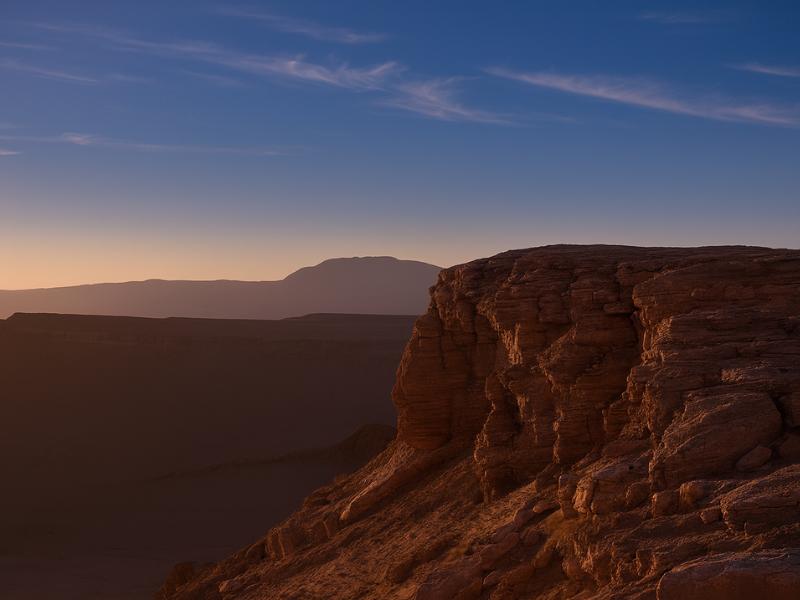
Atacama: 4 Tours In 3 Days
Spend your planning time on the rest of the trip. This package brings four outings into a three-day schedule, with accommodation pickup and a bilingual guide.
Entrance charges vary; accommodation is not included.
Book on GetYourGuideSee The 3-Day Tour Plan ↗