Astronomy in Atacama Desert: Complete Stargazing Guide 2026-2027
Atacama Desert stargazing delivers 300+ clear nights, Bortle-1 skies, and epic Milky Way views. Compare $50–$90 tours, ALMA & Paranal visits, and the best months to go.
Last updated: May 13, 2026
TL;DR
Atacama Desert ranks as world’s premier stargazing destination with 300+ clear nights annually, zero light pollution (Bortle 1 dark sky), 2,400m altitude reducing atmospheric interference, and exceptionally dry air (<1% humidity) creating perfect astronomical conditions. Tourist astronomy tours cost $50-90 for 2-3 hour experiences including telescope viewing, expert guides, and laser pointer constellation tours at facilities like SPACE Observatory, Atacama Lodge, or Ahlarkapin. Professional observatories ALMA (Chajnantor 5,000m, free tours weekends), ESO Paranal (2,635m, Saturday tours), and La Silla (2,400m) offer behind-scenes looks at cutting-edge astronomy though requiring advance booking 2-4 weeks. Visible celestial objects include Southern Cross, Magellanic Clouds (satellite galaxies visible naked eye), Milky Way galactic center appearing overhead, Jupiter and Saturn with moons visible through telescopes, Omega Centauri globular cluster, Tarantula Nebula, and 47 Tucanae. Best months are April-November with peak June-August winter offering clearest skies, coldest nights (-5°C to -10°C optimal telescope conditions), and overhead Milky Way position. DIY stargazing works from Valle de la Luna, Salar de Atacama, or desert roads though tours provide superior telescope equipment (8-14 inch apertures $2,000-10,000+ professional grade) and expert interpretation impossible for amateurs. New moon periods (±5 days) essential for optimal viewing avoiding lunar brightness washing out faint objects. Bring warm layers for -10°C to -15°C nighttime temperatures even summer, plus red flashlight preserving night vision.
Choose What You Want From The Night
Choose what you want and the time you can give it. The result explains the trade-off before you open the booking page.
Why Is Atacama Desert the World’s Best Stargazing Location?
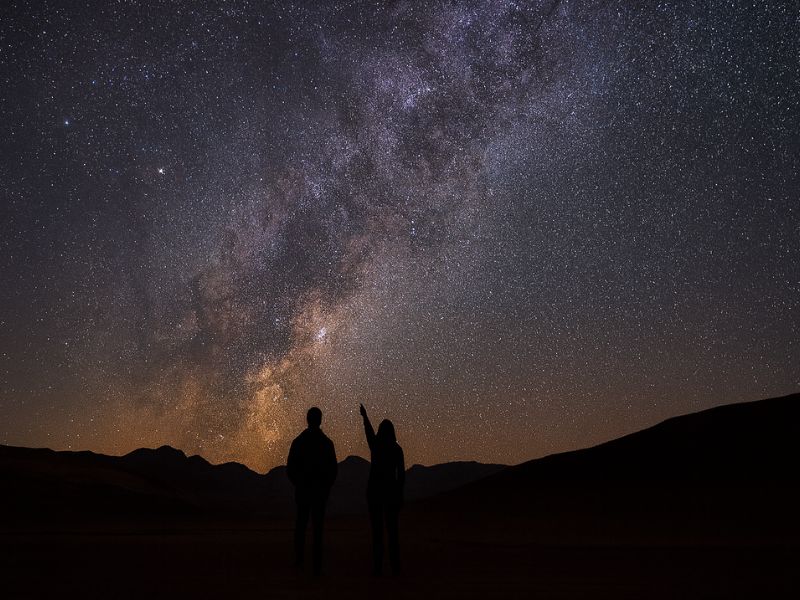
Atacama Desert concentrates 60% of global astronomy infrastructure with ALMA, ESO Paranal, La Silla, and Las Campanas observatories choosing this location for unmatched atmospheric conditions.
Three hundred-plus clear nights annually (330 typical year) provide 82-90% cloud-free probability versus 200-250 nights average astronomy sites globally creating 30-40% more observing opportunities.
Extreme aridity under 1% relative humidity eliminates water vapor absorption distorting infrared and submillimeter wavelengths essential for modern astronomy versus 30-60% humidity typical locations.
High altitude 2,400m San Pedro base (5,000m observatory sites) reduces atmospheric thickness 25-40% compared to sea-level observations improving image clarity and reducing light scattering.
Table: Atacama vs Other World-Class Astronomy Destinations
| Location | Clear Nights/Year | Humidity | Altitude | Light Pollution (Bortle) | Infrastructure | Tourist Access | Why Atacama Wins |
|---|---|---|---|---|---|---|---|
| Atacama Desert, Chile | 300-330 | <1% | 2,400-5,000m | 1 (pristine) | ALMA, Paranal, La Silla (world-leading) | Excellent tours $50-90 | Best combination all factors |
| Mauna Kea, Hawaii | 250-280 | 10-20% | 4,200m | 1-2 | Major observatories | Limited public access | Lower clear nights, higher humidity |
| La Palma, Canary Islands | 280-300 | 20-40% | 2,400m | 1-2 | Excellent observatories | Good tours €40-70 | Higher humidity, fewer clear nights |
| Namibia (NamibRand) | 280-310 | 5-15% | 1,200-1,400m | 1 | Limited | Good tours $60-100 | Lower altitude, less infrastructure |
| Arizona (Kitt Peak) | 240-270 | 20-40% | 2,100m | 2-3 | Good observatories | Moderate access | Fewer clear nights, light pollution |
| Australian Outback | 260-290 | 10-30% | 300-800m | 1-2 | Growing | Scattered tours | Lower altitude, variable humidity |
| Aoraki Mackenzie, NZ | 240-270 | 30-50% | 700-1,000m | 1-2 | Limited | Good tours NZ$80-120 | Higher humidity, lower altitude |
Atacama’s 330 clear nights translate to 82-90% probability any given night being cloud-free versus 66-77% La Palma or 66-74% Mauna Kea creating substantially higher success rates.
The humidity advantage shows <1% Atacama versus 10-20% Mauna Kea or 20-40% La Palma enabling infrared and submillimeter observations impossible in more humid locations.
Altitude combined with aridity creates atmospheric transparency 40-60% superior to sea-level desert sites like Namibia despite similar low humidity conditions.
Light pollution Bortle 1 classification represents pristine dark sky with zero artificial light visible, matched only by most remote global locations though Atacama adding superior infrastructure.
The observatory concentration shows 70+ professional telescopes operating Atacama region versus 13 Mauna Kea, 17 La Palma, creating unmatched density of astronomical capability.
Tourist accessibility advantage combines world-class conditions with developed tour infrastructure ($50-90 professional experiences) versus limited access Mauna Kea or scattered Australian options.
Southern hemisphere positioning provides views of Magellanic Clouds, galactic center overhead, Southern Cross, and celestial objects invisible Northern hemisphere observers.
The professional validation shows astronomers voting with billion-dollar investments choosing Atacama over competing sites based on measurable atmospheric superiority.
Climate stability creates predictable conditions enabling year-round operations versus seasonal limitations affecting higher-latitude or monsoon-influenced locations.
Book world-class Atacama astronomy experiences with Atacama Chile Tours where we connect visitors with premier stargazing opportunities.
What Astronomy Tours Are Available in Atacama Desert?
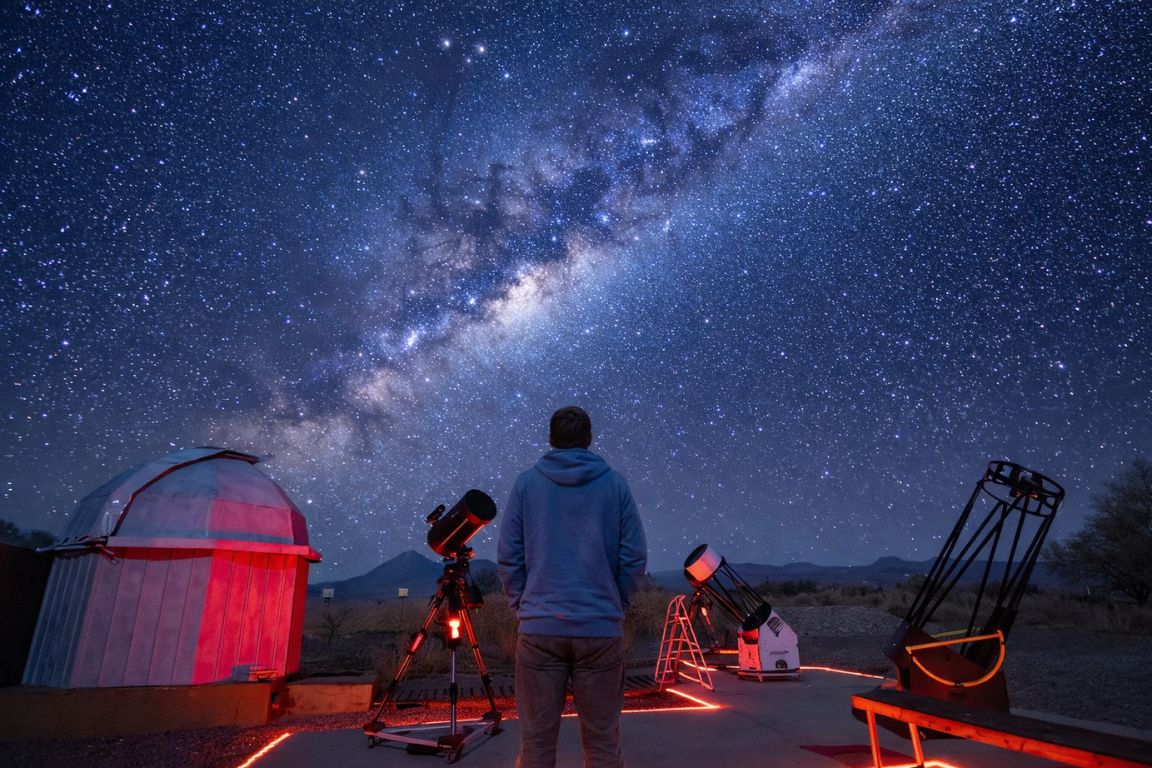
SPACE Observatory operates nightly tours ($65-80, 2-3 hours) featuring 16-inch telescope, astrophotography, and bilingual guides explaining Southern hemisphere constellations from Valle de la Luna location.
Atacama Lodge astronomy program ($50-70, included for guests) provides multiple telescope sizes, laser constellation tours, and intimate small-group experiences (maximum 15 people).
Ahlarkapin Stargazing tours ($70-90, 2.5 hours) emphasize indigenous Atacameño astronomy connecting Western science with traditional sky knowledge from dark desert location.
ALMA Observatory free weekend tours (Saturdays, advance booking required 2-4 weeks) showcase world’s most advanced radio telescope array though not nighttime stargazing.
Table: Atacama Astronomy Tour Options Comparison
| Tour Operator | Cost | Duration | Location | Telescopes | Group Size | Language | What’s Included | Best For | Booking Lead Time |
|---|---|---|---|---|---|---|---|---|---|
| SPACE Observatory | $65-80 | 2-3 hrs | Valle de la Luna area | 16-inch primary + smaller | 20-30 | English, Spanish | Transport, telescopes, photos, hot drinks | Serious stargazers, photography | 2-3 days |
| Atacama Lodge | $50-70 (guests included) | 2 hrs | Lodge property | Multiple 8-12 inch | 10-15 | English, Spanish | Telescopes, laser tour, expertise | Lodge guests, intimacy | Same day usually |
| Ahlarkapin | $70-90 | 2.5 hrs | Remote desert | 12-14 inch + smaller | 12-20 | English, Spanish | Cultural astronomy, transport, telescopes | Cultural connection | 3-5 days peak |
| San Pedro Observatorio | $60-75 | 2-2.5 hrs | San Pedro outskirts | 10-12 inch | 15-25 | English, Spanish, others | Standard tour, hot drinks | Budget option | 1-2 days |
| Private Hotel Tours | $80-120 | 1.5-2 hrs | Various hotel properties | 6-10 inch typically | Small groups | Multiple | Convenience, hotel pickup | Convenience | Usually same day |
| DIY (no tour) | Free | Unlimited | Anywhere dark | Your own or none | Solo/group | N/A | Complete freedom | Experienced amateurs, budget | N/A |
SPACE Observatory advantages show largest tourist-accessible telescope (16-inch aperture, $15,000-20,000 equipment value) capturing fainter objects invisible smaller scopes plus astrophotography capabilities.
Atacama Lodge intimacy provides smaller groups (10-15 maximum) enabling extended telescope time per person and detailed question-answering versus rushed larger commercial tours.
Ahlarkapin cultural integration teaches traditional Atacameño astronomical knowledge showing how indigenous peoples navigated, tracked seasons, and interpreted cosmos before Western astronomy.
The cost-value assessment shows $65-80 providing 2-3 hours expert-guided experience with $20,000+ telescope equipment impossible to replicate DIY under $5,000-10,000 personal investment.
Professional guide expertise explains what you’re observing with Jupiter appearing as bright dot unaided becoming four Galilean moons visible plus cloud bands through telescope with interpretation.
Transportation inclusion eliminates DIY vehicle rental ($50-100 daily) and dark-sky location research, with tours accessing optimal sites (Bortle 1 zones) 15-30km from San Pedro.
The telescope advantage shows commercial 12-16 inch apertures collecting 150-250x more light than naked eye enabling Omega Centauri globular cluster, Tarantula Nebula, and distant galaxies invisible unaided.
Small group benefit at Atacama Lodge or Ahlarkapin provides 5-10 minutes telescope time per person versus 1-2 minutes rushed commercial tours with 30+ participants.
Language flexibility shows English-Spanish bilingual guides standard with some offering German, French, Portuguese accommodating international Atacama visitors.
What Can You See Through Atacama Telescopes?
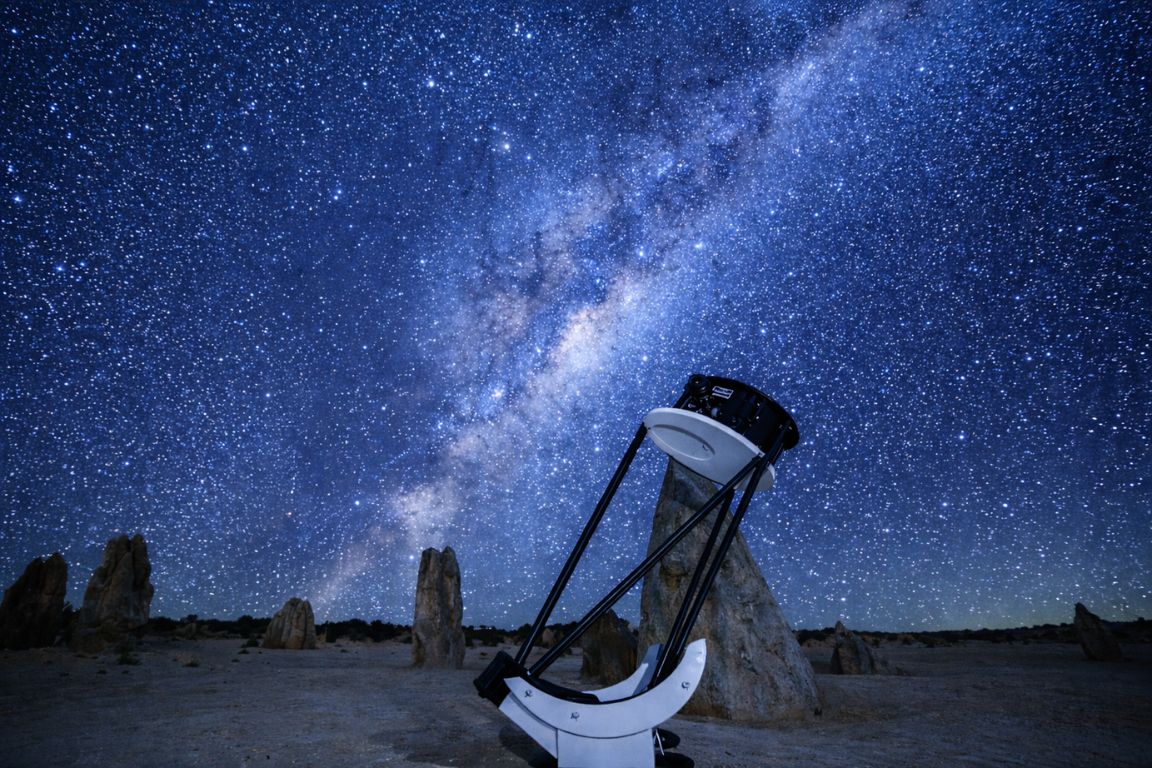
Magellanic Clouds (Large and Small) appear as fuzzy patches naked eye becoming resolved star fields through telescopes, being satellite galaxies orbiting Milky Way visible only Southern hemisphere.
Milky Way galactic center positioned overhead June-August shows dense star clouds, dark nebulae, and galactic structure impossible from Northern hemisphere perspectives where it sits near horizon.
Jupiter reveals four Galilean moons (Io, Europa, Ganymede, Callisto) plus atmospheric cloud bands through 8-inch+ telescopes, with Great Red Spot visible during appropriate rotation.
Saturn displays iconic ring system through even 6-inch telescopes with 12-inch+ scopes resolving Cassini Division gap and moon Titan visible as bright nearby point.
Table: Observable Celestial Objects from Atacama by Season
| Object Type | Naked Eye | Binoculars (10×50) | 8-inch Telescope | 14-inch Telescope | Best Months | Difficulty | Why Worth Viewing |
|---|---|---|---|---|---|---|---|
| Magellanic Clouds | Fuzzy patches | Resolved stars beginning | Clear star clusters | Individual nebulae | Year-round | Easy | Satellite galaxies, Southern hemisphere exclusive |
| Southern Cross | 5 bright stars | Clear pattern | Not needed | Not needed | Year-round | Very Easy | Navigation, iconic constellation |
| Milky Way Core | Bright band overhead | Dense star clouds | Spectacular detail | Incredible resolution | Jun-Aug peak | Easy | Galactic center, dark nebulae |
| Omega Centauri | Fuzzy star | Dense ball | Resolved stars edges | Fully resolved | Apr-Sep | Moderate | Brightest globular cluster |
| 47 Tucanae | Barely visible | Nice cluster | Well resolved | Spectacular | Year-round | Moderate | Second brightest globular |
| Tarantula Nebula | In LMC | Distinct nebula | Detailed structure | Incredible detail | Year-round | Moderate | Active star formation region |
| Jupiter + Moons | Bright dot | 4 moons visible | Cloud bands, moons | Great detail bands | Varies (check position) | Easy-Moderate | Major planet, moons |
| Saturn + Rings | Yellowish dot | Oval shape hint | Clear rings | Cassini Division, Titan | Varies | Moderate | Most spectacular planet view |
| Mars | Red dot | Red disk | Polar ice caps (opposition) | Surface features | Opposition years | Hard | Color, occasional surface detail |
| Orion Nebula | Fuzzy “star” | Clear nebula | Spectacular detail | Incredible structure | Dec-Mar | Easy | Closest major star factory |
| Eta Carinae Nebula | Naked eye nebula | Beautiful structure | Incredible detail | Stunning | Year-round | Easy | Massive star formation, unique |
| Centaurus A Galaxy | Not visible | Barely visible | Clear structure | Dust lane detail | Apr-Sep | Hard | Active galaxy, jets |
Magellanic Cloud advantage shows naked-eye visibility unique to Southern hemisphere with Large Magellanic Cloud (LMC) spanning 10 degrees (20 full moons width) and Small Magellanic Cloud (SMC) 4 degrees.
The Milky Way positioning creates June-August overhead galactic center views impossible Northern hemisphere where it remains near southern horizon obscured by atmospheric thickness and light pollution.
Omega Centauri globular cluster appears as fuzzy 4th magnitude “star” naked eye becoming incredible ball of 10 million stars through 14-inch telescope showing color variations and dense core.
Jupiter observation timing varies with opposition (closest approach) occurring different months different years, requiring checking current position though visible 9-10 months annually.
Saturn ring visibility shows maximum tilt 2025-2026 creating spectacular views versus edge-on 2024-2025 when rings nearly invisible due to viewing geometry.
The Tarantula Nebula in Large Magellanic Cloud represents most active star-forming region visible from Earth, spanning 1,000 light-years across being larger and brighter than Orion Nebula.
Eta Carinae Nebula unique Southern hemisphere object shows massive unstable star (100+ solar masses) expected to explode as supernova within next 100,000 years astronomical timescale.
Mars observation challenges show surface features visible only during opposition (every 2 years) when closest to Earth, otherwise appearing as small reddish disk.
The 47 Tucanae globular cluster positioned near Small Magellanic Cloud creates spectacular naked-eye pairing of foreground Milky Way cluster (13,000 light-years) with background SMC galaxy (200,000 light-years).
Telescope aperture progression shows 8-inch revealing faint objects and detail, 12-inch adding substantial light gathering for fainter targets, 14-16-inch professional tour scopes capturing objects impossible smaller equipment.
What Each Booking Adds
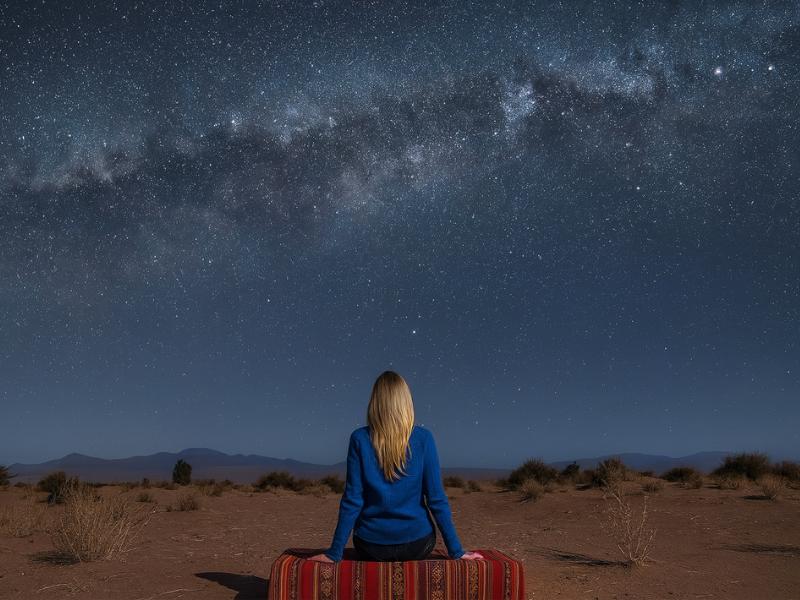
The Roofless Stargazing Experience
Make the sky part of your trip: telescope observation, an astronomy talk and a professional photo to take home.
Hot drinks and blankets provided. Dress warmly; pickup coverage is limited.
Book on ViatorChoose My Stargazing Night ↗Stargazing From A San Pedro Meeting Point
Meet in town for a guided night-sky outing with telescope use, photographs, blankets and hot drinks. Choose the English stargazing option for an English-led session.
About 2.5 hours. Not for children under 4 or travelers over 80. Sky targets depend on conditions.
Book on GetYourGuideBook My Telescope Evening ↗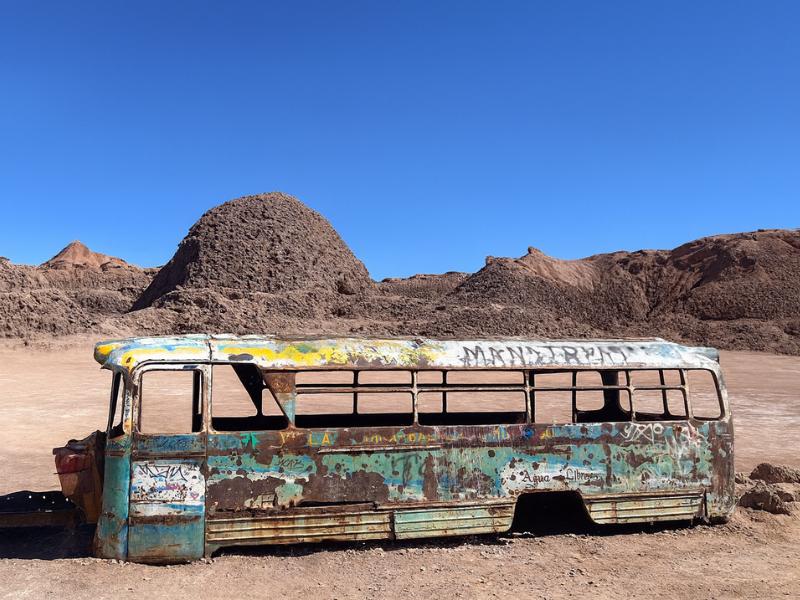
Vallecito And Magic Bus
Give your camera a different desert subject: Vallecito and the Magic Bus. The outing includes snacks, with pickup offered within the operator’s coverage.
Meeting point available outside the pickup area.
Book on ViatorSee The Magic Bus Outing ↗When Is the Best Time for Atacama Stargazing?
April through November provides optimal stargazing with peak June-August winter offering coldest nights (-5°C to -10°C), clearest atmospheric conditions, and Milky Way galactic center positioned overhead.
New moon periods (±5 days dark moon phase) prove essential for optimal viewing with moonlight washing out faint objects and reducing Milky Way visibility dramatically.
Winter June-August delivers coldest driest air creating sharpest telescope images and maximum atmospheric transparency though requiring warmest clothing for -10°C to -15°C nighttime temperatures.
Summer December-February works though warmer nights create thermal turbulence reducing image sharpness and afternoon convection clouds occasionally persisting evening hours.
The best time to visit Atacama desert affects more than just weather – winter can bring occasional flash floods to dry riverbeds, and rental car drivers won’t have guides’ local knowledge about which roads to avoid.
Table: Atacama Stargazing Seasonal Conditions
| Season/Month | Temperature Night | Sky Clarity | Milky Way Position | Cloud Probability | Tourist Crowds | Best For | Challenges |
|---|---|---|---|---|---|---|---|
| Summer (Dec-Feb) | 5°C to 10°C | Good | Southern sky, lower | 5-10% clouds | Very High | Comfortable temps, families | Thermal turbulence, some clouds |
| Autumn (Mar-May) | 0°C to 5°C | Excellent | Rising position | 2-5% clouds | High | Transitional beauty, good conditions | Cooling rapidly |
| Winter (Jun-Aug) | -5°C to -10°C | Outstanding | Overhead galactic center | 0-3% clouds | Medium-High | Absolute best conditions | Extreme cold, warmest gear needed |
| Spring (Sep-Nov) | 0°C to 5°C | Excellent | Descending position | 3-5% clouds | Medium | Good conditions, warming | Variable temperatures |
| New Moon ±5 days | Varies by season | Enhanced 30-40% | N/A | N/A | Smart stargazers | Faintest objects, Milky Way | Must plan around lunar cycle |
| Full Moon ±5 days | Varies | Severely degraded | N/A | N/A | Uninformed tourists | Bright objects only | Avoid for serious stargazing |
Winter cold advantage creates atmospheric stability with -10°C nighttime temperatures eliminating thermal turbulence that blurs planetary detail during warmer seasons.
The clarity progression shows winter achieving 0-3% cloud probability versus 2-5% autumn/spring and 5-10% summer, though all remaining exceptional compared to global standards.
Milky Way positioning overhead June-August enables viewing galactic center, Sagittarius region, and densest star clouds at zenith (directly overhead) minimizing atmospheric distortion.
New moon timing absolutely critical shows moonlight reducing visible stars 70-80% and washing out Milky Way completely, with planning stargazing trips around dark moon phases.
Summer trade-offs include comfortable 5-10°C temperatures requiring lighter clothing versus winter -10°C to -15°C demanding extreme layers, though summer thermal turbulence reducing planetary image quality.
The crowd consideration shows June-August medium-high tourists versus December-February very high (summer vacation), though stargazing tours typically maintaining availability unlike daytime excursions.
Afternoon convection clouds summer occasionally persist into evening (5-10% probability) versus winter near-zero cloud formation creating more reliable conditions.
Planning strategy involves checking lunar calendar ensuring visit coincides with new moon ±5 days window, with full moon ruining faint object and Milky Way viewing.
The atmospheric transparency measurement shows winter visibility enabling 14th magnitude objects versus 13th magnitude summer, representing ~60% more light-gathering capability optimal conditions.
Where Are the Best DIY Stargazing Locations in Atacama?
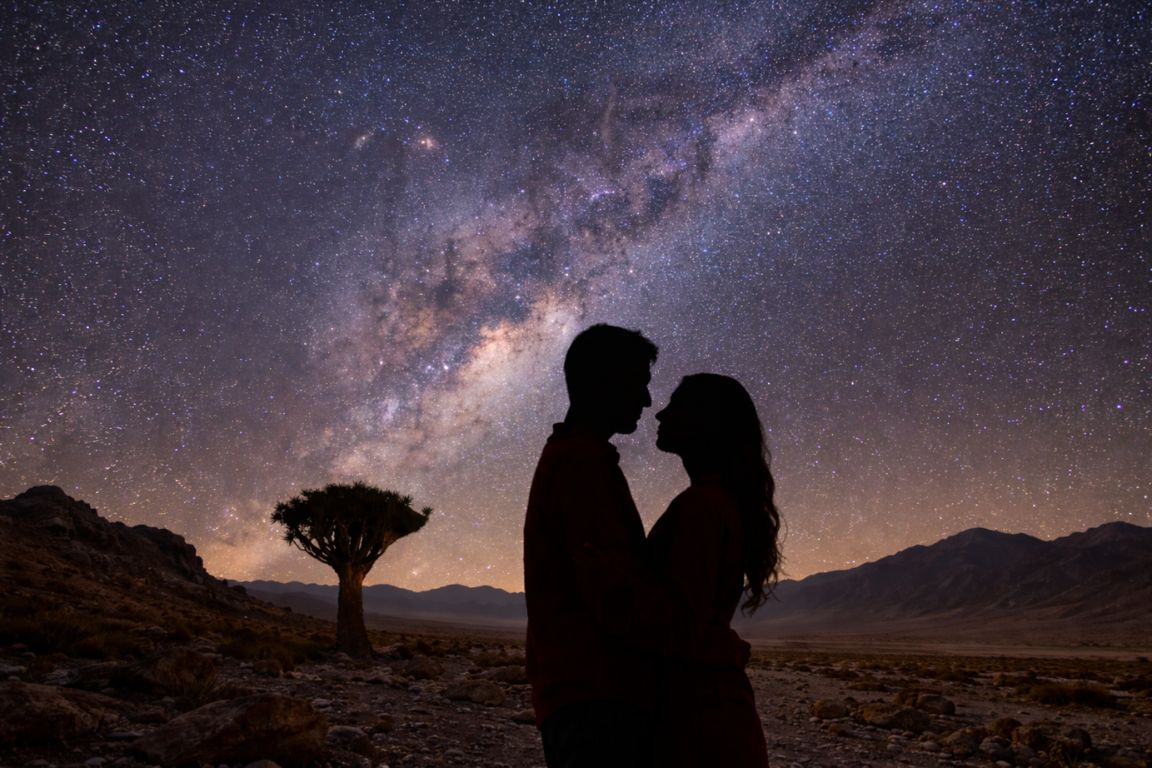
Valle de la Luna dirt roads 10-15km from San Pedro provide Bortle 1-2 dark skies with foreground rock formations creating photographic interest though requiring vehicle access.
Salar de Atacama eastern edge near Toconao offers completely flat salt flats creating unobstructed 360-degree horizon views with zero light pollution though exposed to wind.
Route 23 toward El Tatio anywhere 20-30km from San Pedro delivers pristine dark skies with pulloffs enabling safe parking though isolated requiring emergency preparedness.
Laguna Cejar area after hours (tours end 7-8pm) provides excellent dark-sky access near San Pedro though technically requiring tour access during day for legitimate entry.
Table: DIY Atacama Stargazing Locations
| Location | Distance from San Pedro | Bortle Scale | Access Difficulty | Safety | Facilities | Best For | Coordinates | What to Watch |
|---|---|---|---|---|---|---|---|---|
| Valle de la Luna Roads | 10-15km | 1-2 | Easy (paved then dirt) | Good (some traffic) | None | Photography with foreground | -22.9167°S, -68.2833°W area | Park safely off road |
| Salar de Atacama East | 25-35km | 1 | Moderate (dirt roads) | Moderate (isolated) | None | 360° views, flat horizon | -23.2°S, -68.1°W area | Wind exposure, no shelter |
| Route 23 (El Tatio Road) | 20-40km | 1 | Easy (paved) | Good (occasional traffic) | None | Pristine dark sky, accessible | Various pulloffs | Cold at altitude, traffic |
| Laguna Cejar Area | 18km | 1-2 | Moderate (after-hours) | Good | None after hours | Near town, good sky | -23.0833°S, -68.2°W | May require day tour entry |
| Talabre Village Area | 40km | 1 | Moderate (dirt roads) | Moderate (isolated) | Basic in village | Remote, authentic | -23.3°S, -67.9°W | Very isolated, preparation |
| San Pedro Outskirts North | 3-5km | 2-3 | Very Easy (walk/drive) | Excellent | Town nearby | Convenience, beginners | Various spots | Some light pollution |
Valle de la Luna advantage combines Bortle 1-2 exceptional darkness with dramatic rock formations providing foreground interest for astrophotography compositions.
The Salar de Atacama flatness creates unobstructed horizon enabling horizon-to-zenith Milky Way photos and meteor shower observations without terrain blocking low-angle events.
Route 23 accessibility shows paved road to El Tatio passing through pristine dark zones with multiple pulloff opportunities enabling stargazing without difficult dirt road navigation.
Safety considerations vary with Valle de la Luna seeing some tour traffic providing safety net versus Salar east or Talabre being genuinely isolated requiring emergency preparedness.
The Bortle 1 classification means zero artificial light visible naked eye with Milky Way showing rich detail, zodiacal light visible, and airglow bands apparent to adapted vision.
Light pollution from San Pedro creates Bortle 2-3 within 5km requiring 10km+ distance achieving pristine Bortle 1 conditions for serious astrophotography or faint object viewing.
Wind exposure at Salar locations creates equipment stability challenges requiring weighted tripods and wind protection versus sheltered Valle de la Luna reducing wind issues.
Cell service limitation shows remote locations lacking mobile coverage necessitating informing others of exact GPS coordinates and expected return time for safety.
The altitude factor places all locations at 2,400-2,500m elevation contributing to dry clear air though potentially causing mild altitude symptoms requiring acclimatization.
What Professional Observatories Can Atacama Visitors Tour?
ALMA Observatory (Atacama Large Millimeter Array) offers free Saturday tours (booking required 2-4 weeks ahead) showcasing 66 radio telescopes at 5,000m Chajnantor Plateau studying cosmic origins.
ESO Paranal Observatory provides Saturday tours (advance booking 2-4 weeks, free) featuring Very Large Telescope (VLT) four 8.2-meter units representing cutting-edge optical astronomy.
La Silla Observatory (2,400m) operates occasional Saturday tours (booking required) showing ESO’s older facility housing multiple telescopes including famous 3.6-meter telescope discovering exoplanets.
Las Campanas Observatory (Magellan Telescopes) offers limited public access with advance arrangement showcasing twin 6.5-meter telescopes though tours less regular than ALMA/Paranal.
Table: Professional Atacama Observatory Tours
| Observatory | Operator | Location | Altitude | Tour Days | Cost | Booking Lead | Duration | What You See | Age Restrictions | Languages |
|---|---|---|---|---|---|---|---|---|---|---|
| ALMA | ESO/NAOJ/NRAO | Chajnantor Plateau | 5,000m | Saturdays only | Free | 2-4 weeks required | 4-5 hours | 66 radio telescopes, visitor center, operations center | 12+ (altitude) | English, Spanish |
| ESO Paranal | ESO | Cerro Paranal | 2,635m | Saturdays 2x monthly | Free | 2-4 weeks required | 3-4 hours | VLT four 8.2m telescopes, control room | 16+ typically | English, Spanish, German |
| La Silla | ESO | La Silla mountain | 2,400m | Limited Saturdays | Free | 2-4 weeks | 3-4 hours | Historic telescopes, 3.6m exoplanet hunter | 16+ | English, Spanish |
| Las Campanas | Carnegie | Las Campanas | 2,300m | By arrangement | Free | 4-8 weeks | 2-3 hours | Magellan 6.5m twins | 16+ | English primarily |
ALMA uniqueness shows radio telescope array studying millimeter/submillimeter wavelengths invisible to optical telescopes, revealing cold gas and dust forming stars and planets.
The altitude challenge at ALMA 5,000m Chajnantor requires good health with tours refusing participants with heart conditions, severe hypertension, or poor altitude acclimatization history.
Paranal VLT sophistication demonstrates cutting-edge adaptive optics correcting atmospheric turbulence in real-time creating sharper images than theoretically possible without technology.
Booking requirement 2-4 weeks ahead for ALMA and Paranal reflects limited Saturday tour capacity (50-100 people maximum) and high demand from international astronomy enthusiasts.
The free access advantage provides behind-scenes looks at billion-dollar facilities operating at forefront of astronomical research without commercial tour costs.
Educational value shows professional astronomers explaining current research projects, telescope technology, and cosmic discoveries made using these world-leading instruments.
Tour timing Saturday-only reflects operational schedules with weeknights reserved for actual observing runs using telescopes for scientific research programs.
Age restrictions at Paranal (16+) and ALMA (12+) stem from altitude concerns, tour length endurance, and technical content comprehension requirements.
Photography policies vary with ALMA allowing photos of external telescopes though prohibiting control room images versus Paranal allowing most areas subject to guide instructions.
The Las Campanas Magellan telescopes discovered numerous exoplanets and distant supernovae including evidence supporting universal expansion acceleration (Nobel Prize 2011).
How Does Atacama Astronomy Photography Work?
Milky Way photography requires camera with manual controls, wide-angle lens 14-24mm f/2.8, sturdy tripod, 15-25 second exposures at ISO 3200-6400 capturing galactic detail and foreground landscape.
Star trail photography uses longer exposures 30+ minutes or stacked images creating circular motion trails around celestial poles showing Earth’s rotation.
Deep-sky astrophotography demands tracking mounts following sky rotation enabling multi-minute exposures resolving nebulae, galaxies, and star clusters though requiring $500-2,000+ specialized equipment.
Telescope photography involves eyepiece adapters ($30-100) connecting smartphones to telescopes capturing Moon, planets, and bright objects though requiring steady hands or specialized mounts.
Table: Atacama Astronomy Photography Guide
| Subject | Camera Requirements | Lens | Settings | Tripod | Special Equipment | Difficulty | Post-Processing | Best Season | Expected Results |
|---|---|---|---|---|---|---|---|---|---|
| Milky Way Landscape | Manual controls, full-frame or APS-C | 14-24mm f/2.8 | 15-25s, f/2.8, ISO 3200-6400 | Essential sturdy | None | Moderate | Lightroom/Photoshop | Jun-Aug (overhead) | Stunning wide-field |
| Star Trails | Any with manual | Any lens | 30min+ or stacked | Essential | Intervalometer optional | Easy-Moderate | StarStaX stacking | Year-round | Circular trails |
| Milky Way Panorama | Same as landscape | 24-50mm | Same | Essential | Panorama head helpful | Moderate-Hard | PTGui or similar | Jun-Aug | Ultra-wide vista |
| Deep Sky (tracking) | Same | 50-200mm | Minutes per frame | Essential | Star tracker $400-2,000 | Hard | PixInsight, DSS | Clear nights, new moon | Nebulae, galaxies detail |
| Planets | Any with manual | 200mm+ or telescope | 1/60-1/250s, ISO 400-1600 | Essential | Tracking mount ideal | Moderate-Hard | Stacking software | Check planet position | Surface detail |
| Moon | Any camera | 200mm+ | 1/125-1/500s, ISO 100-400 | Helpful | Tracking helpful | Easy-Moderate | Minimal | Any phase except new | Craters, detail |
| Constellations | Manual | 24-50mm f/2.8 | 15-30s, f/2.8, ISO 1600-3200 | Essential | None | Easy | Minimal | Year-round | Clean constellation shots |
| Smartphone Snapshots | Latest phones (night mode) | Built-in wide | Night mode automatic | Helpful | Adapter for telescope | Very Easy | Phone native | Bright objects only | Decent Milky Way, okay |
Milky Way photography settings show 15-25 second exposures at f/2.8 and ISO 3200-6400 creating proper exposure capturing rich galactic detail without star trailing.
The 500 rule (500 ÷ focal length mm = max seconds) provides rough guideline preventing star trails with 14mm lens allowing 35 seconds theoretical though 15-20 seconds producing sharper results.
Star tracker advantage enables multi-minute exposures following sky rotation revealing faint nebulae and galaxies invisible single 20-second frames though adding $400-2,000 equipment cost.
Foreground integration shows f/2.8 wide apertures creating slight foreground blur requiring focus stacking (multiple focal distances combined) for maximum depth of field landscape-to-stars sharpness.
The smartphone capability with latest iPhone/Samsung night modes capturing adequate Milky Way snapshots (though inferior to DSLR/mirrorless) making astronomy photography accessible without $2,000+ camera investments.
Planet photography challenges show Mars, Jupiter, Saturn requiring 200mm+ focal lengths or telescope adapters plus video capture with frame stacking processing revealing surface detail.
Post-processing importance shows RAW files enabling white balance adjustment, highlight recovery, shadow lifting, and noise reduction creating publication-quality results impossible JPEG shooting.
Battery drain from cold requires 3-4 spare batteries for all-night shooting with -10°C temperatures reducing capacity 50-70% versus room temperature performance.
Red flashlight essential preserves night vision adaptation (30+ minutes full adaptation) versus white light destroying adaptation instantly requiring re-adaptation before seeing faint objects.
Beyond the typical what to pack for Atacama desert essentials, rental car drivers need genuine emergency gear – you’re not getting rescued quickly if you’re stuck on an unnamed dirt road 40km from anywhere.
What Are Atacama Stargazing Tour Costs and Value?
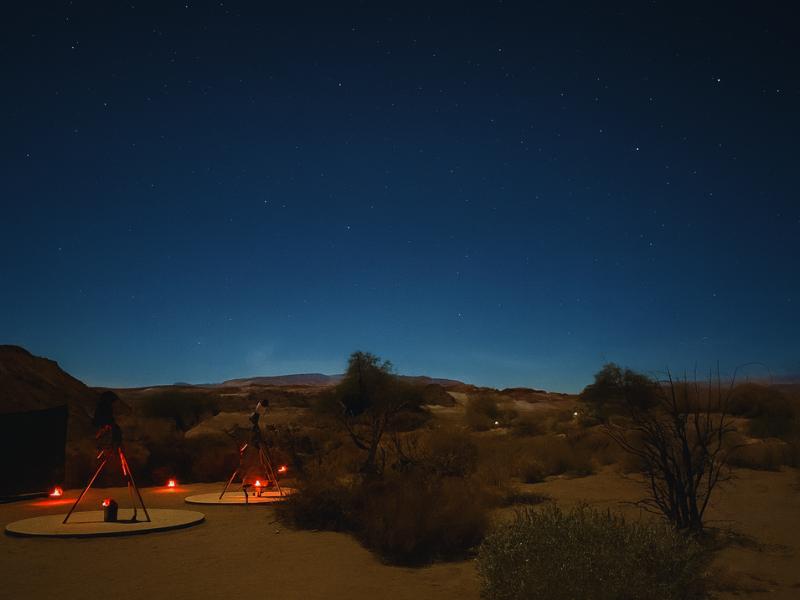
Standard astronomy tours cost $50-90 per person for 2-3 hour experiences providing telescope viewing, expert guides, transportation, and hot drinks creating $25-45 per hour value.
Private astronomy tours range $200-400 for 2-6 people enabling customized schedules, extended telescope time, and personalized instruction though requiring group cost sharing for value.
Observatory tours (ALMA, Paranal, La Silla) operate free though requiring 2-4 week advance booking and occurring Saturday-only with limited availability.
DIY stargazing (book tour here) costs zero equipment rental though lacking telescope access ($5,000-20,000 equivalent gear), expert interpretation, and convenient transportation worth $50-70 versus tour pricing.
Our guide trip costs and budgeting in Atacama shows realistic daily costs across categories – and rental cars consistently emerge as the worst value proposition compared to every other expense.
Table: Atacama Astronomy Cost-Value Analysis
| Option | Cost | Duration | Included | Group Size | Telescope Size/Quality | Expert Guide | Transport | Value Rating | Best For |
|---|---|---|---|---|---|---|---|---|---|
| Standard Commercial Tour | $50-90 | 2-3 hrs | Telescopes, guide, transport, drinks | 12-30 | 10-16 inch ($10,000-20,000) | Bilingual astronomy expert | Included | Excellent | Most visitors |
| Premium Small Group | $80-120 | 2.5-3 hrs | Same + extended time | 8-15 | 12-16 inch | Expert astronomer | Included | Very Good | Enthusiasts, photographers |
| Private Tour | $200-400 total | 2-4 hrs flexible | Customized experience | 2-6 people | Varies | Dedicated guide | Included | Good (if 4-6 people) | Groups, families, custom needs |
| Hotel Included Tour | $50-70 or included | 1.5-2 hrs | Hotel guests, telescopes | 10-20 | 6-12 inch typically | Hotel astronomer | Walkable from room | Excellent (if staying there) | Hotel guests, convenience |
| Professional Observatory Free Tours | Free | 3-5 hrs | World-class facilities, education | 50-100 | View billion-$ equipment | Professional staff | Self-drive 70-100km | Outstanding (if can book) | Space enthusiasts, education |
| DIY Stargazing | Free | Unlimited | Complete freedom | Solo or group | None (or your own) | None | Self-drive $50-100/day | Fair (without equipment) | Experienced amateurs, budget |
| DIY with Rented Equipment | $100-200 equipment + car | Unlimited | Your schedule | Solo or group | Consumer 6-8 inch | None | Self-drive | Poor (better to take tour) | Not recommended |
Standard tour value shows $50-90 providing 2-3 hours with $15,000+ telescope impossible to replicate independently under $5,000-10,000 equipment investment plus years learning to use effectively.
The per-hour calculation reveals $25-45/hour including all equipment, expertise, and logistics comparing favorably against DIY equipment rental ($100-200) and vehicle costs ($50-100).
Professional observatory free tours deliver extraordinary value showing billion-dollar ALMA or VLT facilities though requiring advance booking flexibility and Saturday-only availability.
Private tour economics improve dramatically with 4-6 people splitting $300-400 becoming $50-100 each while gaining customized pacing and extended telescope access.
The included hotel tours at Atacama Lodge, Alto Atacama, Explora provide exceptional value for guests already paying $200-800+ nightly accommodations getting professional astronomy without additional cost.
DIY equipment rental rarely makes sense with $100-200 telescope rental (if even available) plus $50-100 vehicle rental equaling tour costs while lacking expertise and convenience.
Telescope aperture progression shows 6-inch consumer scopes (adequate) versus 10-12 inch tour scopes (very good) versus 14-16 inch premium tours (excellent) collecting 2.5-7x more light revealing fainter objects.
The guide expertise value shows explaining what you observe transforming Jupiter from bright dot into planet with visible moons, atmospheric bands, and Great Red Spot with context impossible solo viewing.
Photography assistance on tours includes helping with camera settings, positioning, and technique worth $50-100 standalone photography lesson integrated into stargazing experience.
Book exceptional-value Atacama astronomy tours at Atacama Chile Tours where we connect visitors with world-class stargazing experiences.
Choose A Date For Your Outing
The Roofless Stargazing Experience
Select your date and party on Viator for the current price and departure options.
Choose My Stargazing Night ↗FAQs
Why is Atacama Desert the best place for astronomy?
Atacama combines 300+ clear nights annually (82-90% probability), <1% humidity (driest on Earth), 2,400-5,000m altitude reducing atmospheric interference, and Bortle 1 zero light pollution creating unmatched observing conditions.
How much do Atacama astronomy tours cost?
Standard tours cost $50-90 per person for 2-3 hours including professional telescopes (10-16 inch), expert guides, transportation, and viewing of planets, nebulae, galaxies, and Magellanic Clouds.
Can you see the Milky Way in Atacama?
Yes, spectacularly. Milky Way galactic center appears overhead June-August with exceptional detail showing dark nebulae, star clouds, and structure impossible from Northern hemisphere or light-polluted areas.
What is the best month for stargazing in Atacama?
June-August winter offers optimal conditions with coldest nights creating atmospheric stability, clearest skies (0-3% clouds), and Milky Way core positioned overhead, though requiring warmest clothing for -10°C to -15°C.
Do you need a tour for Atacama stargazing?
Not required though highly recommended. Tours provide $15,000+ professional telescopes, expert interpretation transforming dots into planets with moons, and convenient access to dark-sky locations versus DIY requiring $5,000-10,000 equipment investment.
What can you see through Atacama telescopes?
Magellanic Clouds (satellite galaxies), Jupiter’s four moons and cloud bands, Saturn’s rings and Cassini Division, Milky Way galactic center, Omega Centauri globular cluster, Tarantula Nebula, and countless deep-sky objects.
How to Plan Your Atacama Astronomy Experience
Book astronomy tours 2-3 days advance during shoulder seasons or 3-5 days peak June-August though same-day availability often existing except weekend peak periods.
Check lunar calendar ensuring visit coincides with new moon ±5 days window maximizing Milky Way and faint object visibility avoiding full moon washing out detail.
Plan 2-3 nights stargazing attempts allowing weather buffer with 90%+ probability at least one exceptional viewing night over multi-night stays.
Reserve professional observatory tours (ALMA, Paranal) 2-4 weeks minimum ahead with Saturday-only availability and limited capacity requiring advance planning.
Bring warm layers with down jacket, thermal base layers, hat, and gloves essential for -10°C to -15°C nighttime temperatures regardless of warm daytime conditions.
Pack camera equipment from home including wide-angle f/2.8 lens, sturdy tripod, and 3-4 spare batteries if planning astrophotography versus relying on limited local rental options.
Download offline star chart apps (SkySafari, Stellarium) for constellation identification and learning celestial navigation enhancing understanding without requiring internet connectivity.
Consider DIY stargazing locations Valle de la Luna or Salar de Atacama areas if experienced though commercial tours providing superior telescope access and expert interpretation.
For world-class Atacama astronomy experiences and expert stargazing tours, book at Atacama Chile Tours where we connect visitors with pristine Southern hemisphere skies.
Glossary
- Bortle Scale: Dark sky classification from 1 (pristine) to 9 (city center), with Atacama achieving Bortle 1 in remote areas meaning zero artificial light pollution.
- Magellanic Clouds: Large and Small Magellanic Clouds, satellite galaxies orbiting Milky Way visible as fuzzy patches naked eye from Southern hemisphere.
- Seeing: Atmospheric stability measurement affecting telescope image sharpness, with excellent seeing <1 arcsecond versus poor seeing >2 arcseconds from thermal turbulence.
- Galactic Center: Dense core of Milky Way galaxy in Sagittarius constellation appearing overhead June-August from Atacama enabling spectacular viewing impossible Northern hemisphere.
- New Moon: Lunar phase with Moon between Earth-Sun showing dark side, creating optimal stargazing conditions without moonlight washing out faint objects.
Key Takeaways
- Atacama Desert ranks world’s premier stargazing destination with 300+ clear nights annually (82-90% probability), <1% humidity driest on Earth, 2,400-5,000m altitude, and Bortle 1 zero light pollution creating unmatched conditions.
- Astronomy tours cost $50-90 for 2-3 hours including 10-16 inch professional telescopes ($10,000-20,000 value), expert bilingual guides, transportation, and viewing planets, nebulae, galaxies, Magellanic Clouds. Operators: SPACE Observatory $65-80 (16-inch telescope, Valle de la Luna), Atacama Lodge $50-70 (guests included, intimate groups), Ahlarkapin $70-90 (cultural astronomy).
- Professional observatories: ALMA free Saturday tours (5,000m, 66 radio telescopes, booking 2-4 weeks), ESO Paranal free Saturday tours (VLT four 8.2m telescopes, 2-4 weeks booking), La Silla occasional tours.
- Visible objects: Magellanic Clouds satellite galaxies naked eye, Milky Way galactic center overhead June-August, Jupiter four moons plus cloud bands, Saturn rings and Cassini Division, Omega Centauri brightest globular cluster, Tarantula Nebula, 47 Tucanae.
- Best months June-August winter (-5°C to -10°C nights, 0-3% clouds, Milky Way overhead, sharpest seeing), April-November all excellent, December-February good though warmer creating thermal turbulence. New moon ±5 days essential for faint objects with full moon washing out Milky Way 70-80%.
- DIY locations: Valle de la Luna roads 10-15km (Bortle 1-2, foreground rocks), Salar de Atacama east 25-35km (Bortle 1, flat 360° views), Route 23 toward El Tatio 20-40km (Bortle 1, accessible paved road). P
- hotography: camera with manual controls, 14-24mm f/2.8 wide-angle, sturdy tripod, 15-25 second exposures, ISO 3200-6400, spare batteries 3-4 minimum (cold drains 50-70%).
- Essential gear: down jacket for -10°C to -15°C nights, warm hat, gloves, thermal layers, red flashlight preserving night vision. Tour value: $50-90 providing $15,000+ telescope access and expert interpretation impossible DIY under $5,000-10,000 investment plus years learning.
- Atacama advantages over competitors: 330 clear nights vs 250-280 Mauna Kea, <1% humidity vs 10-40% elsewhere, Bortle 1 pristine vs Bortle 2-3 competitors.
- Southern hemisphere exclusive views: Magellanic Clouds, galactic center overhead, Southern Cross, objects invisible Northern hemisphere. Book exceptional Atacama astronomy experiences at Atacama Chile Tours.
Written by experienced Atacama Desert astronomy guide specializing in celestial navigation, astrophotography, and connecting visitors with Southern hemisphere’s most spectacular night skies. Date: December 29, 2025.
Make It Part Of Your Trip
Roofless combines telescope observation with an astronomy talk and professional photo.
The Roofless Stargazing Experience
Make the sky part of your trip: telescope observation, an astronomy talk and a professional photo to take home.
Choose My Stargazing Night ↗