ALMA Observatory vs a Stargazing Tour: What Is the Difference?
Travellers book an ALMA visit expecting to look through a giant telescope at Saturn. They arrive in daylight, at a support facility, to see antennas that collect radio waves. It is a fascinating morning, and it is not stargazing.
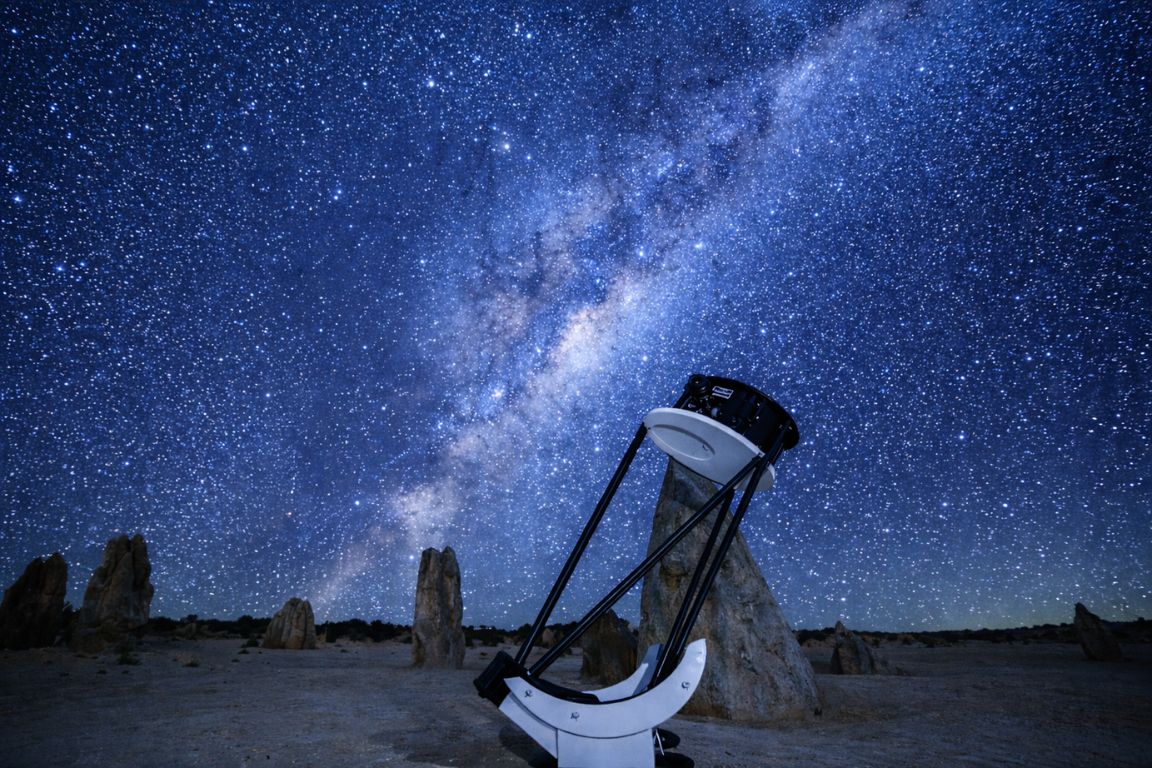
What is the difference between ALMA and a stargazing tour?
ALMA is a professional radio observatory that runs free daytime visits to its support base, where you see engineering rather than stars and never look through an eyepiece. A commercial stargazing tour is a night-time excursion with optical telescopes, a guide, and views of planets, star clusters and the Milky Way. They share a desert and nothing else.
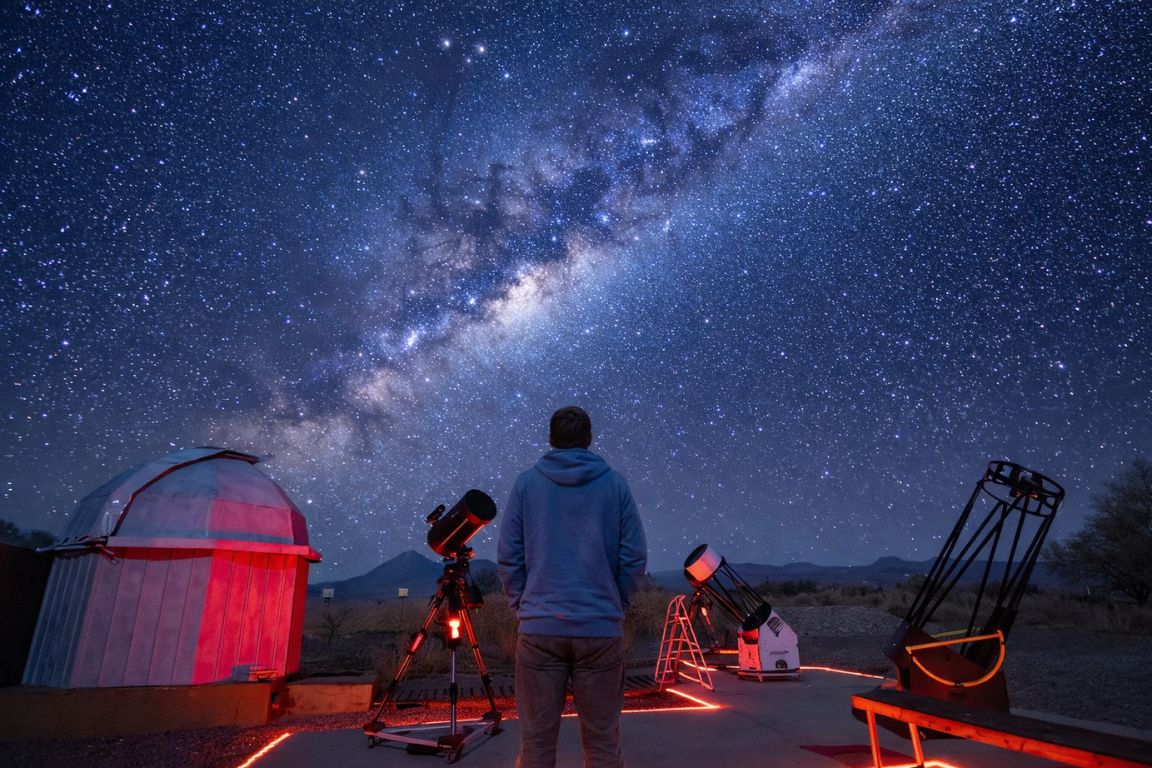
This is one of the most persistent mix-ups in Atacama trip planning. The word observatory does a lot of misleading work. In popular usage it means a dome with a big lens that people queue up to peer through. ALMA is not that. It is an array of dish antennas that detect millimetre and submillimetre radio waves, feeding data into computers, with no eyepiece anywhere in the system.
Both are worth doing, and they answer entirely different questions. ALMA answers "how does frontier astronomy actually work?" A stargazing tour answers "what does the southern sky look like from one of the darkest places on Earth?" Book one expecting the other and you will be disappointed by something genuinely excellent.
| ALMA public visit | Commercial stargazing tour | |
|---|---|---|
| Time of day | Daytime, weekend mornings | Night, after full darkness |
| What you look through | Nothing. No eyepiece exists | Optical telescopes, plus naked-eye guiding |
| What you see | Antennas, control room, technical facilities | Planets, star clusters, nebulae, the Milky Way |
| Altitude visited | The support facility, roughly 2,900 m | Sites near San Pedro, roughly 2,400 to 2,600 m |
| Cost | Free, when the programme runs | Listed from $35 to $65 in our catalogue |
| Booking | In advance through the observatory itself | Through tour operators, including this site |
| Typical duration | Around half a day including transport | 2 to 3 hours |
| Runs every day? | No, weekends only and subject to suspension | Most nights, reduced around the full moon |
To be explicit about our position: this site sells stargazing tours. We do not sell ALMA access and nobody can, because the observatory's public programme is free and booked directly with them. If ALMA is what you want, the section below tells you how to go about it and then sends you to their site, not ours.
Book The Astronomy Experience You Mean
Choose what you want and the time you can give it. The result explains the trade-off before you open the booking page.
What exactly is ALMA?
ALMA is the Atacama Large Millimeter/submillimeter Array, a radio telescope made of dozens of movable antennas spread across the Chajnantor plateau at about 5,000 m. It is operated by an international partnership involving European, North American and East Asian organisations in cooperation with Chile, and it studies cold gas and dust where stars and planets form.
The antennas work together as a single instrument. By combining signals from dishes placed kilometres apart, the array behaves like one enormous telescope with resolution no single dish could achieve. Move the antennas closer together and it sees broad structures. Spread them out and it resolves fine detail. Custom transporters shift them across the plateau.
The site was chosen for the same reason the whole region attracts astronomy: extreme dryness. Water vapour in the atmosphere absorbs exactly the wavelengths ALMA is built to detect, so the array needed somewhere both very high and very dry. The Chajnantor plateau, east of San Pedro toward the Bolivian and Argentine borders, is one of the few accessible places on Earth that satisfies both.
| Aspect | Detail |
|---|---|
| Full name | Atacama Large Millimeter/submillimeter Array |
| Type | Radio interferometer, millimetre and submillimetre wavelengths |
| Array site | Chajnantor plateau, about 5,000 m |
| Support base | Operations Support Facility, lower on the mountain, roughly 2,900 m |
| Operated by | An international partnership of European, North American and East Asian partners with Chile |
| What it studies | Cold dust and gas, star-forming regions, protoplanetary discs, distant galaxies |
| Why here | Very high, extraordinarily dry air, minimal water vapour absorption |
| Visible to visitors | The support facility and antennas under maintenance, not the high array site |
You may have seen ALMA's images without knowing it. The array produced the widely reproduced picture of a young star surrounded by concentric rings of dust, gaps carved by forming planets. That is the kind of science this instrument exists for, and no optical telescope on Earth could have taken it.
Why can you not look through ALMA's telescopes?
Because there is nothing to look through. ALMA collects radio waves at millimetre wavelengths, far outside the range human eyes detect. The dishes focus that radiation onto cryogenically cooled receivers, which convert it into digital signals that a supercomputer correlates into images. There is no light path, no lens, and no eyepiece.
The distinction is worth understanding because it explains almost everything else about an ALMA visit. An optical telescope is an eye extension. A radio telescope is closer to an antenna and a very sensitive radio receiver. Its images are constructed rather than viewed, and they emerge hours or days later after processing.
This also explains why ALMA works in daylight. Radio observations do not need darkness the way optical astronomy does. The array runs around the clock, which is another reason visitor access is structured as a daytime facility tour rather than a night-time observing session.
| Radio telescope (ALMA) | Optical telescope (stargazing tour) | |
|---|---|---|
| Detects | Millimetre and submillimetre radio waves | Visible light |
| Human eye can perceive it? | No | Yes |
| Needs darkness? | No, operates day and night | Yes, and prefers no moon |
| Output | Data processed into images later | A live view at the eyepiece |
| Best targets | Cold dust, molecular gas, forming planetary systems | Planets, the Moon, star clusters, bright nebulae |
| Visitor experience | See the machine, hear the science | See the sky yourself |
What does an ALMA visit actually involve?
The observatory has run free public visits on weekend mornings to its Operations Support Facility, the lower base where antennas are maintained and operations are controlled. Visitors are shown the technical buildings, the antenna maintenance area and the control room, with staff explaining the science. Visitors do not go up to the 5,000 m array site.
The reason for that restriction is medical rather than administrative. Working at 5,000 m requires oxygen support and health screening, and staff themselves rotate up for limited periods. Taking members of the public to that altitude in a minibus would be irresponsible, so the visitor programme stops at the support facility, which sits at a much more manageable elevation.
What you get in exchange is a genuinely rare look inside a working frontier observatory: antennas up close in the maintenance yard, an explanation of how interferometry turns dozens of dishes into one telescope, and the operations room where observations are scheduled. For anyone with an interest in how big science is done, it lands hard.
Availability is the catch. The programme has been paused and restarted over the years, places are limited, and it does not run daily. Check current status and booking rules on the ALMA Observatory's own website before you build a trip around it, and treat anything a third party tells you about ALMA access with suspicion.
| Practical point | What to expect |
|---|---|
| Cost | Free, when the visitor programme is running |
| When | Weekend mornings, not every weekend |
| Booking | Required in advance, directly with the observatory, capacity limited |
| Where you go | The Operations Support Facility, not the high array plateau |
| Getting there | The facility sits off the road east of San Pedro toward the border. Arranging your own transport is usually necessary |
| Duration | Roughly half a day including travel |
| Suitability | Adults and older children with an interest in science. Age and health rules may apply |
| What you will not do | Look through a telescope, see stars, visit the 5,000 m site |
The Direct Fit And Useful Alternatives
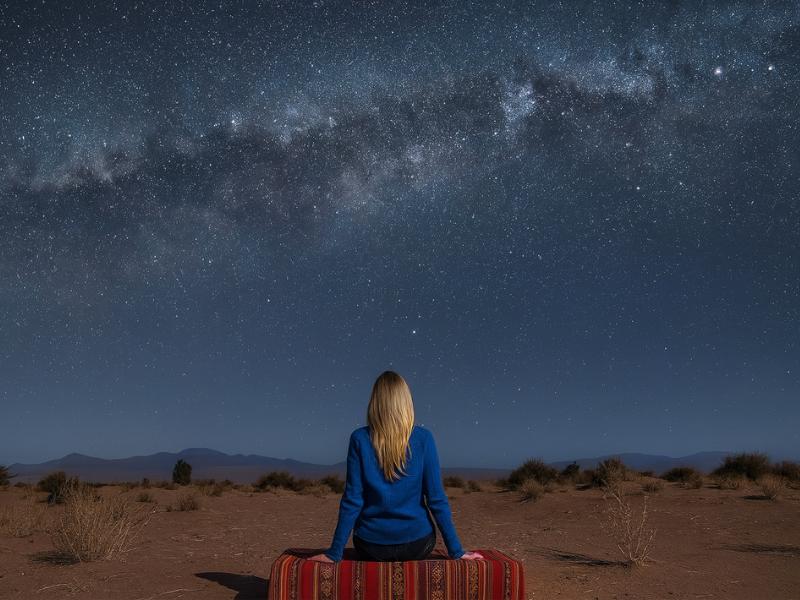
The Roofless Stargazing Experience
Make the sky part of your trip: telescope observation, an astronomy talk and a professional photo to take home.
Hot drinks and blankets provided. Dress warmly; pickup coverage is limited.
Book on ViatorChoose My Stargazing Night ↗Stargazing From A San Pedro Meeting Point
Meet in town for a guided night-sky outing with telescope use, photographs, blankets and hot drinks. Choose the English stargazing option for an English-led session.
About 2.5 hours. Not for children under 4 or travelers over 80. Sky targets depend on conditions.
Book on GetYourGuideBook My Telescope Evening ↗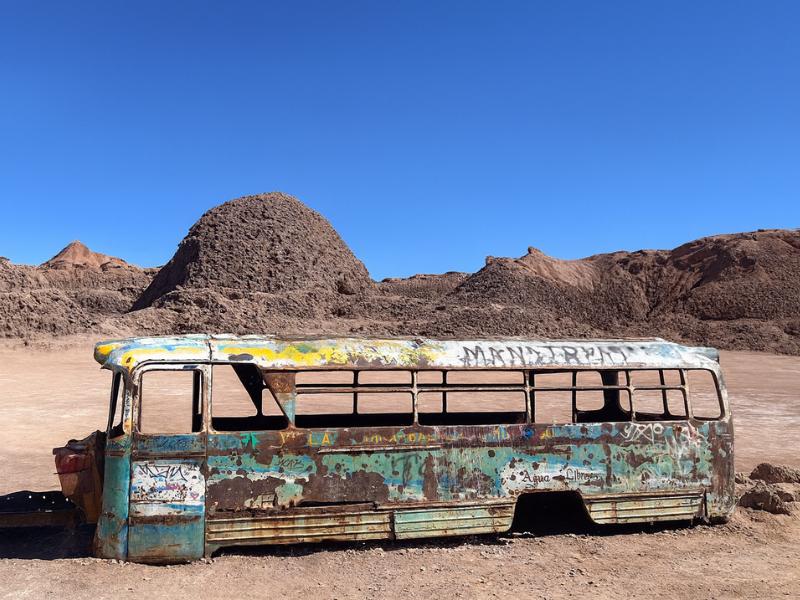
Vallecito And Magic Bus
Give your camera a different desert subject: Vallecito and the Magic Bus. The outing includes snacks, with pickup offered within the operator’s coverage.
Meeting point available outside the pickup area.
Book on ViatorSee The Magic Bus Outing ↗What has ALMA actually found, and why does it matter?
ALMA's speciality is the cold universe: the dust and molecular gas that visible-light telescopes cannot see through. Its best-known results include detailed images of young stars ringed by dusty discs with gaps where planets are forming, maps of complex molecules in space, and observations of extremely distant galaxies caught while they were still assembling.
Understanding what the array is for changes how a visit feels. Without it, you are looking at large white dishes in a maintenance yard. With it, you are looking at the instrument that turned planet formation from a theory sketched on blackboards into something photographed in progress.
The dusty disc images are the ones to know before you go. For decades, astronomers argued about how planets emerge from the debris around newborn stars. ALMA produced pictures of exactly that process: bright rings of dust separated by dark gaps, the gaps swept clean by bodies growing into planets. It looked almost too neat to be real, and it turned out to be common.
The chemistry work is less photogenic and equally significant. At millimetre wavelengths, individual molecules leave distinctive fingerprints, so the array can identify what interstellar clouds are made of. That is how astronomers detect organic molecules in the regions where stars and planetary systems form, which speaks directly to how the ingredients of life get distributed.
| Research area | What ALMA contributes | Why the Atacama site matters |
|---|---|---|
| Planet formation | Direct images of dust discs with gaps carved by forming planets | Fine detail requires antennas spread kilometres apart on a flat, high plateau |
| Astrochemistry | Identifying molecules by their millimetre-wave fingerprints | Dry air lets faint molecular signals through |
| Star-forming regions | Seeing into cold, dense clouds opaque to visible light | Submillimetre wavelengths pass through dust that blocks light |
| Distant early galaxies | Detecting galaxies assembling in the young universe | Extremely faint signals need minimal atmospheric absorption |
| Solar system bodies | Mapping surfaces and atmospheres of planets, moons and comets | The array works day and night, unlike optical astronomy |
None of this happens live in front of visitors. Observations are queued, executed by operators when conditions suit, and processed for weeks afterwards. That is the honest character of an ALMA visit: it is a tour of a machine and an explanation of a method, not a moment of discovery you get to witness.
Can you visit other professional observatories in Chile?
Yes, but not from San Pedro as a day trip. The European Southern Observatory runs visitor programmes at its Paranal and La Silla sites, and other major observatories sit near La Serena in the Coquimbo region. All of them are hundreds of kilometres from San Pedro, in a different part of the country entirely.
This trips people up when they plan a Chilean astronomy trip from a map. The country's observatory sites are spread across a long stretch of the north, and the drive between them is measured in many hours. ALMA is the one whose support facility is genuinely near San Pedro. Everything else is a separate leg of a trip.
The same principle applies to those sites as to ALMA: professional facilities host daytime visits about how the science works, not night-time viewing sessions. The European Southern Observatory's site publishes the current arrangements for its own facilities. If you want to look at stars in Chile, the answer everywhere is a public or commercial observing session, not a research telescope.
| Facility | Region | Reachable from San Pedro? | Type of visit |
|---|---|---|---|
| ALMA support facility | East of San Pedro de Atacama | Yes, half a day | Daytime, free, booked ahead |
| Paranal | Inland from Antofagasta | No, a long separate journey | Daytime weekend visits |
| La Silla | Coquimbo region, inland from La Serena | No, far south of the Atacama | Daytime weekend visits |
| Tourist observatories near San Pedro | Outside town | Yes, most nights | Night-time, telescopes, guided |
What is a commercial stargazing tour in San Pedro actually like?
A vehicle collects you from your hotel after dark and drives 20 to 40 minutes clear of town lights. At the site an astronomer runs a naked-eye tour of the southern constellations, then rotates the group through optical telescopes trained on planets and deep-sky objects. Hot drinks are served, and most operators photograph you under the Milky Way.
Two things make this better here than almost anywhere. The transparency of the air, which means faint objects hold their detail rather than dissolving into haze. And the hemisphere. Northern travellers get their first sight of the Magellanic Clouds, the Southern Cross, the galactic core riding high overhead, and the dark nebulae that indigenous Andean sky traditions read as animal shapes rather than reading the bright stars between them.
Expect real cold. The temperature falls fast after sunset at 2,400 m in dry air, and you will be standing still outdoors for two hours. Operators provide blankets or ponchos and hot drinks, and every one of them still has guests who came in a t-shirt and regretted it. Check what to pack for the Atacama before your first night out.
| Stage of the night | What happens | Roughly how long |
|---|---|---|
| Hotel pickup | Collected in town after dark, time shifts with the season | 15 to 30 minutes |
| Drive to the observing site | Out of town to escape street lighting | 20 to 40 minutes |
| Naked-eye sky tour | Constellations, planets, the Milky Way, laser-guided | 30 to 40 minutes |
| Telescope rotation | Planets, star clusters, nebulae, double stars | 40 to 60 minutes |
| Astrophotography and refreshments | Portrait under the Milky Way, hot drinks, snacks | 20 to 30 minutes |
| Return | Dropped back at your hotel | 20 to 40 minutes |
How do the stargazing tours on this site differ?
Three products sit in our catalogue at different price points. The premium Roofless experience runs three hours with large-aperture telescopes and an expert astronomer. The shorter Roofless adventure is a more intimate two hours with sky storytelling and a photo souvenir. The small-group astronomical adventure is the budget entry at two hours from a remote observing site.
All three include hotel transfers and warm drinks, and all three are subject to the moon and the weather. What separates them is group size, telescope size, and how much of the evening is dedicated to instruction versus atmosphere.
| Tour | Duration | Rating | Bookings | Listed price | Character |
|---|---|---|---|---|---|
| The Roofless Stargazing Experience | 3 hours | 4.9 | 4,565 | From $65 | Premium. Large telescopes, experienced astronomer, gourmet snacks, thermal gear |
| The Roofless Stargazing Adventure | 2 hours | 4.9 | 2,634 | From $45 | Intimate. Storytelling focus, telescope and naked-eye viewing, campfire atmosphere |
| Astronomical Adventure stargazing tour | 2 hours | 4.6 | 1,198 | From $35 | Small group, remote site, guided constellation tour, photo souvenir |
The pattern in those numbers is consistent with what guests report. Longer sessions with bigger instruments rate higher, because the queue at the eyepiece is shorter and the objects hold more detail. If astronomy is a genuine interest rather than a box to tick, the three-hour option is the one to take.
Choose A Date For Your Outing
The Roofless Stargazing Experience
Select your date and party on Viator for the current price and departure options.
Choose My Stargazing Night ↗Which should you choose, ALMA or a stargazing tour?
Choose ALMA if you want to understand how modern astronomy is done and enjoy engineering, and if your dates happen to include a weekend when visits run. Choose a stargazing tour if you want to see the sky. If you have a spare weekend morning and a free evening, do both, because they complement each other rather than competing.
| If you are... | Book | Why |
|---|---|---|
| Fascinated by big science and instruments | ALMA visit | Rare access to a working frontier observatory |
| Hoping to see Saturn's rings yourself | Stargazing tour | ALMA has no eyepiece. Only optical telescopes deliver this |
| Travelling with children who like space | Stargazing tour first | Immediate and visual. ALMA rewards patience and reading |
| An amateur astronomer with your own gear | Both | The sky quality justifies the trip, and ALMA gives professional context |
| Short on time, midweek only | Stargazing tour | ALMA visits fall on weekends and may not run at all |
| Sensitive to altitude | Stargazing tour | Observing sites near town are lower than the ALMA facility |
| On a strict budget | ALMA if the timing works | Free, though you still pay to get there |
One more consideration. ALMA visits depend on a programme run by a research organisation with other priorities, so they can be suspended without much notice. Stargazing tours run most nights year-round. If your trip hinges on one astronomy experience, the reliable choice is the commercial one.
How does altitude affect each option?
The ALMA support facility sits around 2,900 m, roughly 500 m above San Pedro, high enough to notice but manageable for most visitors. Commercial stargazing sites stay close to town at 2,400 to 2,600 m. Neither approaches the array's 5,000 m plateau, which is closed to visitors precisely because of the altitude.
If you are altitude-sensitive, the stargazing tours are the gentler option and can be done on your first or second night in town. The ALMA visit is better placed after a couple of days, though it is far from the hardest thing the region will ask of your body. For comparison, the standard geyser trip goes to about 4,300 m.
| Location | Approximate altitude | Altitude difficulty |
|---|---|---|
| San Pedro de Atacama | 2,400 m | Mild |
| Commercial stargazing sites | 2,400 to 2,600 m | Mild |
| ALMA Operations Support Facility | About 2,900 m | Noticeable, manageable |
| El Tatio geysers, for comparison | About 4,300 m | Significant |
| ALMA array site, Chajnantor plateau | About 5,000 m | Closed to visitors, staff use oxygen |
Our altitude and tour order guide sets out a sensible progression for a whole trip, and both astronomy options fit into it easily on the low-altitude days.
When should you plan your stargazing night?
Aim for the week either side of new moon, when the sky is darkest and faint objects are visible. A full moon floods the sky and most operators reduce or cancel sessions around it. Between roughly December and February, afternoon cloud from the altiplano rains is the other variable that shuts nights down.
Plan a spare evening. Stargazing is the one Atacama experience that weather can cancel outright, and if it is the reason you came, having two possible nights rather than one materially improves your odds. Operators generally reschedule or refund, which is little comfort if you are flying out the next morning.
| Condition | Effect on the night | What to do |
|---|---|---|
| New moon | Darkest skies, faint galaxies and nebulae visible | The window to aim for |
| First or last quarter | Good. The Moon itself is spectacular through a telescope | A strong compromise |
| Full moon | Sky washed out, deep-sky objects lost | Many operators suspend tours |
| Altiplano rains, roughly January to February | Afternoon and evening cloud | Leave a backup night |
| Dry winter months | Very clear, and very cold | Best conditions, pack serious layers |
Seasonal detail is in the best time to visit guide, and our astronomy in the Atacama guide covers which objects are visible at which time of year.
What do we sell, and what do we not?
This site books commercial stargazing tours run by local operators around San Pedro de Atacama. We do not book ALMA visits, sell ALMA tickets, or arrange transport to the observatory. ALMA's public programme is free and organised by the observatory itself, and any third party charging you for access to it is not selling what you think.
We are saying this plainly because the search term that brings most people to this page is ALMA, and the honest answer to that search is a link to the observatory rather than to our checkout. If you came looking for an ALMA visit, go to their site, check whether the programme is running on your dates, and book directly.
What we can do is the other half of the astronomy trip. The sky above San Pedro is the reason ALMA was built where it was, and you can see it yourself the same week, with a telescope and someone who knows what they are pointing at. That is what the tours in this catalogue are.
If you are still assembling the rest of your days, our orientation guide to things to do in San Pedro groups every experience by type, and the honest verdict on whether the Atacama is worth visiting is the page to read if you are not yet committed.
Make It Part Of Your Trip
Roofless is an optical telescope outing, with an astronomy talk and a professional photo listed.
The Roofless Stargazing Experience
Make the sky part of your trip: telescope observation, an astronomy talk and a professional photo to take home.
Choose My Stargazing Night ↗