Is the Atacama Desert Worth Visiting? An Honest Answer
The Atacama is expensive to reach, thin on oxygen, and full of tours that start before dawn. It also has a sky and a set of landscapes that very little else on Earth matches. Whether that trade works depends entirely on who you are.
Is the Atacama Desert worth visiting?
For most travellers who enjoy landscape, geology and night skies, yes, clearly. For travellers who want beaches, cities, easy days or lie-ins, no. The Atacama is a high-effort destination: remote, costly to reach, physically demanding through altitude, and organised around dawn departures. The scenery repays that effort, but only if the effort suits you.
That is the whole answer in one paragraph, and the rest of this guide is the evidence behind it. We sell tours here, so treat that as a declared interest. We would still rather you skipped the Atacama than flew halfway across a continent to be miserable at 4,300 m in the cold, because that traveller writes an honest one-star review and they are right to.
What follows is the case for and against, with the specifics people usually only discover after booking. Getting there. Altitude. The early starts. What actually distinguishes this desert from others. And a straight section on who should not come.
| Question | Honest answer |
|---|---|
| Is the scenery genuinely world-class? | Yes. Salt flats, altiplano lagoons, geysers and a night sky that few places rival |
| Is it easy to reach? | No. A flight to Calama, then roughly 100 km by road, from wherever you started |
| Is it cheap? | No. Remote logistics push tour, food and room prices well above the Chilean average |
| Is it physically demanding? | Moderately. The walking is easy, the altitude is not |
| Can you relax there? | Only if you build in rest days. The standard circuit is a series of dawn starts |
| Is it good for a two-night stop? | Workable but thin. Three nights is the honest minimum |
Pick The Experience That Makes The Trip Worth It
Choose what you want and the time you can give it. The result explains the trade-off before you open the booking page.
What actually makes the Atacama different from other deserts?
Three things: extreme aridity that has lasted long enough to strip the landscape of vegetation almost entirely, an altitude range that puts salt flats and 6,000 m volcanoes in the same view, and atmospheric conditions so stable that the world's major observatories cluster here. No other accessible desert stacks all three.
Most deserts are hot and sandy. This one is neither, most of the time. San Pedro sits on the edge of the Salar de Atacama, a crusted basin of salt and brine, with the Andes forming a wall of volcanic cones to the east. Daytime is warm and the nights are cold enough that water freezes in winter. Sand dunes exist but they are a minor feature next to eroded salt ridges, clay badlands and mineral-stained lagoons.
The aridity is the engine behind everything else. Blocked from Pacific moisture by a coastal range and from Amazonian moisture by the Andes, large parts of the Atacama receive almost no rain. That dryness is why the rock is so exposed, why colours are so saturated, and why the sky over the Chajnantor plateau is clear enough to justify billion-dollar telescope arrays.
| Feature | Atacama | Typical hot sand desert |
|---|---|---|
| Dominant surface | Salt crust, clay badlands, volcanic gravel | Dune fields and stony plain |
| Base altitude | About 2,400 m at San Pedro, rising above 4,000 m nearby | Usually near sea level |
| Night temperature | Frequently near or below freezing at altitude | Cool but rarely freezing |
| Water features | Brine lagoons, altiplano lakes, thermal springs, geysers | Rare oases |
| Wildlife you will see | Flamingos, vicuñas, viscachas, Andean foxes | Mostly nocturnal, seldom seen |
| Night sky | Among the clearest and driest observing conditions on Earth | Good, but usually more humid |
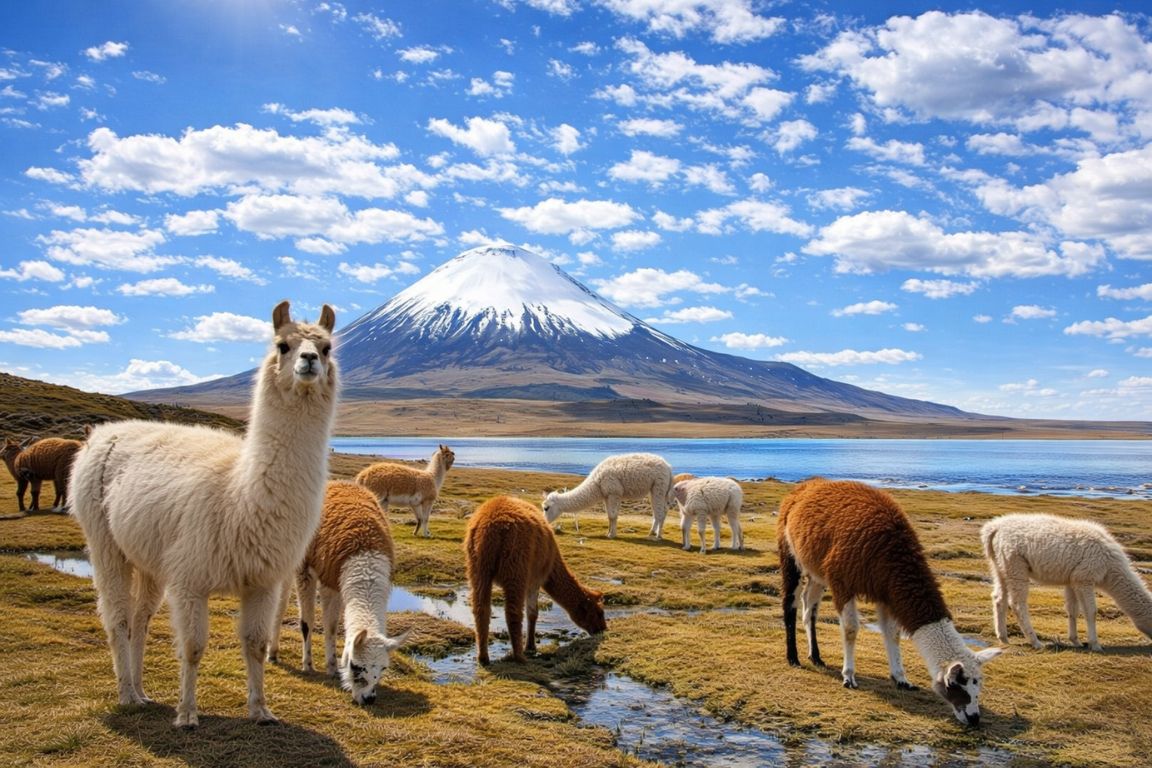
The flamingo point deserves emphasis because it surprises people. Three species feed in the brine of the Salar de Atacama, and watching pink birds wade through a white salt plain under a volcano is a genuinely strange sight. So is a herd of vicuñas grazing at 4,200 m beside a lagoon the colour of ink.
What does it really cost to get there?
San Pedro has no airport. You fly into Calama, roughly 100 km away, usually via Santiago, then transfer by shuttle, bus or private vehicle for about an hour and a half. From Europe, North America or Asia that means two flights minimum plus a road leg, and for most people a full day of travel in each direction.
This is the honest first hurdle. The Atacama is not somewhere you drop into for a night. Even from Santiago it is a two-hour flight plus the transfer, and the flight schedule concentrates around the morning and evening, which can burn a day at either end.
The other route in is overland from Bolivia, arriving from the Uyuni salt flats over the Hito Cajón border crossing at high altitude, or by long-distance bus up the Chilean coast. Both are viable and both are long. The bus from Santiago is a serious undertaking measured in days rather than hours.
| Route in | Approximate travel time | What to plan for |
|---|---|---|
| Santiago to Calama by air, then road | About 2 hours flying plus 1.5 hours by road | The standard route. Book the transfer or shuttle in advance |
| International arrival via Santiago | Usually a full day plus the domestic leg | An overnight in Santiago before the northbound flight is often worth it |
| Overland from Uyuni, Bolivia | Typically a multi-day tour ending at the border | Arrives already acclimatised, which is a real advantage |
| Long-distance bus from Santiago | Roughly a day and a night on the road | Cheapest, and it costs you two travel days |
| Calama to San Pedro by road | Around 1 to 1.5 hours | Shared shuttles meet flights. Private transfers cost more |
On money, we will not invent figures for flights or hotel rates, because they move constantly. What we can say plainly is that remoteness inflates everything on the ground. Food, fuel and water are trucked in. Rooms in a small oasis town in high season are not cheap. Tours carry the cost of long drives in 4x4 vehicles with guides. Budget accordingly and read the Atacama trip costs and budgeting guide before you commit, along with how to get to the Atacama Desert for route specifics.
How much of a problem is the altitude, honestly?
San Pedro itself, at about 2,400 m, causes mild symptoms in some people and none in most. The problem is the tours. A standard week takes you to 4,300 m at El Tatio and above 4,000 m at the altiplano lagoons, often within 48 hours of arriving from sea level. That is where headaches, nausea and breathlessness appear.
Altitude sickness is not a matter of fitness. Marathon runners get it and sedentary retirees sometimes do not. What predicts it best is how fast you ascend and how high you sleep, which is why the sequencing of your tours matters more than your gym record.
The practical consequence is that a very short trip is riskier than a longer one. Three nights in San Pedro before the first high day is comfortable. Landing at Calama at noon and boarding a 4:30 am geyser pickup the next morning is not, and it is exactly what a two-night itinerary forces.
| Place | Altitude | How most people feel |
|---|---|---|
| Calama airport | About 2,300 m | Fine, occasionally a little breathless with luggage |
| San Pedro de Atacama town | About 2,400 m | Mild. Sleep can be light for the first night or two |
| Termas de Puritama | About 3,500 m | Noticeable on the steps, otherwise easy |
| Piedras Rojas sector | About 4,000 to 4,200 m | Slow walking, mild headache common |
| Miscanti and Miñiques lagoons | About 4,100 to 4,350 m | Real breathlessness, some visitors stay in the vehicle |
| El Tatio geyser field | About 4,300 m | Hardest for many, because it is cold, early and abrupt |
| Cerro Toco summit | 5,604 m | Demanding even for acclimatised, fit walkers |
If you have a heart or lung condition, are pregnant, or travel with very young children, this section is the one to discuss with a doctor before booking, not after. It is also the reason we would steer people with those concerns toward the low-altitude half of the region, which is genuinely rewarding on its own. Our altitude and tour order guide and advice for senior travellers both go further.
The Direct Fit And Useful Alternatives
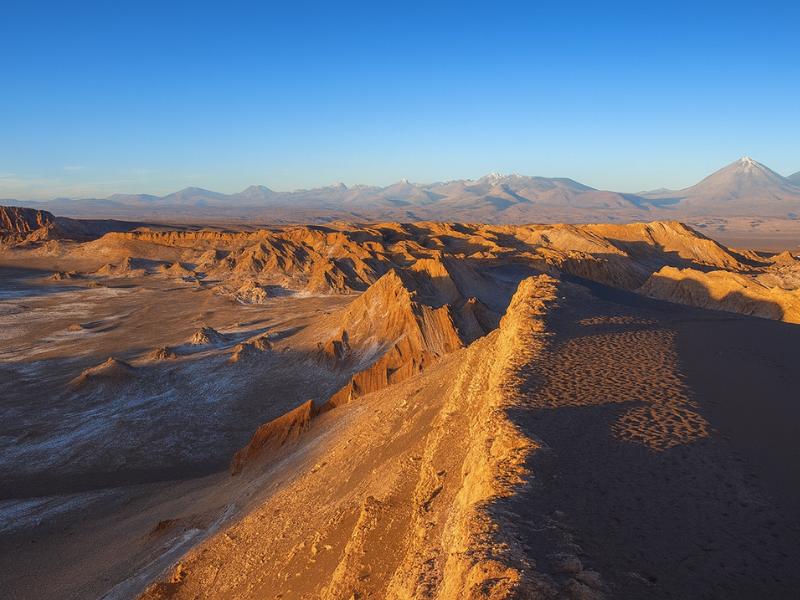
Valley Of The Moon
Make room for a desert landscape outing without committing several days. A guided Moon Valley excursion gives your afternoon a clear destination.
About four hours. Walking is involved; read the participation requirements.
Book on ViatorSee Moon Valley Departures ↗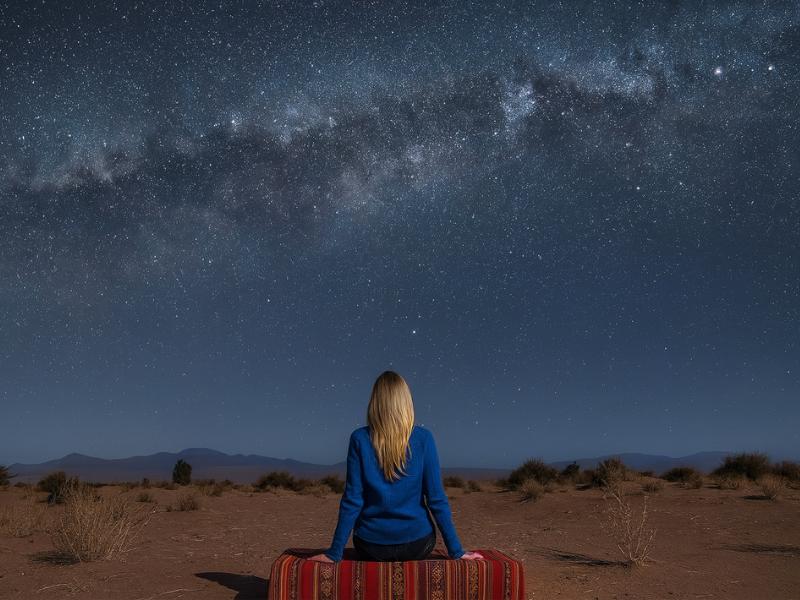
The Roofless Stargazing Experience
Make the sky part of your trip: telescope observation, an astronomy talk and a professional photo to take home.
Hot drinks and blankets provided. Dress warmly; pickup coverage is limited.
Book on ViatorChoose My Stargazing Night ↗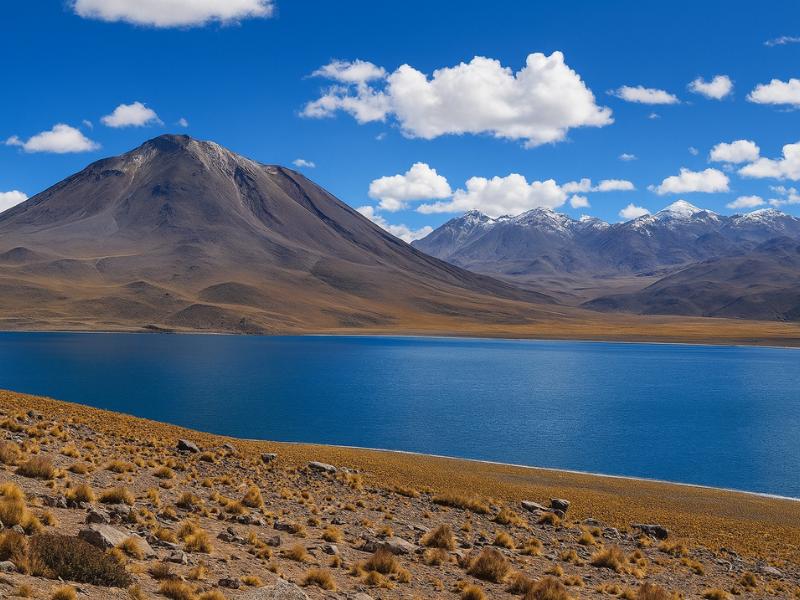
Piedras Rojas And Highland Lagoons
Give a full day to red rocks and highland lagoons without organizing the driving yourself. A connected circuit makes more sense than treating every stop as a separate trip.
A long, high-altitude outing; check participation requirements.
Book on ViatorSee The Piedras Rojas Route ↗What do the early starts actually look like?
The signature Atacama tours run at unsociable hours because the landscapes demand it. Geysers steam hardest in the freezing pre-dawn, so El Tatio pickups fall between 4 am and 5 am. Full-day altiplano circuits leave around 7 am and return after dark. Valley tours run to sunset. Stargazing starts after nightfall.
Stack those without thought and you get a schedule that is genuinely punishing: up at 4 am for geysers, back at midday, out again at 4 pm for a valley sunset, then a stargazing tour at 9 pm. People do it. People also come home exhausted and remember very little of it.
| Experience | Typical pickup | Typical return | Total commitment |
|---|---|---|---|
| El Tatio geysers at sunrise | 4:00 to 5:00 am | Late morning | About 8 hours |
| Southern altiplano full-day circuit | 7:00 to 8:00 am | Early evening | 10 to 12 hours |
| Salt lagoon float | Early afternoon | After sunset | 4 to 5 hours |
| Valle de la Luna | Mid-afternoon | After sunset | 4 to 5 hours |
| Stargazing | After dark, varies by season | Late evening | 2 to 3 hours |
| Hot-air balloon | Before dawn | Mid-morning | About 3 hours |
The fix is simple and most travellers resist it: leave gaps. Never put a dawn start the morning after a stargazing night. Never put two full days back to back if you can avoid it. A trip with four excellent days and two easy ones beats a trip with six frantic ones, and the photographs come out better when you are not asleep in the back of the vehicle.
Who is the Atacama genuinely a great fit for?
Landscape photographers, geology enthusiasts, amateur astronomers, hikers who like altitude, and travellers who prefer scenery to nightlife. Also anyone building a South American itinerary that already includes Bolivia or Argentina, since the Atacama fits neatly into that geography rather than being a detour.
The clearest signal that you will love it: you get excited by the idea of standing on a salt crust at 4,000 m with nobody around and no sound at all. That silence is the thing people describe most often afterwards, more than any single viewpoint.
| Traveller type | Fit | Why |
|---|---|---|
| Landscape photographer | Excellent | Extreme light, empty foregrounds, colour you do not have to enhance |
| Astronomy enthusiast | Excellent | Among the best accessible skies on the planet, with real telescope access |
| Geology or volcano interest | Excellent | Geysers, salt tectonics, active cones, altiplano lakes in one region |
| Hiker comfortable with altitude | Very good | Cerro Toco, canyoning, long valley walks |
| Couple wanting something memorable | Very good | Balloon flights, private circuits, remarkable dinners under the sky |
| Family with older children | Good | Floating lagoons and sandboarding land well, but manage the early starts |
| Solo traveller | Good | Group tours make it sociable and San Pedro is easy to move around |
If you are travelling alone or with children, we have dedicated guides on solo travel in San Pedro and visiting the Atacama with kids that get into the specifics rather than repeating generic advice.
Who should probably skip the Atacama?
Skip it if you want a relaxing beach or city break, if early mornings ruin your holiday, if you have a heart or lung condition that altitude would aggravate, if your total time in Chile is under a week, or if your budget is tight enough that a remote desert town will consume it.
This is the section most tour sites will not write. Here it is plainly.
- You have two nights or fewer. After transfers you get roughly one usable day, and the altitude risk of packing a high tour into it is real. Spend the time somewhere with less overhead.
- You cannot do early starts. The two signature experiences, geysers and stargazing, sit at opposite ends of the clock. Remove dawn from the equation and you lose a genuine chunk of the destination.
- You are looking for a cheap leg of a backpacking trip. It can be done leanly, but the fixed costs of getting there and the price of tours make it one of the more expensive stops in Chile.
- You need altitude-free travel. Even the town sits at 2,400 m, and the best days go far higher. There is no version of this trip that stays low and still delivers the highlights.
- You want variety in a small radius. Everything here is desert. Magnificent desert, in many forms, but if you tire of arid landscape by day three you will run out of enthusiasm before you run out of tours.
- You are visiting in the January to February altiplano rains and cannot move dates. Roads to El Tatio and the high lagoons close occasionally, and afternoon cloud can spoil stargazing.
None of that is fatal on its own. Two of them together is a good reason to spend the week in the Chilean Lake District, Patagonia or the Valparaíso coast instead.
What disappoints visitors most often?
Four recurring complaints: the cold and crowds at El Tatio, sunset traffic at Valle de la Luna, cloudy stargazing nights during the summer rains, and the gap between San Pedro's rustic image and the reality of a dusty, busy tourist town. All four are manageable if you know about them in advance.
The town itself is the biggest expectation mismatch. Photographs sell an adobe village at the edge of nothing. What you get is an adobe village at the edge of nothing that also contains dozens of agencies, a constant flow of vans, and prices set by demand. It is still atmospheric at dusk. It is not undiscovered, and has not been for decades.
| Common disappointment | Why it happens | What to do instead |
|---|---|---|
| El Tatio felt cold and crowded | Every operator arrives for the same 30-minute dawn window | Consider a later private departure, and pack far more warmth than feels reasonable |
| Valle de la Luna sunset was busy | One reserve, one great viewpoint, fixed closing time | Take a Vallecito or Cordillera de la Sal sunset instead |
| Stargazing was cancelled or cloudy | Full moon washes out faint objects, summer brings afternoon cloud | Book near new moon and leave a spare night in the schedule |
| The town felt touristy | It is the base for the entire region's tourism | Stay in an outlying ayllu, and walk out at golden hour |
| Prices felt high | Everything is trucked in across a desert | Book bundled multi-day tours, eat where the guides eat |
| The tours felt repetitive | Three salt-and-rock circuits in a row look alike | Mix categories deliberately, see our things to do orientation guide |
Choose A Date For Your Outing
Valley Of The Moon
Select your date and party on Viator for the current price and departure options.
See Moon Valley Departures ↗How does it compare with the Uyuni salt flats?
They are neighbours geographically and different experiences in practice. Uyuni, in Bolivia, is a single vast white salt flat crossed on multi-day 4x4 tours with basic lodging. The Atacama is a base town with a variety of day trips, better infrastructure and a wider range of landscape types. Many travellers do both, connected overland.
If you want the mirror-flat white horizon and the reflection photographs, that is Uyuni, and no Atacama tour substitutes for it. If you want geysers, flamingos, valleys, hot springs and telescope nights from a comfortable base, that is San Pedro. The combination is one of the great overland routes in South America precisely because the two are not the same thing.
Comfort is the honest differentiator. Uyuni circuits mean shared rooms, long unpaved days and occasionally no hot water. San Pedro means your own hotel, a restaurant choice, and coming home each evening. Neither is better. They suit different tolerances. We compare them in detail in combining the Atacama with the Uyuni salt flats.
Is it worth it if you only have two or three days?
Three nights is the honest minimum for the trip to justify the journey. That gives two full days plus an arrival evening, enough for one valley sunset, one lagoon float, one full-day altiplano circuit and a stargazing night. Two nights is workable but leaves no margin for weather, altitude or a cancelled tour.
The maths is unforgiving because of the travel legs. A two-night stay usually means arriving mid-afternoon on day one and leaving mid-morning on day three, which is one full day of activity. Fly in for one full day of a destination that took most of a day to reach in each direction and the ratio stops making sense.
| Length of stay | Realistic activity days | Verdict |
|---|---|---|
| 1 night | Almost none | Not worth the journey |
| 2 nights | 1 full day plus a sunset | Thin, and altitude risk if you attempt a high tour |
| 3 nights | 2 full days plus 2 evenings | The honest minimum. Works well |
| 4 nights | 3 full days | Comfortable. Covers the classics with a rest window |
| 5 nights or more | 4 or more full days | Ideal. Adds adventure activities and proper acclimatisation |
Travellers with a fixed three or four days often take a bundled package rather than assembling days themselves, because the ordering problem is already solved. The three-day combo with four tours, listed at $401 with a 4.6 rating across more than three thousand bookings, places El Tatio, the altiplano circuit, a valley sunset and a Baltinache float in a workable order. Our three to four day classic itinerary lays out the same logic if you prefer to book pieces separately.
What is the minimum that justifies the journey?
Three experiences, chosen from different categories. One low-altitude landscape day, such as a float in the Baltinache lagoons or a Valle de la Luna sunset. One high-altitude day, either the southern circuit or El Tatio. One clear night under a telescope. Get those three and the trip has delivered what the Atacama is uniquely good at.
Everything else is enrichment. Puritama, Quitor, canyoning, the balloon, the villages, all worth doing and none of them the reason people cross a continent. The core of the case for the Atacama is that it does three things better than almost anywhere: strange water in a dry place, high thin landscape with no vegetation, and a night sky with no haze in it.
| The minimum trip | Example | Why it counts |
|---|---|---|
| One low-altitude landscape day | Baltinache hidden lagoons, from $60 | Salt geology and floating, with no altitude load |
| One high-altitude day | Southern altiplano circuit to Chaxa, Miscanti and Piedras Rojas | The widest range of landscape in a single day |
| One night under a telescope | The Roofless stargazing experience, from $65 | The sky is the region's rarest asset |
So: worth visiting? If those three appeal and you can give the region three nights, comfortably yes. If you read this page and kept catching on the cold, the hours, the altitude and the cost, take that seriously. There is no shame in deciding a place is not for you, and the Atacama is not a destination that rewards being talked into it.
If you are leaning yes, the next practical decisions are timing and length. The best time to visit the Atacama covers season by season, and how many days to spend turns the three-night minimum into a real schedule.
Make It Part Of Your Trip
Moon Valley gives you a focused landscape experience without buying a whole itinerary.
Valley Of The Moon
Make room for a desert landscape outing without committing several days. A guided Moon Valley excursion gives your afternoon a clear destination.
See Moon Valley Departures ↗