Socaire: The Terraced Village on the Road Up
Socaire is a small Atacameño village of stone terraces at around 3,500 metres, halfway up the climb from the salt flat to the altiplanic lagoons. Nobody books a tour to Socaire. Almost everyone on the southern circuit stops there anyway.
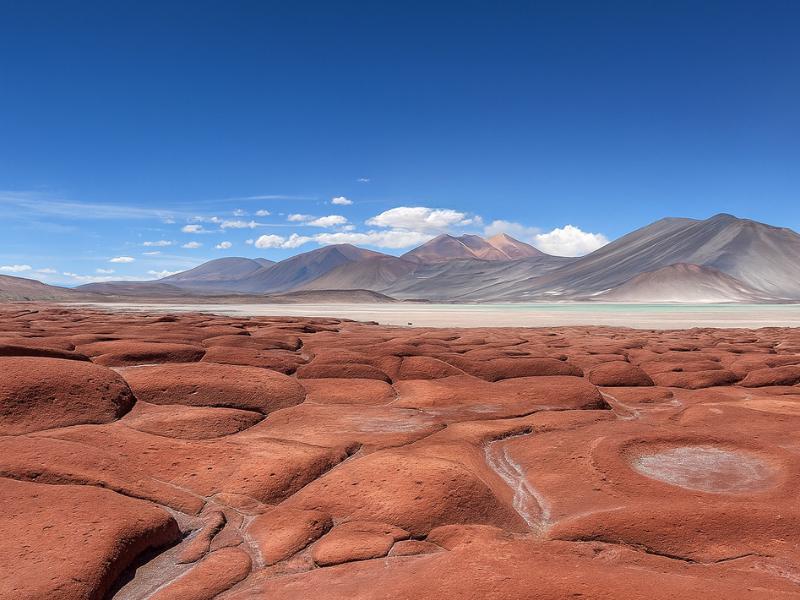
What is Socaire, and why does your tour stop there?
Socaire is a small Atacameño farming village at roughly 3,500 metres, on the road that climbs from the Salar de Atacama towards the altiplanic lagoons and Piedras Rojas. Tours stop because it is the last settlement with facilities before the high plateau, and because the stone agricultural terraces around it are genuinely worth a look.
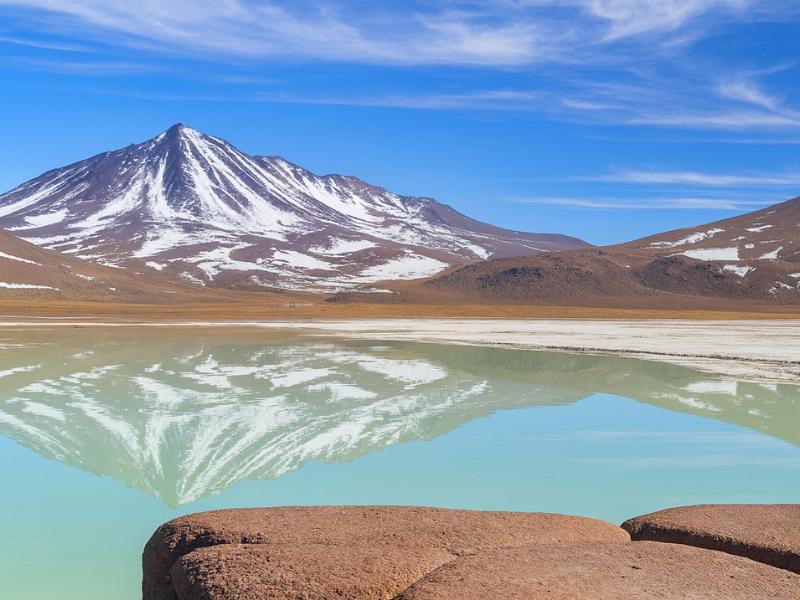
It is not a large place. A handful of streets, adobe and stone walls, a church, a school, a few small eating places and craft stalls that open when the vans arrive. Agriculture, herding and, increasingly, tourism traffic are what keep it going. People live here permanently, which is not true of everywhere your circuit passes.
The stop serves two practical purposes on a 10 to 12 hour day. It is a toilet and coffee break at the point where the road is about to get serious, and it is a deliberate pause partway up the altitude gain, giving bodies twenty minutes at 3,500 metres before being taken to 4,100. Guides rarely spell that second reason out, but it is why the stop sits where it does.
Being straight about it: Socaire is a stop, not a destination. You will be there for half an hour, you will not see everything, and that is the correct amount of time for what is on offer. The point of this guide is to make that half hour worth something rather than a queue for the toilet.
Choose The Wider Route Around Socaire
Choose what you want and the time you can give it. The result explains the trade-off before you open the booking page.
How high is Socaire, and where does it sit on the climb?
Socaire sits at around 3,500 metres, roughly 1,100 metres above San Pedro de Atacama and 600 metres below the altiplanic lagoons. It is the natural midpoint of the ascent, and the first place on the circuit where most travellers physically notice the altitude.
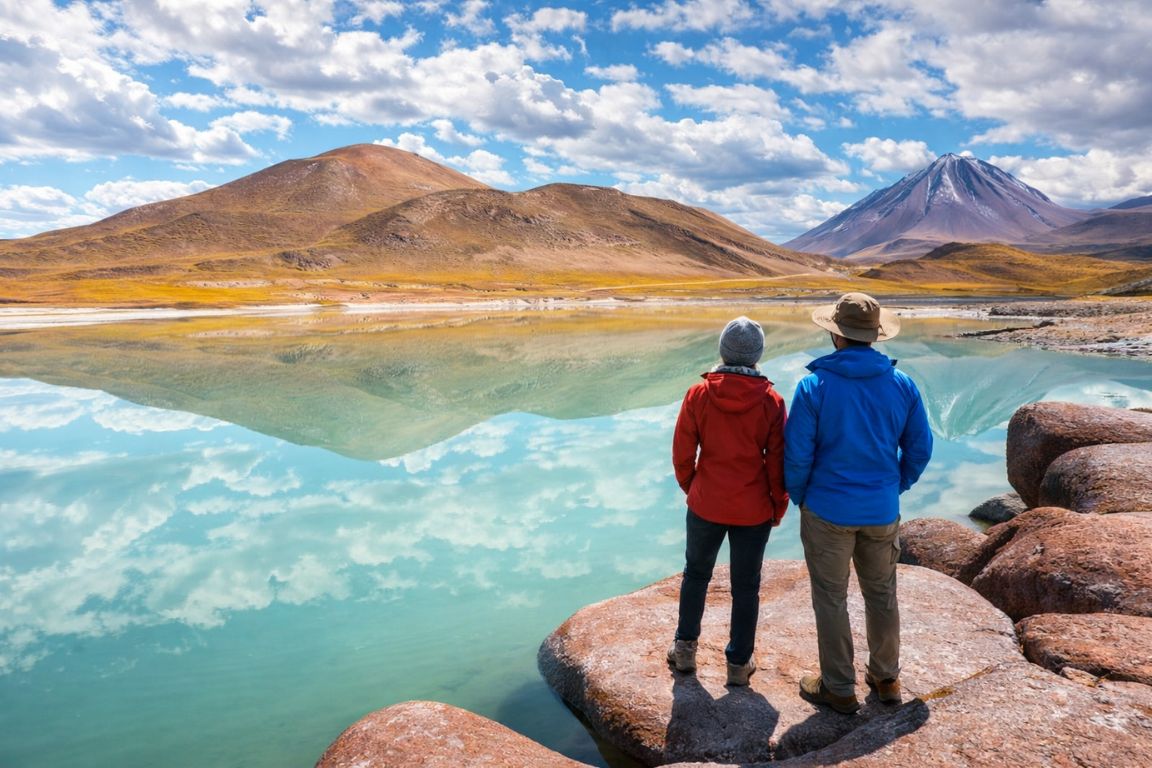
The step up from Toconao is the abrupt one. Toconao is a village at 2,500 metres where nothing feels different from town. An hour later you are 1,000 metres higher, and walking up the short slope to the terraces leaves people breathing harder than they expected. That reaction is a useful piece of information about how the rest of your day will go.
| Point on the circuit | Approximate altitude | Gain from San Pedro | Typical position in the day |
|---|---|---|---|
| Laguna Chaxa, Salar de Atacama | Around 2,300 m | About 100 m lower | Morning or late afternoon |
| San Pedro de Atacama | 2,400 m | Baseline | Pickup |
| Toconao | 2,500 m | Around 100 m | First stop, breakfast |
| Socaire | Around 3,500 m | Around 1,100 m | Mid-morning, and often lunch on the way back |
| Lagunas Miscanti and Miñiques | Around 4,100 m | Around 1,700 m | Late morning |
| Highest point on the road | Above 4,300 m | Around 1,900 m | Between the lagoons and Salar de Talar |
| Piedras Rojas, Salar de Talar | Just above 4,000 m | Around 1,600 m | Around midday |
Use the Socaire stop as a self-check. If a gentle walk here makes you dizzy or gives you a headache rather than simply making you breathe harder, tell your guide before the van climbs another 600 metres. That conversation is far easier at 3,500 metres than at 4,100. The full picture on sequencing sits in our altitude and tour order guide.
What do you actually see in 30 to 45 minutes?
Realistically: the terraces from a viewpoint or a short walk, the outside of the church and its walled forecourt, a few craft stalls, and a coffee. That is the honest inventory. Groups that use the time well get the terraces and the church. Groups that do not get the toilet and a soft drink.
Time allocation is the whole game here. Half an hour disappears very fast when 14 people are queueing for two toilets, so decide before you get out of the van what you want from the stop and go straight to it.
| What you can do | Time it takes | Worth it? |
|---|---|---|
| Look at the agricultural terraces | 10 to 15 minutes | Yes, this is the reason the village is interesting |
| Walk to the church and its forecourt | 10 minutes | Yes, and it is the village's focal point |
| Coffee, tea or a snack | 10 to 15 minutes | Yes, especially before the high section |
| Craft stalls | 5 to 10 minutes | Sometimes, depends what is open on the day |
| Toilets | 5 to 15 minutes with a queue | Necessary, the last reliable stop before the plateau |
| Walking the whole village | More than you have | Not possible on a group circuit |
If your tour also uses Socaire for lunch on the way back down, you get a second and usually longer window, which is when the village is easier to appreciate. Ask your guide at pickup which pattern the day follows, because it changes how you spend the morning stop.
What are the terraces, and why are they built that way?
They are stone-walled agricultural terraces cut into the slopes around the village, a farming technique used across the Andes for centuries. Flat steps hold soil that would otherwise wash off a hillside, they slow irrigation water so it soaks in rather than running away, and the stone walls store daytime heat that protects crops from night frost.
All three functions matter at 3,500 metres. Water is scarce and arrives from the mountains rather than the sky, so it has to be moved through channels and held where it is needed. Soil is thin and precious. And the temperature swing between a sunny afternoon and a clear night at this height is brutal for anything growing, which is where the thermal mass of a stone wall earns its keep.
| Feature of the terraces | What it does |
|---|---|
| Stepped flat platforms | Stop soil eroding off a steep slope |
| Dry stone retaining walls | Hold the step in place and absorb daytime heat |
| Irrigation channels | Distribute meltwater from the mountains along and down the system |
| Small plot sizes | Match the water available and the labour of a small community |
| Position near the watercourse | Farming follows the water, which is the limiting factor here |
What grows depends on the season and the plot, and you will see fodder crops for animals alongside vegetables and Andean staples. Ask your guide rather than guessing from the road: local growing patterns shift and the person driving you generally knows the families who farm the ground you are looking at.
The terraces are working farmland, not a monument. Stay on the paths and the road, do not climb the walls, and do not walk into plots. It seems obvious and it is broken constantly.
The Direct Fit And Useful Alternatives
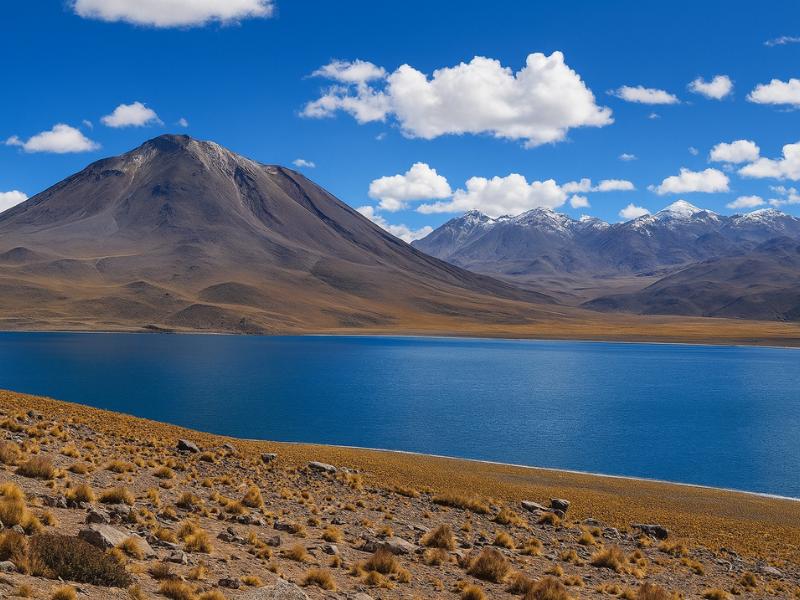
Piedras Rojas And Highland Lagoons
Give a full day to red rocks and highland lagoons without organizing the driving yourself. A connected circuit makes more sense than treating every stop as a separate trip.
A long, high-altitude outing; check participation requirements.
Book on ViatorSee The Piedras Rojas Route ↗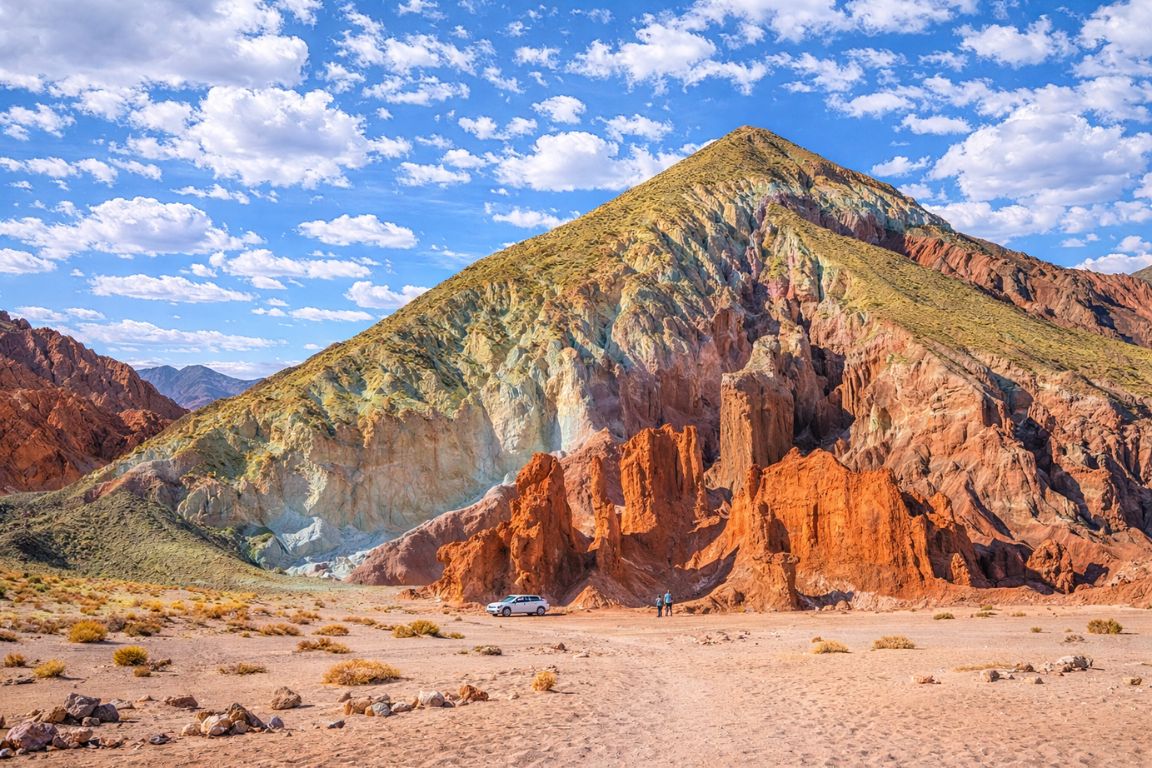
Rainbow Valley And Yerbas Buenas
A guided outing pairing mineral-coloured hills with the Yerbas Buenas petroglyphs. Breakfast and hotel pickup are listed, with English and Spanish guiding.
Allow about six hours. Entrance tickets need arranging separately.
Book on GetYourGuideExplore Rainbow Valley And Rock Art ↗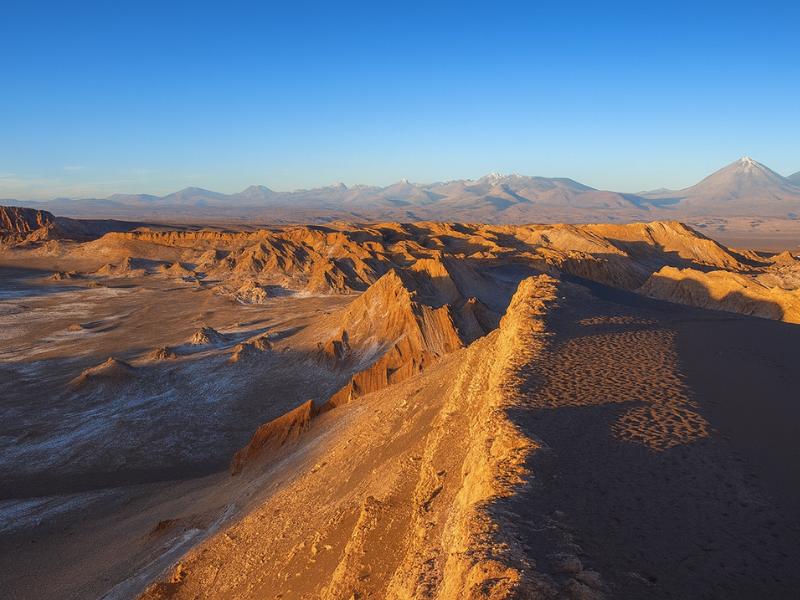
Valley Of The Moon
Make room for a desert landscape outing without committing several days. A guided Moon Valley excursion gives your afternoon a clear destination.
About four hours. Walking is involved; read the participation requirements.
Book on ViatorSee Moon Valley Departures ↗What is the church, and can you go inside?
Socaire has a small stone and adobe church dedicated to San Bartolomé, set in a walled forecourt at the centre of the village, in the style typical of Atacameño settlements. It is usually admired from the outside. Opening is tied to services and local life rather than to tour schedules, so treat access as a bonus.
These village churches follow a recognisable regional pattern: thick adobe or stone walls, a separate or attached bell structure, timber from cactus and native wood in the roof because nothing else grows large enough at this altitude, and a walled atrium in front used for gatherings and festivals. They are functioning religious buildings for a living community, not museum pieces.
If it is open, go quietly, keep your voice down and ask before photographing the interior. If there is a service or a preparation for a festival happening, stay outside. Local patron saint celebrations matter a great deal in Atacameño villages and a tour group wandering through the middle of one is not welcome, however curious.
The better-known church on this route is in Toconao, whose separate bell tower is a protected national monument and one of the most photographed structures in the region. Socaire's is smaller and plainer. Our Toconao village guide covers that stop, and the two villages complement each other rather than duplicating.
Can you eat in Socaire, and what is available?
Yes, at a small scale. There are a few modest eating places and stalls serving hot drinks, simple hot food and snacks, and many full-day circuits schedule their lunch here on the descent from Piedras Rojas. Range is limited, cash is useful, and vegetarians should say so early rather than at the counter.
Expect Andean home cooking rather than a menu: soups, stews, potatoes, rice, sometimes llama or local meat, plus coca tea, which is offered everywhere on this route and is a normal part of local life at altitude. Portions tend to be generous, which matters after a morning at 4,000 metres when your appetite has been suppressed and then comes back all at once.
| What you may find | Notes |
|---|---|
| Hot drinks including coca tea | Widely available, commonly taken for altitude |
| Simple hot meals | Soups and stews, usually a fixed offering rather than a menu |
| Snacks and soft drinks | Sold from small shops and stalls |
| Card payment | Unreliable, carry Chilean pesos |
| Vegetarian or vegan options | Possible but limited, tell your operator when you book |
| Bottled water | Available, but bring your own supply from San Pedro anyway |
Whether lunch is included depends on your tour. The 12-hour Red Stones, Altiplánicas and Chaxa Experience lists breakfast and lunch, while other departures include breakfast and snacks and leave lunch to you. Check the inclusions on the listing so you know whether to carry cash for a meal.
Why does nobody book a tour to Socaire alone?
Because there is not a day's worth of things to do there, and everyone involved knows it. Socaire is a working village of a few hundred people with terraces, a church and a handful of shops. It is genuinely interesting for half an hour and it does not pretend to be more.
This is the honest version, and it is more useful than pretending otherwise. Search interest in Socaire is high because it appears on every southern circuit itinerary, so people look it up to find out what it is. The answer is that it is a waypoint with real character, not an attraction with an entrance gate.
That framing changes how you should treat it. Do not arrive hoping for a highlight and feel let down when you get a coffee and a viewpoint. Arrive understanding it is the last inhabited place before the plateau, look properly at the terraces, notice how people farm at 3,500 metres in one of the driest regions on earth, and it becomes one of the more quietly memorable stops of the day.
Compare it with the actual highlights the same tour delivers, Piedras Rojas and the altiplanic lagoons, and Socaire's role is obvious. It is the human counterpoint to five hours of landscapes with nobody in them.
Can you stay overnight in Socaire?
There is very little accommodation, and no dependable booking infrastructure of the kind travellers are used to. A small number of very simple options exist in and around the village, but they are not reliably bookable online and availability changes. Almost everyone sleeps in San Pedro de Atacama and visits Socaire as a stop.
There is also a practical reason not to stay high. Sleeping at 3,500 metres when you have recently arrived from sea level is harder on the body than visiting during the day and coming back down, which is exactly the pattern the standard circuit follows. Ascending during the day and descending to sleep is the sensible approach for anyone not already acclimatised.
The exception is travellers with their own vehicle, plenty of time and Spanish, who want to spend a couple of days walking the terraced valleys properly. That is a real trip, but it is not a mainstream one, and it needs arranging locally rather than through a booking site.
For everyone else, the accommodation question belongs in town. Our guide to where to stay in San Pedro de Atacama covers the range from hostels to lodges and explains why location within the village matters more than star ratings here.
Choose A Date For Your Outing
Piedras Rojas And Highland Lagoons
Select your date and party on Viator for the current price and departure options.
See The Piedras Rojas Route ↗How does Socaire compare with Toconao?
Toconao is bigger, lower, more geared to visitors and more polished. Socaire is smaller, higher, quieter and more agricultural. Most southern circuits stop at both, which is the right way to see them, because each shows a different side of Atacameño village life.
| Feature | Toconao | Socaire |
|---|---|---|
| Altitude | 2,500 m | Around 3,500 m |
| Position in the day | First stop, breakfast | Mid-morning, often lunch on the return |
| Landmark | Separate bell tower, a national monument | Stone terraces on the slopes |
| Craft and shopping | Better developed, more stalls | Limited, opens around tour arrivals |
| Facilities | More reliable | Basic but functional |
| Atmosphere | Busier, more visitor-facing | Quieter, more working village |
| Typical time given | 30 to 45 minutes | 20 to 45 minutes |
If you only remember one distinction, make it this: Toconao is where you buy things and use good toilets, Socaire is where you look at how people farm at altitude. Both are short. Neither justifies its own day.
Which tours stop in Socaire?
All three of our full-day southern circuits pass through Socaire, since it sits directly on the only road up to the altiplanic lagoons and Salar de Talar. The differences are in day length, group size, price and whether lunch is included, not in whether Socaire is on the route.
| Tour | Listed price | Length | Rating | Socaire on this itinerary |
|---|---|---|---|---|
| Piedras Rojas, Altiplanic Lagoons & Chaxa Full-Day | $110 | 10 hours | 4.9 from 3,929 bookings | Included alongside Toconao and the Tropic of Capricorn marker |
| Red Stones, Altiplánicas & Chaxa Experience | $120 | 12 hours | 4.9 from 1,346 bookings | Included, with breakfast and lunch both listed |
| 3-in-1: Red Stones, Highland Lagoons & Chaxa | $85 | 11 hours | 4.7 | Included, group capped at 14 |
Prices move with season and demand, so confirm on the live listing before booking. If you want longer in the village than a group schedule allows, a private departure is the only way to get it, and the trade-offs are set out in private tours against group departures.
What are the etiquette rules in an Atacameño village?
Ask before photographing people, stay off private land and out of the terraces, keep noise down near the church, buy something rather than only using the toilets, and pay in cash. These are small courtesies in a place where a few hundred residents host a steady stream of vans every day of the year.
| Do | Do not |
|---|---|
| Ask permission before photographing residents | Photograph people, especially children, without asking |
| Stay on roads and marked paths | Walk into cultivated plots or climb terrace walls |
| Buy a drink or a craft item from local sellers | Use the facilities and buy nothing at all |
| Carry Chilean pesos in small notes | Assume cards or foreign currency will work |
| Keep quiet around the church | Walk into a service or a festival preparation |
| Take your rubbish back to the van | Leave anything behind, waste collection is limited |
Tourism income genuinely matters in villages on this route, and the communities are involved in managing the sites your tour visits, including access at Piedras Rojas. Spending a few thousand pesos on a coffee is not charity, it is the mechanism by which the stop keeps working for both sides.
What does the Socaire stop tell you about the rest of your day?
How you feel walking a gentle slope at 3,500 metres is the best available preview of how you will handle 4,100 metres an hour later. Breathing harder is normal. A headache, nausea or dizziness at Socaire is a signal to speak to your guide before the van climbs any higher.
Guides use the stop this way whether or not they say so. They watch who is moving slowly, who has stopped drinking water, and who has gone quiet. Being honest with them costs nothing and is far better than being unwell at the lagoons with two hours of driving between you and thick air.
Three practical things to do in Socaire regardless of how you feel: drink water, eat something even without appetite, and put on the layer you will need higher up before you get back in the van. Doing all three at 3,500 metres is easier than doing any of them at 4,100 in the wind.
If it turns out the high plateau is not for you, the desert still has plenty at low altitude. The Valle de la Luna, the salt lagoons, Pukará de Quitor and the town itself all sit between 2,300 and 2,600 metres, and our 3 to 4 day classic itinerary shows how to build a trip around them.
Make It Part Of Your Trip
The main purchase is the red-rock and lagoon day. Confirm the Socaire stop with the operator if it is your priority.
Piedras Rojas And Highland Lagoons
Give a full day to red rocks and highland lagoons without organizing the driving yourself. A connected circuit makes more sense than treating every stop as a separate trip.
See The Piedras Rojas Route ↗