Baltinache Hidden Lagoons: The Complete Visitor Guide
Seven turquoise lagoons hide in a fold of the Cordillera de la Sal, forty kilometres from San Pedro down an unpaved road. Only one is open to swimmers, the rules are strict, and there are no facilities at all.
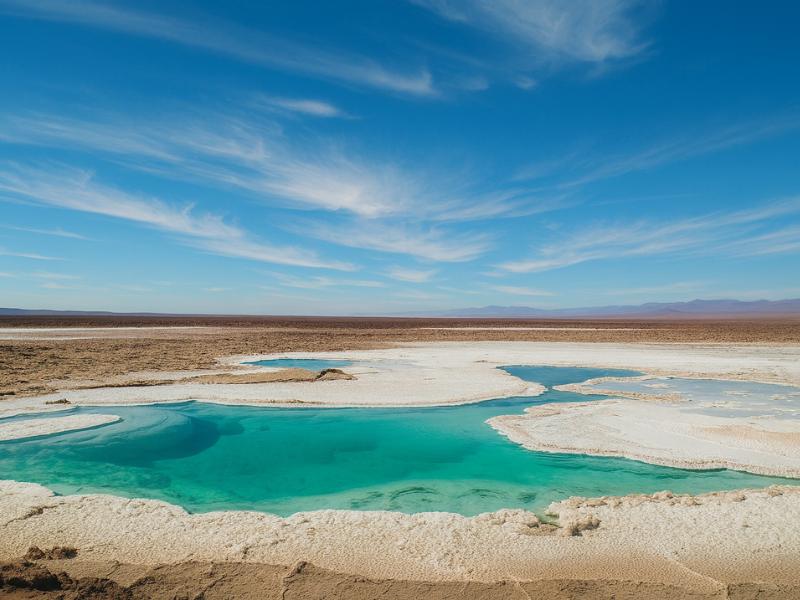
What are the Lagunas Escondidas de Baltinache?
A chain of seven small hypersaline lagoons strung through a depression in the Cordillera de la Sal, west of San Pedro de Atacama. The water is intensely turquoise against white salt crust and dark rock, and the whole site sits away from any settlement on unpaved road, which is why the Spanish name translates as the hidden lagoons.
The lagoons are the surface expression of groundwater in a salt basin. Brine seeps into low points, evaporates in some of the driest air on the planet, and leaves crust building around the edges. What you end up with is a set of separate pools, each a slightly different colour depending on depth, mineral content and how the light hits it, spaced a few minutes' walk apart along the floor of the depression.
Scale surprises people. These are not large lakes. Several are small enough to walk around in a few minutes, and the appeal is not size but the concentration of colour in a landscape that has almost none. The surrounding Cordillera de la Sal is a ridge of folded salt and clay running parallel to the Andes, the same formation that produces Valle de la Luna and the Vallecito rock shapes.
The site is managed by the local Atacameño community, which decides access, capacity and the rules that govern behaviour there. That management is the reason Baltinache still looks the way it does after becoming one of the most requested outings in the region.
Choose The Lagoon Trip You Actually Want
Choose what you want and the time you can give it. The result explains the trade-off before you open the booking page.
Why is only one lagoon open for swimming?
Because these are small, closed bodies of water with no flushing mechanism, and everything a visitor brings into them stays. Sunscreen, repellent, body oils and sediment stirred from the bed all accumulate. Restricting bathing to a single designated lagoon concentrates that impact in one place and leaves the other six untouched.
The reasoning becomes obvious once you see the volume of water involved. A lagoon a few dozen metres across, in a climate where nothing is diluted by rain, cannot absorb hundreds of swimmers a week without changing. Larger salt-flat sites can spread the load. Baltinache cannot.
Swimming access here has not been continuous. The tour listing on this site notes that the designated lagoon has been open for swimming since March 2025, which follows a period when bathing was suspended. That history is the important part: access at Baltinache is a decision the community reviews, not a permanent feature, so confirm current conditions against the live tour listing rather than relying on an article, including this one.
None of that diminishes the visit. Six lagoons you walk past and photograph, one you get into, and the walking between them is a large part of the experience. Visitors who arrive expecting to swim in all seven have misread the tour, not been short-changed by it.
How salty is Baltinache, and how does it feel?
Salty enough that floating is effortless and involuntary. Baltinache is generally regarded as producing a stronger float than Laguna Cejar, and the sensation is the same in kind but more pronounced: your legs lift on their own, staying upright is difficult, and the water feels dense and slightly slippery on the skin.
Precise salinity figures for these lagoons vary between sources and shift with evaporation through the year, so treat any single number you read with suspicion. What is consistent is the effect. You lie back, you stay up, and you do not have to do anything to make it happen.
The physical sensations worth preparing for are the same ones the salt flats produce everywhere. Cuts sting sharply. Brine in the eyes is painful and takes serious rinsing. Salt crystallises on drying skin within minutes of getting out, and it stays in swimwear until you wash it properly. Do not shave the morning of the tour, and do not put your head under, no matter how good the photograph looks.
Water temperature follows the season rather than the air, and it is cold. In winter the float becomes a short, sharp experience that plenty of visitors decline, while in summer the water is refreshing rather than pleasant. The floating lagoons guide covers the seasonal water question in more detail, and it applies here identically.
What are the access rules, and why are they stricter than at Cejar?
Baltinache runs on capped numbers, designated swimming, marked routes, and a firm expectation that you enter the water free of sunscreen, repellent and lotions. The site is smaller, more fragile and further from any infrastructure than the Cejar lagoons, so the community that manages it controls access much more tightly.
These rules are enforced by guides rather than posted on signs, and they are not negotiable. Guides who let a group ignore them lose access to the site, which is why they can seem strict compared with the more relaxed atmosphere at other salt-flat stops. Follow them without argument and the visit is entirely pleasant.
| Rule you will be asked to follow | The reason behind it |
|---|---|
| Swim only in the designated lagoon | Concentrates visitor impact in one place and protects the other six |
| No sunscreen, oils or repellent on skin entering the water | Nothing washes out of a closed lagoon in a desert; it accumulates |
| Stay on the marked routes between lagoons | The crust is fragile and footprints in it last |
| Take everything out with you | There is no waste collection anywhere on site |
| Numbers on site are capped | Small lagoons cannot absorb unlimited visitors |
| Drone use is generally not permitted | Wildlife disturbance and visitor privacy |
| Do not remove salt formations | The crust structures take a long time to form and are the attraction |
The practical consequence for you is a small planning change: apply sunscreen after your swim rather than before, and wear a hat and long sleeves on the walk in. That is the opposite of normal desert advice and the thing visitors most often get wrong.
The Direct Fit And Useful Alternatives
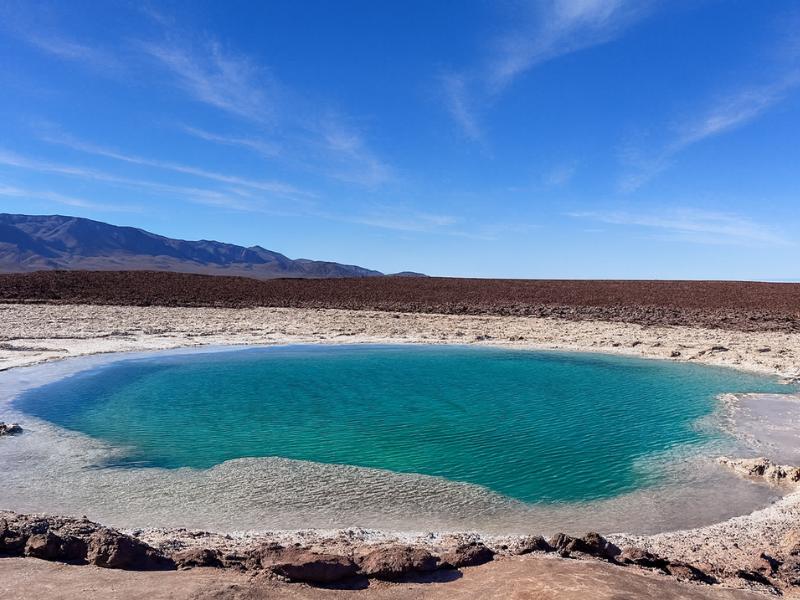
Baltinache Hidden Lagoons
Visit the chain of seven lagoons with shared transport and bilingual guiding. Choose this for the salt-and-turquoise scenery and a lagoon-focused day.
Allow about five hours. Entrance extra; urban pickup coverage and rough-road travel. Swimming depends on current access.
Book on GetYourGuideVisit The Baltinache Lagoons ↗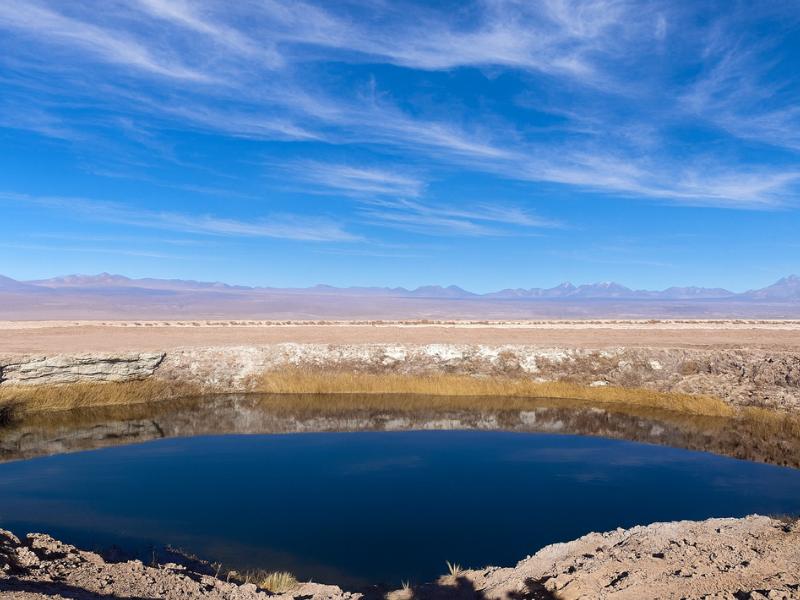
Laguna Cejar And Nearby Lagoons
Choose a lagoon outing for a change of pace from rocky valleys. This route combines Cejar with nearby Ojos del Salar and Tebenquiche.
About five hours. Bring sun protection; the itinerary and bathing access depend on current conditions.
Book on ViatorBook A Cejar Lagoon Outing ↗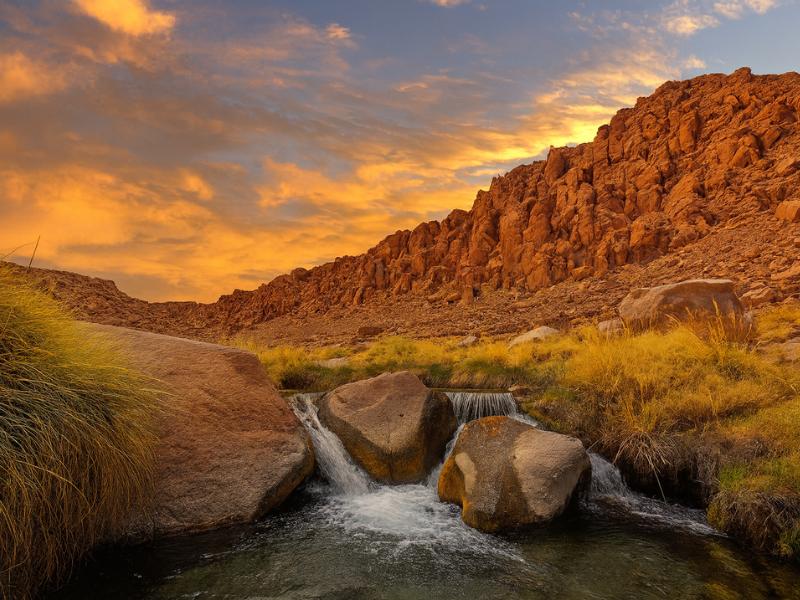
Puritama Hot Springs: AM Or PM
A hot-springs visit with transport lets you leave the driving out of your relaxation plans. Choose a morning or afternoon option.
About 4.5 hours. Bring towel and swimwear. Hotel pickup; return to central San Pedro. Confirm entrance arrangements.
Book on GetYourGuideChoose My Hot-Springs Time ↗How hard is the walk between the lagoons?
Short but uneven. The lagoons are linked by a few minutes of walking each, across salt crust and compacted ground with some rough sections and mild slopes. Total walking on a standard tour is modest, well under an hour spread across the visit, but the surface is sharp and awkward rather than smooth.
Altitude is not the problem here. Baltinache sits at roughly the same elevation as San Pedro, around 2,400 metres, so unlike El Tatio or the altiplanic lagoons, nothing about the walk is complicated by thin air. This is one of the few Atacama outings you can comfortably do on your first day.
Footwear is the variable that decides how the walk goes. Salt crust forms rough, coral-like ridges that will cut bare feet and shred thin flip-flops. Closed shoes for the walking and something you can wear into the water are the ideal combination, and plenty of visitors bring water shoes for exactly this.
| Aspect of the visit | Difficulty | Notes |
|---|---|---|
| Altitude | Very low | Around 2,400 m, the same as San Pedro town |
| Total walking | Low | Short links between lagoons, under an hour in total |
| Terrain | Moderate | Sharp salt crust, uneven ground, no handrails |
| Getting into the water | Moderate | Crusted edges and no steps; go slowly |
| Road access | Rough | Around an hour, largely unpaved and bumpy |
| Heat exposure | Moderate to high | No shade anywhere on site |
What facilities exist at Baltinache?
Almost none, and that is the point. Expect no showers, no cafe, no shop and at best rudimentary toilets. Whatever rinsing happens is done with water the operator brings, and whatever you eat and drink comes out of the vehicle. Plan the visit as though the site is empty of services, because it very nearly is.
This is the single biggest practical difference from the Cejar circuit, and the thing that most often surprises people who booked on the strength of photographs. There is nowhere to change beyond behind a vehicle or under a towel, nowhere to buy water, and no way to properly wash off salt until you are back at your hotel.
Good operators close that gap, and the difference between a well-run Baltinache trip and a poor one is almost entirely logistical: how much fresh water they carry for rinsing, whether the snacks are decent, whether the vehicle is comfortable on an hour of dirt road. That is worth reading recent reviews for, because scenery is not the variable here.
| What you might expect | What is actually there | How to handle it |
|---|---|---|
| Showers | None | Bring a litre of fresh water of your own purely for rinsing |
| Changing rooms | None | Wear swimwear under your clothes from the hotel |
| Toilets | Basic at best | Go before you leave San Pedro |
| Food and drink | Whatever the tour brings | Most listings include snacks or brunch; check yours |
| Shade | None | Hat, long sleeves, sunglasses; apply sunscreen after swimming |
| Mobile signal | Unreliable | Download anything you need before leaving town |
| Somewhere to leave valuables | The vehicle only | Leave jewellery and watches at the hotel; salt corrodes metal |
How do you get to Baltinache, and how long is the drive?
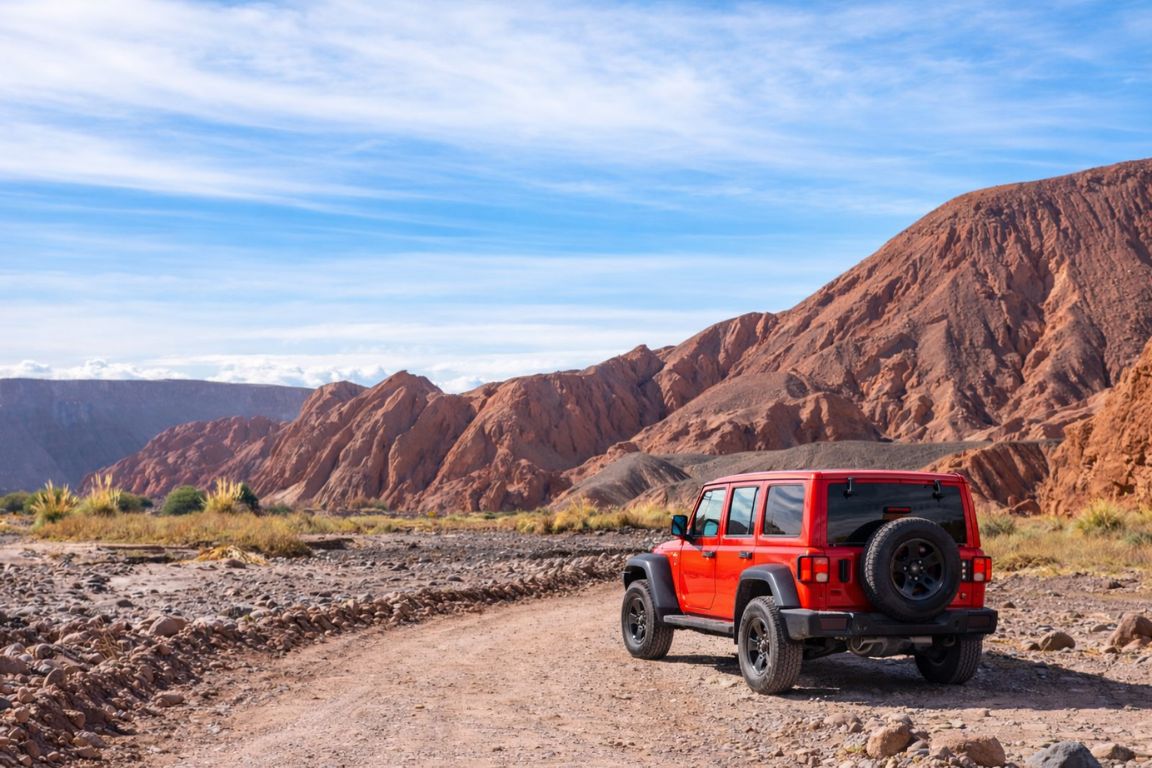
The lagoons lie roughly forty kilometres west of San Pedro de Atacama, reached by an unpaved road that takes around an hour each way. The final stretch is rough. Standard rental cars are a poor idea, and access is controlled at the entrance to the site rather than open to anyone who turns up.
Self-driving here is possible for a well-equipped vehicle but rarely sensible. The road is corrugated, unsigned in places, and there is no fuel, water or help along it. Add controlled entry and capped numbers and the argument for an organised trip becomes practical rather than commercial. The guided versus self-drive comparison works through where a rental car genuinely helps around San Pedro, and this route is one of the clearer cases against.
The drive itself is part of the day. You cross flat pale ground with the Cordillera de la Sal rising ahead, and the lagoons stay invisible until you are almost on top of them, which is where the name comes from. Sit somewhere you can see out and treat the hour as scenery rather than transit.
| From San Pedro to | Distance | Road | Drive time |
|---|---|---|---|
| Baltinache hidden lagoons | Around 40 km | Largely unpaved, rough final stretch | About 1 hour |
| Laguna Cejar | Around 20 km | Mostly sealed | 25 to 35 minutes |
| Valle de la Luna | Around 15 km | Sealed | 20 to 30 minutes |
| Termas de Puritama | Around 30 km | Sealed then track | 45 to 60 minutes |
| El Tatio geysers | Around 90 km | Mostly unpaved, high altitude | About 2 hours |
Baltinache or Laguna Cejar: an honest comparison
Baltinache wins on setting, quiet and the strength of the float. Cejar wins on convenience, price and the three-stop circuit that finishes with sunset at Tebenquiche. Baltinache is a landscape you walk through. Cejar is an afternoon out with a drink at the end. Neither replaces the other.
Booking numbers on this site tell their own story. The Baltinache half day has recorded more bookings than any other tour in the catalogue, at 6,789 and counting with a 4.9 rating, while a second Baltinache product has 3,625. That is not marketing, it is what people actually choose, and the reason is the setting rather than the swimming.
| Baltinache | Laguna Cejar circuit | |
|---|---|---|
| What you see | Seven turquoise lagoons in a salt canyon | One float lagoon, two sinkholes, one mirror lagoon |
| Swimming | One designated lagoon | The designated bathing lagoon in the Cejar system |
| Float strength | Generally stronger | Strong |
| Crowds | Capped and controlled | Busier; closer to town and cheaper |
| Facilities | Essentially none | Limited rinse facilities |
| Road | An hour, largely unpaved | Half an hour, mostly sealed |
| Sunset | Depends on departure time | Yes, at Tebenquiche, with a pisco sour |
| Listed price on this site | From around $60 | From around $35 |
| Walking | Short hike across salt crust | Minimal |
If you have room for both, do both, and put a couple of days between them so the salt has time to stop being a novelty. If you have room for one and want the picture that made you look up the Atacama in the first place, take Baltinache. Full detail on the alternative is in the Laguna Cejar and floating lagoons guide.
Choose A Date For Your Outing
Baltinache Hidden Lagoons
Select your date and party on GetYourGuide for the current price and departure options.
Visit The Baltinache Lagoons ↗What does the Baltinache half-day itinerary look like?
Hotel pickup, an hour on unpaved road, a guided walk past the lagoons with commentary on how the salt basin formed, a swim in the designated lagoon, a rinse and a snack or brunch, then the drive back. Half-day trips run around four to five hours door to door.
Departure times vary by operator, and the choice matters more here than at most sites. A morning slot gives cooler walking, softer light on the water and a free afternoon. A later slot warms the water slightly and can end with better colour on the salt ridges, at the cost of a hotter walk in.
| Stage | Typical time | What to know |
|---|---|---|
| Hotel pickup in San Pedro | Start of the tour | Swimwear on under your clothes; no changing rooms on site |
| Drive to the lagoons | About 1 hour | Unpaved and bumpy; not one to read in |
| Guided walk past the lagoons | 40 to 60 minutes | Sharp crust underfoot; stay on the marked route |
| Swim in the designated lagoon | 15 to 30 minutes | No sunscreen or repellent before entering; keep your head up |
| Rinse and snack or brunch | 30 to 45 minutes | Rinse water is what the operator carries; bring your own too |
| Return to San Pedro | About 1 hour | Salt will still be on you until you shower at the hotel |
Because it is short, low-altitude and undemanding, Baltinache combines well with an evening outing. It sits comfortably in the same day as a stargazing session, and it is a sensible choice for the day after El Tatio when nobody has the energy for another dawn start.
What should you bring to Baltinache?
Swimwear worn under your clothes, closed shoes for the crust plus something you can wear into the water, two towels, your own litre of fresh water for rinsing, a hat and long sleeves, sunscreen to apply after swimming, and a sealed bag for wet things. There is nothing on site to buy or borrow.
Two items separate a good visit from an uncomfortable one. The first is footwear with a sole, because the crust cuts. The second is your own rinse water, because what the operator carries is shared across the group and a private litre poured over your shoulders is worth more than it sounds.
| Item | Why it matters at Baltinache |
|---|---|
| Closed shoes plus water shoes | Salt crust cuts bare feet and destroys thin sandals |
| Swimwear under your clothes | There is nowhere to change on site |
| Two towels | The first is salty and damp within minutes of your swim |
| Your own litre of fresh water | The only rinse available is what the vehicle carries |
| Hat, sunglasses, long sleeves | There is no shade anywhere on site |
| Sunscreen, applied after swimming | Lotions are not permitted in the lagoon |
| Sealed bag | Salt ruins electronics and stiffens fabric |
| Cash in Chilean pesos | Community access points may take payment directly |
| Drinking water | Dry air plus salt water dehydrates faster than it feels |
Leave watches, rings and anything plated at the hotel. Hypersaline water is hard on metal and there is no safe place to store valuables while you are floating. The general kit list for the region is in the Atacama packing guide.
Who should skip Baltinache?
Travellers who cannot manage an hour of rough unpaved road, anyone with mobility limits that make uneven salt crust risky, people with open wounds or skin conditions salt aggravates, and visitors who specifically want a sunset with a drink, which the Cejar circuit does better.
Altitude is not a reason to skip it. At roughly 2,400 metres this is one of the gentlest outings in the region on that front, which makes it a good first-day choice while you acclimatise for the higher trips later in the week. The acclimatisation and tour-order guide puts it in that slot for exactly this reason.
| If this is you | Verdict | What to do instead |
|---|---|---|
| Just arrived from sea level | Go; low altitude and low effort | Nothing needed |
| Bad back or motion sickness | Think carefully | An hour of corrugated road each way is the issue, not the site |
| Limited mobility | Difficult | Puritama's boardwalks are far more manageable |
| Open cuts or shaved this morning | Come, but stay out of the water | The walk and the colour are most of the value |
| Want a sunset drink on a salt flat | Take the other tour | Cejar and Tebenquiche is built around that |
| Travelling with toddlers | Manageable but demanding | See the family travel guide |
| Only one free half day in the desert | Strong choice | It is the most booked tour on this site for a reason |
Which Baltinache tour should you book?
Two products on this site go to the lagoons. The four-hour Hidden Lagoons of Baltinache tour is the best seller in the entire catalogue, listed at around $60 with 6,789 bookings and a 4.9 rating. The five-hour Baltinache Lagoons Tour is listed at around $71 with 3,625 bookings and a 4.6 rating. The Cejar circuit is the alternative if you want a sunset instead.
The difference between the two Baltinache products is mostly length and inclusions rather than destination. The shorter one includes a scenic hike, the swim in the designated lagoon, brunch or snacks and a pisco sour. The longer one runs five hours with bilingual guiding, snacks and shared transport. Read both listings before choosing, since departure times and inclusions change more often than the route does.
| Tour | Listed price | Rating | Duration | Bookings | Best for |
|---|---|---|---|---|---|
| Hidden Lagoons of Baltinache | Around $60 | 4.9 | 4 hours | 6,789+ | Most visitors; the shortest route to the lagoons with brunch and a pisco sour |
| Baltinache Lagoons Tour | Around $71 | 4.6 | 5 hours | 3,625+ | A longer version with more time on the salt flats and bilingual guiding |
| Half-Day Laguna Cejar Experience | Around $35 | 4.8 | 5 hours | 814+ | The alternative float, with the Ojos del Salar and sunset at Tebenquiche |
Prices and availability move, so check the live listing before booking. Baltinache fills earlier than most tours in the region because access numbers are capped, which makes it one of the few outings genuinely worth reserving before you arrive rather than sorting out in town. The advance versus on-arrival booking guide covers how far ahead to commit by season, and the costs and budgeting guide puts the half-day price in context against a full Atacama week. Wider background on the reserve system across the Salar de Atacama is published by CONAF, Chile's national forestry corporation.
Make It Part Of Your Trip
Choose the dedicated route to the chain of lagoons, with shared transport and guiding.
Baltinache Hidden Lagoons
Visit the chain of seven lagoons with shared transport and bilingual guiding. Choose this for the salt-and-turquoise scenery and a lagoon-focused day.
Visit The Baltinache Lagoons ↗