Vallecito, the Magic Bus and the Cordillera de la Sal
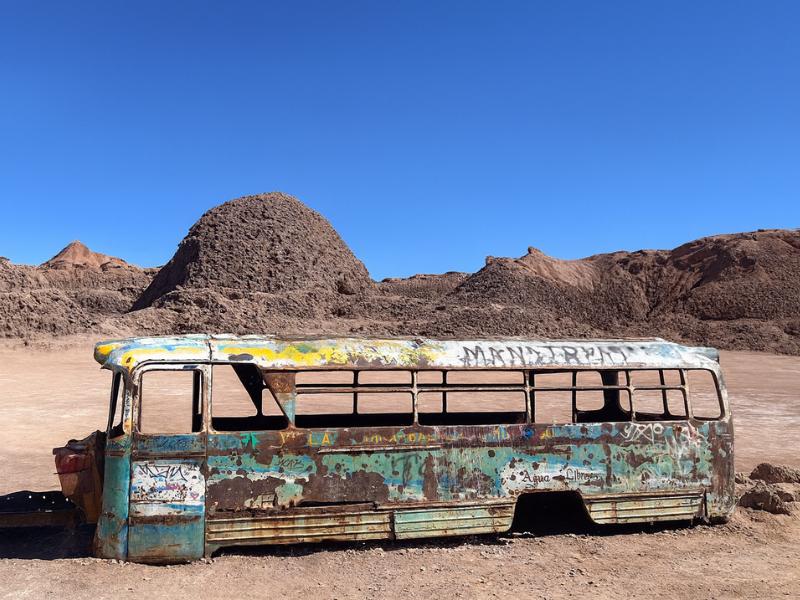
An abandoned bus, painted over by two decades of passing travellers, sits in a fold of the Salt Mountains a short drive from San Pedro. Around it lies Vallecito, the quiet version of the landscape everyone queues for at Moon Valley.
What is the Cordillera de la Sal, and why does it look like that?
The Cordillera de la Sal is a low range of salt, gypsum and clay running north to south between San Pedro de Atacama and the mountains to the west. It is not volcanic rock. It is the dried floor of an ancient lake basin, squeezed upward by tectonic pressure and then carved by wind and very occasional rain.
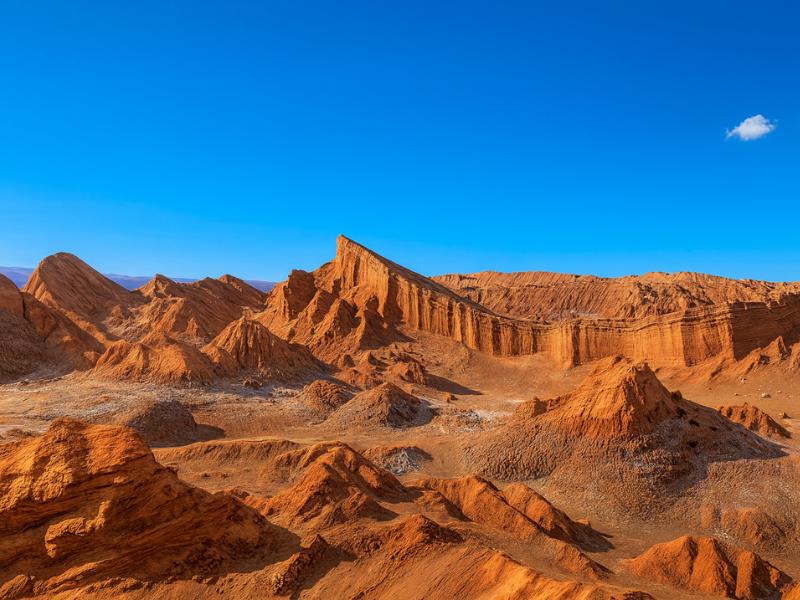
Understanding that one fact changes how the whole area reads. When you look at a striped wall of sediment in Vallecito, you are looking at layers laid down under water and then folded like a rug pushed against a doorway. Some beds tilt at improbable angles. Some are nearly vertical. The colours change with the mineral: white and grey where halite and gypsum dominate, ochre and red where iron-bearing clays sit, dark bands where finer sediment settled.
| Material | Where it came from | What you see on the ground |
|---|---|---|
| Halite (rock salt) | Evaporation of a standing lake in a closed basin | White crusts, crystalline surfaces, the crunch underfoot |
| Gypsum | Precipitated as the water concentrated | Glassy blades and plates that catch the light |
| Clay and silt | Fine sediment carried in from surrounding highlands | Smooth ochre and red bands, the softest material and the fastest to erode |
| Conglomerate and gravel | Coarser debris washed down in wetter phases | Harder caps that protect softer beds beneath and create the pinnacles |
The reason the range erodes into fins, spires and narrow valleys rather than rounded hills is that soft and hard layers alternate. Water, when it comes, cuts straight down through the soft beds and stalls at the hard ones. Wind does the rest, sandblasting the exposed faces. Nothing grows to hold it together, because the ground is salt.
You also hear it. On cool evenings, as the temperature drops, salt crystals contract and the ground makes a faint ticking, popping sound. Guides usually ask groups to go quiet for a minute so people can hear it. In a landscape with no birds, insects or leaves, it is the only sound the place makes on its own.
Choose The Bus Or The Classic Valley
Choose what you want and the time you can give it. The result explains the trade-off before you open the booking page.
What is the Magic Bus, and why do people go?
The Magic Bus is an abandoned, graffiti-covered bus sitting in a fold of the Cordillera de la Sal near Vallecito. It has no official status, no plaque and no ticket office. It became a landmark because it is a piece of human wreckage in an otherwise empty landscape, and because it photographs extremely well.
Accounts of how it got there vary, and our team is not going to pick one and present it as fact. What is not in dispute is what happened afterwards: passing travellers have been painting it for years, layer over layer, so the bus you photograph is not the bus anyone photographed five years ago. The colours change, the tags change, the interior changes. It is an accidental, rolling piece of collective art.
People go for the contrast. Everything else in the salt range is geology on a scale of millions of years. Then there is a rusting vehicle covered in spray paint, tilted in the sand, with the Andes behind it. That juxtaposition is the photograph, and it is why the stop appears in almost every Vallecito itinerary.
Two honest caveats. First, it is a short stop, usually 15 to 25 minutes, not a destination in itself: the valley around it is the actual tour. Second, the bus is a wreck in the desert. It has broken glass, sharp edges and no maintenance. Climbing on the roof for a photo is a bad idea and guides discourage it. Adding your own paint is a matter between you and everyone who comes after you.
Where is Vallecito, and how does it differ from Valle de la Luna?
Vallecito sits in the same Cordillera de la Sal, a short drive from San Pedro, but outside the main Valle de la Luna sector of the reserve. The geology is close to identical. The difference is the traffic: Moon Valley draws the bulk of San Pedro's afternoon tours, Vallecito draws a fraction of them.
| Valle de la Luna | Vallecito | Valle de la Muerte / Valle de Marte | |
|---|---|---|---|
| Altitude | about 2,400 to 2,600 m | about 2,400 to 2,600 m | about 2,400 to 2,600 m |
| Crowds at sunset | Heaviest in the region | Noticeably lighter | Moderate |
| Signature features | Gran Duna, Tres Marias, salt caverns, Piedra del Coyote | Magic Bus, narrow valleys, canyon walls, small dunes | Huge dune faces, sandboarding, ridge viewpoints |
| Walking involved | 2 to 4 km in short pieces | Short hikes, generally gentle | Steep sand if you climb the dune |
| Typical tour length | 4 to 5 hours | 4 to 5 hours | Often a 2 to 3 hour add-on |
| Acclimatisation needed | None | None | None |
Read that table and the honest conclusion is that the two valleys are variations on the same theme rather than different experiences. If you have one afternoon and you want the postcard, go to Valle de la Luna. If you have already done Moon Valley, or you are travelling in high season and the thought of a hundred people on a ridge puts you off, Vallecito gives you the same salt range with room to move.
There is one more practical distinction. Because Vallecito sits outside the busiest sector, operators can run smaller vehicles and looser schedules there. The sunset stop tends to feel less like a car park and more like a group of people standing in a valley, which is what most visitors imagined before they arrived.
Which should you book if you only have one afternoon?
Book Valle de la Luna if this is your first Atacama sunset and you want the named landmarks. Book Vallecito and the Magic Bus if you value quiet over checklist, if you are visiting in January or February peak, or if you want a smaller group and a longer stop at each place.
There is no wrong answer, and anyone who tells you one valley is objectively better is selling something. What differs is the mood. Moon Valley is a headline attraction operating at capacity, with the accompanying logistics: a queue at the entry, a convoy on the internal road, a ridge full of tripods. Vallecito is the same landscape run at a quarter of the volume.
A useful tiebreaker is how many days you have. On a two-day trip, take the classic. On four or more days, do both, on different afternoons, and you will notice how differently the same rock reads with and without a crowd in it. The itinerary shapes are in the two-day plan and the 3 to 4 day classic itinerary.
The Direct Fit And Useful Alternatives
Vallecito And Magic Bus
Give your camera a different desert subject: Vallecito and the Magic Bus. The outing includes snacks, with pickup offered within the operator’s coverage.
Meeting point available outside the pickup area.
Book on ViatorSee The Magic Bus Outing ↗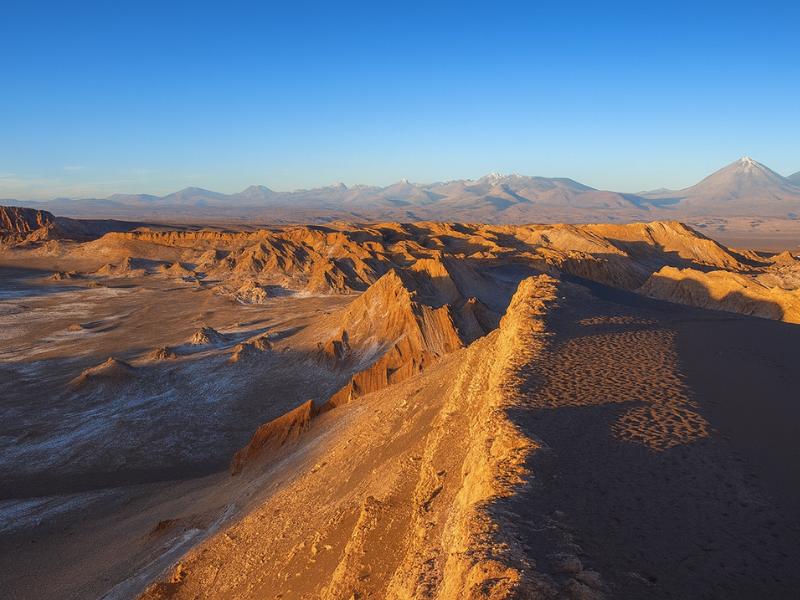
Valley Of The Moon
Make room for a desert landscape outing without committing several days. A guided Moon Valley excursion gives your afternoon a clear destination.
About four hours. Walking is involved; read the participation requirements.
Book on ViatorSee Moon Valley Departures ↗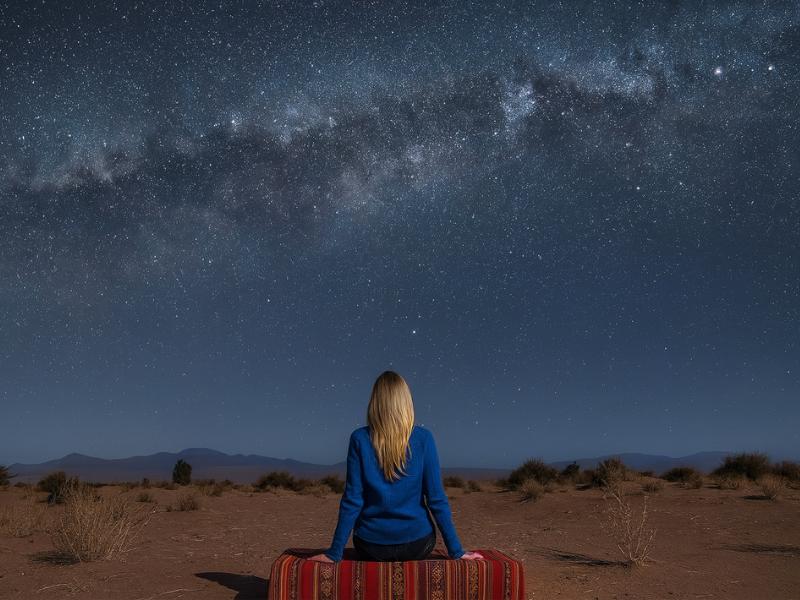
The Roofless Stargazing Experience
Make the sky part of your trip: telescope observation, an astronomy talk and a professional photo to take home.
Hot drinks and blankets provided. Dress warmly; pickup coverage is limited.
Book on ViatorChoose My Stargazing Night ↗What does a Vallecito afternoon actually look like?
Hotel pickup in mid to late afternoon, a 20 to 30 minute drive into the salt range, two or three short walks through narrow valleys and dune sections, the Magic Bus photo stop, then a sunset viewpoint with a drink and snacks before returning to San Pedro after dark.
| Stage | Roughly how long | What happens |
|---|---|---|
| Hotel pickup and drive out | 30 to 45 min | Collection around San Pedro, then the road into the Cordillera de la Sal |
| First valley walk | 30 to 45 min | Narrow salt corridors, layered walls, guide explains the geology |
| Magic Bus stop | 15 to 25 min | Photographs, the story of the bus, a look at how the paint has changed |
| Dunes and viewpoints | 45 to 60 min | Short climbs for elevated views over the salt range |
| Sunset stop | 45 to 60 min | Pisco sour or wine with snacks while the light turns, then alpenglow east |
| Return | 30 min | Back into town after dark, usually dropped at your hotel |
The drink at sunset is a genuine feature of these tours rather than a marketing line. Operators carry a table, glasses and appetisers out into the valley and set up while the group is still walking. It changes the last hour from a photo stop into something closer to an evening out, which is why the Vallecito formats hold high ratings.
Alcohol at 2,400 m does hit harder than at sea level, particularly on day one before you have adjusted and if you have been under-drinking water all afternoon. One pisco sour is a pleasant part of the experience. Three is a rough evening.
How busy does it get, and when?
Vallecito is quieter than Moon Valley in every season, but it is not empty. The busiest window is January and February, Chilean summer holidays, followed by the July winter break. April to May and September to October give the best combination of stable weather and light traffic.
| Period | Visitor volume | Weather character | Verdict for Vallecito |
|---|---|---|---|
| January to February | Highest of the year | Warmest days, occasional altiplanic cloud and storms to the east | The strongest case for choosing Vallecito over Moon Valley |
| March to May | Moderate, falling | Stable, clear, comfortable afternoons | Excellent, arguably the best window |
| June to August | Moderate, with a July peak | Coldest nights, very clear skies, early sunsets | Superb light, bring serious layers for the sunset stop |
| September to November | Moderate, rising | Stable and clear, warming through | Excellent |
| December | Rising toward peak | Warm, late sunsets | Good, book ahead |
The altiplanic winter, the summer months when moisture pushes over the Andes, mostly affects the high-altitude tours rather than the salt range at 2,400 m. Even so, a cloudy sunset is a cloudy sunset. If your trip is short and sunset matters to you, spread your valley afternoons across two days rather than betting everything on one. The seasonal detail sits in the best time to visit.
Are Valle de Marte and Valle de la Muerte the same place?
They are two names for the same valley next door to Moon Valley, and the confusion is part of local lore. The widely repeated account is that a researcher named it Mars Valley for its red ground and the name was misheard as Death Valley, which then stuck. Both names are still in use today.
Whichever name your guide uses, the place itself is distinct from both Moon Valley and Vallecito. Its signature is scale: enormous sand faces banked against rock walls, steep enough that sandboarding operates there. The ridge above it is where Piedra del Coyote looks down, which is why so many Moon Valley tours end facing into it.
If the name interests you, treat it as a story rather than a settled fact. What our team can say plainly is that the valley is red, that it is dry beyond anything most visitors have experienced, and that the two names appear interchangeably on maps, signs and tour listings across San Pedro. Do not book two tours expecting two different valleys.
How much walking is there, and does altitude matter here?
Expect two to four kilometres across the afternoon in short, gentle sections, with a few soft-sand climbs. The whole area sits at roughly 2,400 to 2,600 m, the same as San Pedro, so no acclimatisation is required. You will still notice the thinner air on any uphill.
| Where | Approximate altitude | Effort | Who might find it hard |
|---|---|---|---|
| San Pedro de Atacama | 2,400 m | Baseline | Anyone in their first 24 hours |
| Vallecito valley floor | about 2,400 to 2,500 m | Flat walking on sand and salt | Nobody in reasonable health |
| Dune and ridge viewpoints | about 2,500 to 2,600 m | Short soft-sand climbs | People with knee issues, or anyone rushing it |
| Magic Bus site | about 2,500 m | Level, a few steps from the vehicle | Nobody |
The thing to internalise is that at 2,400 m you are breathing roughly three quarters of the air pressure you get at sea level. That does not cause altitude sickness in most people, but it does mean a modest sand climb feels like a steeper one, and that a hangover, a long flight or a skipped lunch will hit harder than usual. Drink water through the afternoon and take the climbs slowly.
Compare that with what waits later in the week. El Tatio sits around 4,300 m and Cerro Toco tops out at 5,604 m. Vallecito is the gentle end of the scale, which is exactly why it belongs early in a trip. The full sequencing logic is in the altitude and tour order guide.
Choose A Date For Your Outing
Vallecito And Magic Bus
Select your date and party on Viator for the current price and departure options.
See The Magic Bus Outing ↗What do the small-group formats change?
Group size changes pace more than content. A capped group of a dozen or so moves through the valleys faster, stops where the light is rather than where the schedule says, and gives you a guide who can answer questions rather than shout over a crowd. On a sunset tour, that is most of the value.
In practical terms a smaller vehicle can use narrower access tracks, which puts you closer to the walking start. Pickups take less time because there are fewer hotels to visit, so you leave town earlier and arrive with more daylight in hand. And the sunset set-up with drinks works far better around 12 people than around 40.
The trade-off is price and availability. Small-group formats cost more per person and fill earlier, especially in January and February. If your dates are fixed and you want the capped version, book it before you arrive. The general case for and against is in private tours versus group tours.
| Tour | Listed price | Rating | Duration | Bookings | What defines it |
|---|---|---|---|---|---|
| Vallecito & Magic Bus Adventure | from $50 | 4.9 | 4 hours | 1,430+ | Sunset in the Cordillera de la Sal, Magic Bus photo stop, pisco sour with wine and appetisers, group capped at 18 |
| Vallecito Atacama Desert Tour | from $45 | 4.7 | 5 hours | 477+ | A longer afternoon: rock formations, the bus, short hikes and a sunset pisco sour with an English-speaking guide |
| San Pedro de Atacama: Valle de la Luna Tour | from $47 | 4.6 | 5 hours | 1,611+ | The neighbouring valley, useful if you want both sectors of the salt range across two afternoons |
Those are listed starting prices and they move with season and demand, so check the live listing before booking. All three include hotel pickup, which matters more than it sounds when you are coming back into town after dark.
How do you photograph the bus and the salt range?
Shoot the bus in side light rather than at midday, and save the wide landscape work for the final hour. The bus is a small, busy, high-contrast subject in a huge empty frame, so the usual mistake is standing too far back and losing it against the ground.
| Subject | Best light | Approach that works |
|---|---|---|
| Magic Bus, whole vehicle | Late afternoon side light | Get low, include the ridge line behind, let the paint carry the colour |
| Paint detail | Open shade or overcast | Fill the frame, treat it as abstract texture rather than documentary |
| Narrow valley walls | When the sun is off the walls | Vertical framing, include a person for scale |
| Salt range panorama | Final 60 minutes | From a ridge viewpoint, wait for shadows to define the folds |
| Alpenglow on the Andes | 10 to 25 min after sunset | Turn east while the group faces west, Licancabur goes pink |
Dust is the enemy of equipment here. Change lenses as little as possible, keep the bag closed between shots and expect to clean sensors after an Atacama trip. A polarising filter can deepen the sky dramatically at this altitude, sometimes past believable, so use it with restraint.
If you want an aerial version of the same landscape, the dawn balloon flight passes over Moon Valley, Death Valley and the Salt Mountains, which is the only way to see the folding of the range from above. It is a very different price bracket and it flies at sunrise, not sunset.
What should you bring, and what should you expect afterwards?
Layers, water, sun protection and closed shoes, exactly as for any late-afternoon desert tour. You leave in heat and return in cold, and the sunset stop is often the windiest, most exposed part of the afternoon.
- Warm layer plus windproof shell. Non-negotiable. The temperature drop after sunset is fast and the valleys funnel wind.
- 1.5 to 2 litres of water. The humidity here is extraordinarily low and you dehydrate without obviously sweating.
- Closed walking shoes. Sand gets into everything, and salt crystals are sharp.
- Sunscreen, brimmed hat, sunglasses. Thin air plus reflective pale ground is a punishing combination.
- Head torch or phone torch. The walk back to the vehicle after sunset is genuinely dark.
- Cash for tips if you want to tip the guide, since card payment in a valley is not a thing.
Afterwards, most groups get back into San Pedro in time for dinner, and the town's restaurants stay open late. If you are stacking activities, a stargazing tour later the same night is a common and comfortable pairing, because both are evening activities at town altitude and neither requires an early start. The astronomy options are compared in the Atacama stargazing guide.
Where Vallecito fits across a longer stay, it works as a second or third afternoon, after Moon Valley and before or after a low-altitude lagoon half-day such as Laguna Cejar. Keep the high days, Piedras Rojas and the geysers, for later in the week. Budget planning across all of it is in trip costs and budgeting.
Make It Part Of Your Trip
This outing explicitly names the bus and Vallecito, with snacks and pickup within the operator’s coverage.
Vallecito And Magic Bus
Give your camera a different desert subject: Vallecito and the Magic Bus. The outing includes snacks, with pickup offered within the operator’s coverage.
See The Magic Bus Outing ↗