Termas de Puritama: Hot Springs Guide for San Pedro
A warm river runs down a narrow canyon about 30 kilometres from San Pedro de Atacama, stepped into a chain of stone-edged pools at roughly 3,500 metres. Termas de Puritama is the one Atacama outing where the point is to stop moving.
What are the Termas de Puritama?
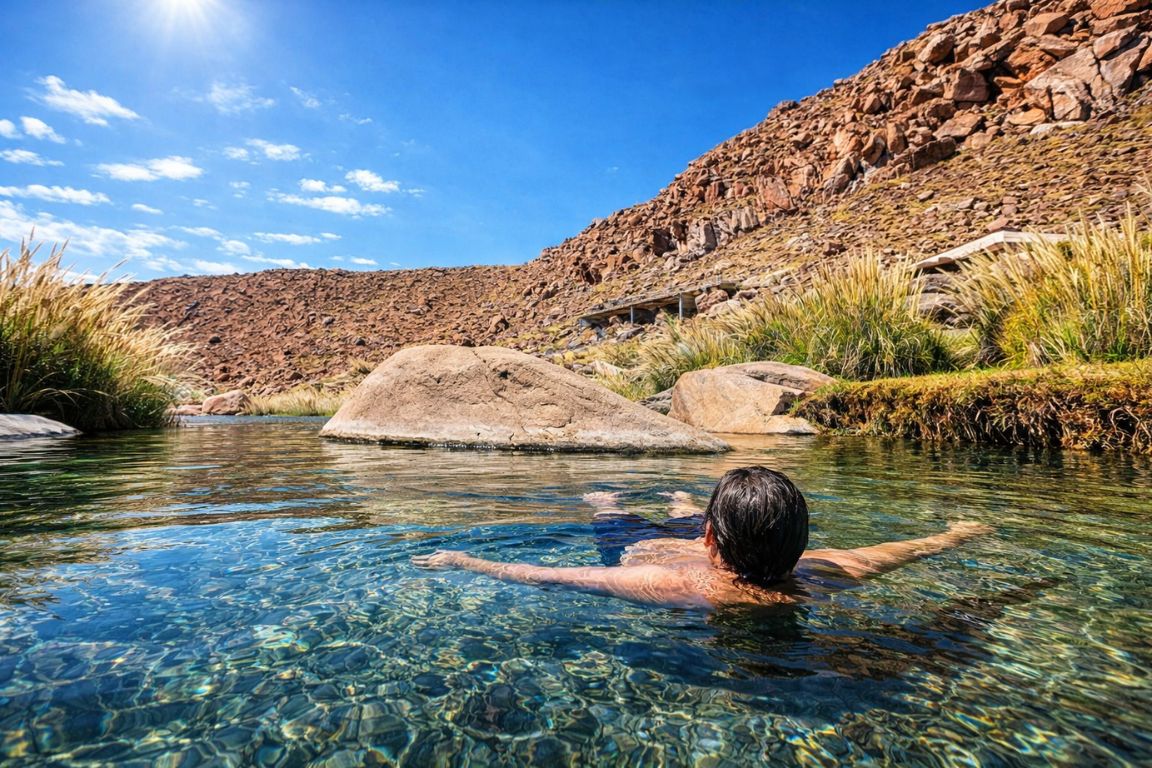
Puritama is a thermal river, not a spa. Geothermally heated water surfaces high in a narrow canyon and steps downhill through a chain of terraced pools linked by small waterfalls, edged in stone and connected by wooden boardwalks. Reeds and grasses line the banks, which is startling in a desert this dry.
The name comes from Kunza, the language of the Atacameño people, and translates roughly as hot water. That is a fair description of the place and also of the entire attraction. There is no built pool, no chlorine, no tiling. Water arrives from underground at its own temperature, fills one basin, spills into the next, and keeps going down the canyon.
Counting the pools is oddly contentious. The chain is usually described as eight terraced basins, and several tour listings describe seven, because the number actually open to bathers changes with maintenance, flow and management decisions. Our advice is not to arrive counting. Walk the boardwalk to the top, look at the pools on the way, and choose one that suits the depth and the crowd rather than one with a particular number attached.
The setting is what makes it. You are in a slot of green at 3,500 metres, with dry ochre canyon walls rising either side and nothing but rock and sky beyond them. Coming from a day at Valle de la Luna or the salt flats, the contrast is genuinely disorienting. This is the wettest, greenest, softest thing in the region.
Make The Soak The Main Event
Choose what you want and the time you can give it. The result explains the trade-off before you open the booking page.
How hot is the water at Puritama, really?
Warm rather than hot. The pools sit in the region of 28 to 33 degrees Celsius, which reads as pleasantly above body-comfortable in cool air and merely mild on a warm afternoon. Water enters the chain at its highest temperature and loses a little heat as it steps downhill, so the upper pools generally run warmest.
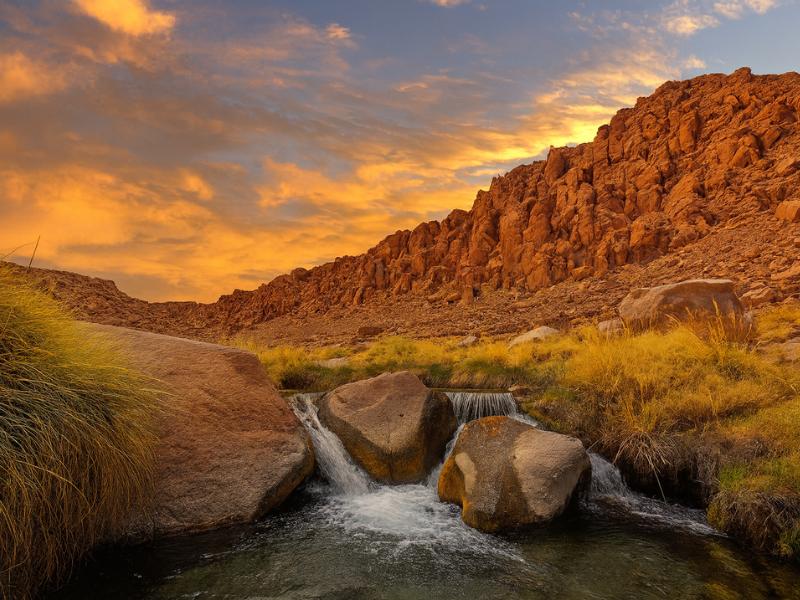
Expectations cause more disappointment here than the water does. People who have been to Icelandic or Japanese thermal baths arrive braced for something scalding, sit down, and find the temperature closer to a heated swimming pool than a hot tub. That is not a fault. It is the temperature the spring delivers, and it is the reason you can stay in for an hour rather than ten minutes.
Position within the chain matters more than people expect. Sit near where water enters a basin and you feel a distinct warm current; drift to the far edge of the same pool and it cools by a noticeable margin. Depth varies too, from thigh-deep shelves to sections where you can sit with shoulders under. Move around before settling. The pool you first walk into is rarely the best one for you.
| Where you are in the chain | What to expect | Who it suits |
|---|---|---|
| Upper pools, nearest the source | Warmest water, strongest inflow, usually the busiest | Anyone who feels the cold, or arriving on a chilly morning |
| Middle terraces | Balanced temperature, small falls between basins | Most visitors; the sweet spot for a long soak |
| Lower pools | Slightly cooler, generally quieter, more reeds | People who want space over heat |
| Directly under an inflow | Noticeably warmer, moving water on your shoulders | Anyone treating this as a recovery stop |
| Shallow edges | Coolest, and where the air gets at you | Nobody, for long |
One physical detail worth knowing: because the air at 3,500 metres is thin and dry, evaporation off wet skin cools you fast the moment you stand up. The water can feel perfect and the ten seconds after leaving it can feel brutal. Keep your towel within reach of the pool rather than back at the entrance.
Where is Puritama and how long does the drive take?
The canyon lies roughly 30 kilometres north-east of San Pedro de Atacama, on the road that heads towards El Tatio. Driving time is around 45 minutes to an hour depending on the vehicle and the last stretch of track. The climb takes you from 2,400 metres in town to about 3,500 metres at the pools.
That geography is useful to hold in your head, because it explains why Puritama pairs so naturally with the geysers. Both sit on the same road out of town. Some visitors try to combine them into one day, and while a private itinerary can technically do it, the result is a very long day with a 4am start at one end and a wet, cold departure at the other. Splitting them across two days is almost always better.
Arrival involves a short walk. Vehicles park above the canyon and you descend a path and boardwalk to reach the water, then climb back out afterwards at 3,500 metres. It is not a hike, but it is not flat either, and the return climb after a long soak catches people out. Take it slowly and it is a non-event.
| From San Pedro to | Approximate distance | Driving time | Altitude at the stop |
|---|---|---|---|
| Termas de Puritama | Around 30 km | 45 to 60 minutes | Around 3,500 m |
| El Tatio geysers | Around 90 km | About 2 hours | Around 4,320 m |
| Laguna Cejar | Around 20 km | 25 to 35 minutes | Around 2,300 m |
| Baltinache hidden lagoons | Around 40 km on unpaved road | About 1 hour | Around 2,400 m |
| Valle de la Luna | Around 15 km | 20 to 30 minutes | Around 2,500 m |
| Toconao village | Around 38 km | About 45 minutes | Around 2,500 m |
Why does Puritama work best as a recovery day?
Because most Atacama itineraries stack high-altitude, early-start days back to back, and by day three people are running on broken sleep and thin air. Puritama sits low enough to be gentle, warm enough to loosen everything that has seized up, and asks nothing of you beyond getting into water.
Look at what a typical week does to a body. El Tatio at 4,320 metres before dawn. Piedras Rojas and the altiplanic lagoons above 4,000 metres for ten hours. Cold water at the floating lagoons. Late nights for stargazing. Each is worth doing and none is restful. The cumulative effect is a specific kind of tiredness that is not quite altitude sickness and not quite exhaustion.
Placed the morning after El Tatio, Puritama does something measurable. You are still at altitude, so acclimatisation continues, but you are horizontal in warm water instead of walking on freezing boardwalks. Muscles that tightened up in the cold release. And the day costs you nothing in energy, which means you can still do a sunset outing that evening.
| Day | Typical plan | Load on you | Where Puritama fits |
|---|---|---|---|
| Day 1 | Arrive, acclimatise, town and Valle de la Luna at sunset | Light | Too early; save it |
| Day 2 | Floating lagoons or Baltinache, stargazing at night | Moderate | Not yet needed |
| Day 3 | El Tatio geysers, 4am start at 4,320 m | Heavy | The reason you will want it |
| Day 4 | Puritama morning, free afternoon | Very light | Ideal placement |
| Day 5 | Piedras Rojas and altiplanic lagoons, long day | Heavy | You will arrive fresh |
The acclimatisation and tour-order guide builds this out properly, and the five-day itinerary shows the same logic across a longer stay. If you only have three days, Puritama competes for a slot rather than filling a gap, and the honest answer is that first-timers usually get more from the geysers and the salt flats.
The Direct Fit And Useful Alternatives
Puritama Hot Springs: AM Or PM
A hot-springs visit with transport lets you leave the driving out of your relaxation plans. Choose a morning or afternoon option.
About 4.5 hours. Bring towel and swimwear. Hotel pickup; return to central San Pedro. Confirm entrance arrangements.
Book on GetYourGuideChoose My Hot-Springs Time ↗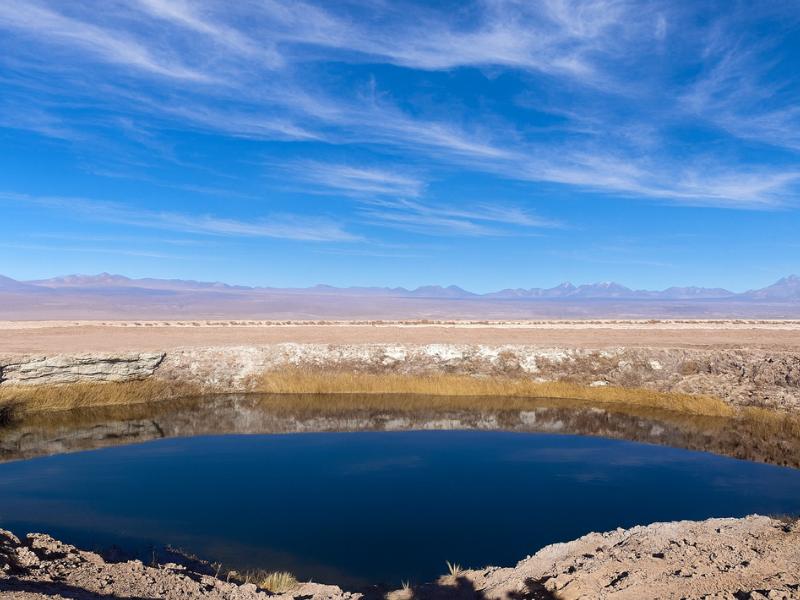
Laguna Cejar And Nearby Lagoons
Choose a lagoon outing for a change of pace from rocky valleys. This route combines Cejar with nearby Ojos del Salar and Tebenquiche.
About five hours. Bring sun protection; the itinerary and bathing access depend on current conditions.
Book on ViatorBook A Cejar Lagoon Outing ↗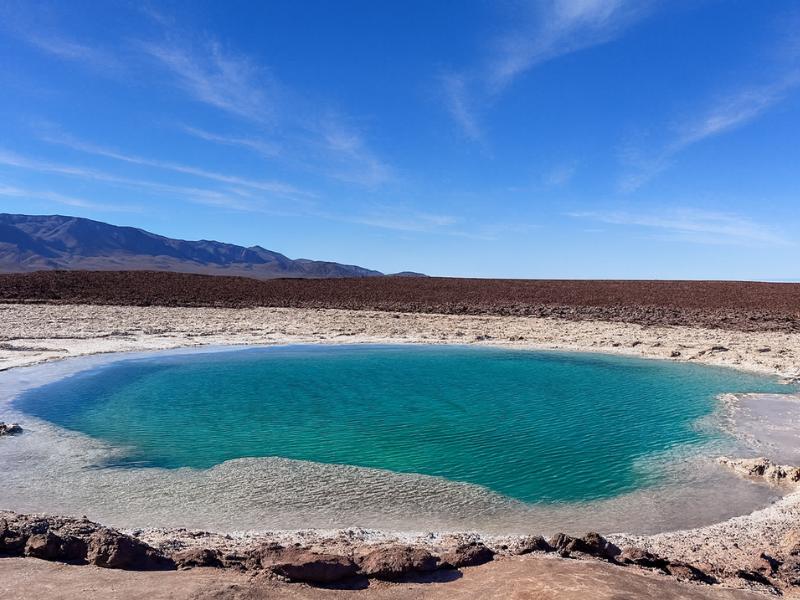
Baltinache Hidden Lagoons
Visit the chain of seven lagoons with shared transport and bilingual guiding. Choose this for the salt-and-turquoise scenery and a lagoon-focused day.
Allow about five hours. Entrance extra; urban pickup coverage and rough-road travel. Swimming depends on current access.
Book on GetYourGuideVisit The Baltinache Lagoons ↗How long do people actually stay in the pools?
Two to three hours on site is typical, of which perhaps ninety minutes is spent in the water in stints rather than continuously. Most people soak, get out, warm up in the sun, move to a different pool and get back in. Half-day tours are built around roughly this rhythm.
Continuous immersion at 28 to 33 degrees for hours is less appealing than it sounds, because your body eventually stops registering the water as warm. The pattern that works is intervals. Twenty or thirty minutes in, ten minutes out on a warm rock, then back in somewhere further up the chain. That also gives you a reason to see the whole canyon rather than one basin.
Time of day changes the arithmetic. Mornings are cooler in the air, which makes the contrast with the water stronger and the getting-out harder. Afternoons are warmer overall and the light in the canyon is better, but the canyon walls throw shade earlier than you expect, and once your pool is in shadow the appeal drops fast. If you have a choice, aim to be in the water while the sun is still on it.
Do not plan anything strenuous for the two hours after. A long warm soak at altitude leaves most people pleasantly useless. That is the point, but it does mean a Puritama morning followed by a Cerro Toco climb is a poorly designed day.
How accessible are the boardwalks and the pools?
Better than most natural thermal sites, and still not step-free. Wooden boardwalks and stone paths link the pools along the canyon, which removes most scrambling, but reaching the canyon floor from the car park involves a descent and a climb back out at 3,500 metres. Entering each pool means steps or a stone edge.
For travellers with reduced mobility this is the honest picture: the walkways are a genuine help and the site is far easier than, say, clambering across salt crust at Baltinache, but there are no handrails everywhere, surfaces are wet, and the altitude makes any climb feel harder than the same climb at sea level. People with knee problems or limited stamina generally manage it fine if they go slowly and pick a pool near the bottom of the path rather than the top.
Wet stone and wet wood are slippery. Water shoes or sandals with grip are more useful here than at any other Atacama site, and they double as protection against cold stone on the walk between pools. Flip-flops are the common choice and the common cause of an undignified slide.
| Traveller | How Puritama works out | Practical tip |
|---|---|---|
| Older travellers in reasonable health | One of the best outings in the region | Choose a lower pool to shorten the walk; see the senior travel guide |
| Families with children | Works well; shallow shelves in several pools | Water is warm but the air is not; bring extra towels |
| Reduced mobility or knee issues | Possible but not step-free | Go slowly on the return climb at 3,500 m |
| Nervous swimmers | Comfortable; pools are contained and calm | Depth varies pool to pool, so check before entering |
| Anyone straight off a flight | Fine, and gentler than most first-day options | Drink more water than feels necessary |
| Post-El Tatio and tired | Ideal | Book the morning slot and keep the afternoon free |
What should you bring to Puritama?
Swimwear worn under your clothes, a proper towel rather than a hotel hand towel, footwear with grip that can get wet, a warm layer for after, sunscreen, water, and a dry bag for the walk back. Changing facilities are basic, so arriving half-changed saves the worst of the faff.
The item people most often regret leaving behind is a second towel. One gets soaked by the first exit and stays cold for the rest of the visit. The item people most often bring pointlessly is a full picnic, since most tours include a snack and there is limited space to spread out.
| Item | Why it matters at Puritama |
|---|---|
| Swimwear worn under clothes | Changing facilities are minimal; arriving ready removes the queue |
| Two towels | The first is wet after your first exit; the second saves the afternoon |
| Water shoes or grippy sandals | Wet stone and boardwalk are slippery, and rock is cold underfoot |
| Warm layer for afterwards | Evaporation at 3,500 m cools you faster than the air temperature suggests |
| High-factor sunscreen | Altitude UV is severe and water reflects it back at you |
| Drinking water | Warm water plus altitude plus dry air dehydrates you quickly |
| Dry bag or plastic bag | For wet swimwear on the drive back |
| Small cash in pesos | Useful for anything bought on the way; cards are not universal |
Leave heavy jewellery and anything precious at the hotel. Mineral water and silver do not get along, and there is nowhere secure to store valuables while you are in a pool three terraces up the canyon. The general kit thinking is in the Atacama packing guide.
Morning or afternoon: which Puritama slot is better?
Morning slots give you warmer water against cooler air, quieter pools and a free afternoon. Afternoon slots give you warmer air, better light in the canyon and an easier exit from the water, but the walls throw shade earlier than expected and you lose the evening for a sunset tour.
Neither is wrong, and the deciding factor is usually what else you have booked. If a sunset outing at Valle de la Luna or a stargazing session is on the same day, take the morning. If you flew in that day and want a gentle start, take the afternoon, since it gives you time to reach town, settle and eat first.
Crowding follows tour-bus rhythms rather than the clock, so the quietest water tends to be either early or late in the operating day rather than at a specific hour. Guides know the pattern for the day they are working and will often steer you up or down the canyon on arrival. Following that advice is generally better than heading for the first pool you see.
Choose A Date For Your Outing
Puritama Hot Springs: AM Or PM
Select your date and party on GetYourGuide for the current price and departure options.
Choose My Hot-Springs Time ↗How does Puritama compare with the other water stops in the Atacama?
Puritama is the only warm, comfortable, sit-down water experience in the region. The floating lagoons are cold and saline and about buoyancy. The El Tatio pool is a rough thermal bath at extreme altitude. Baltinache is a hypersaline float with no facilities at all. They are not substitutes for each other.
Visitors sometimes ask which single water outing to pick, as though they were variations of the same day. They are not. Floating in hypersaline water is a novelty you experience once and remember; sitting in a warm thermal river is a rest you actively use. Most three-day itineraries fit one of each rather than choosing between them.
| Site | Water | Altitude | Facilities | What you actually do |
|---|---|---|---|---|
| Termas de Puritama | Warm, roughly 28 to 33 C, fresh mineral water | Around 3,500 m | Boardwalks, basic changing, toilets | Soak for two to three hours |
| Laguna Cejar system | Cold and hypersaline | Around 2,300 m | Limited rinse facilities | Float for a few minutes, rinse, watch sunset at Tebenquiche |
| Baltinache hidden lagoons | Cold and intensely saline | Around 2,400 m | Essentially none | Short hike, float in one lagoon, walk the salt crust |
| El Tatio thermal pool | Warm, variable by day and position | Around 4,320 m | Rudimentary changing huts | A brief soak in freezing air |
| Canyoning pools | Cold, in a canyon setting | Varies | Guided with full safety kit | Rappels and hiking, not relaxation |
Which Puritama tour fits your trip?
Three products on this site reach the pools. The dedicated half-day trip is the direct and best-value route. The private romantic full day includes Puritama inside a larger package. The four-day multi-day experience folds it into a wider itinerary alongside the geysers, lagoons and stargazing.
For most travellers the dedicated half day is the obvious answer. It exists to do one thing, it leaves the rest of your day open, and its rating reflects a simple product delivered well.
| Tour | Listed price | Rating | Duration | Bookings | Best for |
|---|---|---|---|---|---|
| Puritama Hot Springs Experience | Around $53 | 5.0 | 4 hours | 438+ | Anyone who just wants the pools, with pickup and entrance handled |
| Private Romantic Day, full day | Listed at $2,200 for the private package | 4.6 | 12 hours | 1,007+ | Couples marking an occasion; balloon flight, horseback ride and Puritama in one day |
| Multi-Day Experience with pickup | Around $540 | 4.8 | 96 hours | 1,830+ | Four-day visitors who want the whole region handled in one booking |
Entrance to the pools is ticketed and capacity is managed, which is why the entrance fee is normally bundled into an organised trip rather than bought at the gate on the day. If you are driving yourself, check current access arrangements before setting out, since turning up without a booking is not reliable. The guided versus self-drive comparison covers where a rental car helps in this region and where it does not.
Can you visit Puritama independently, and should you?
You can drive yourself as far as the canyon, but entry is ticketed and capacity is managed, so turning up without a booking is unreliable. Most visitors go on an organised half day because it removes the ticket question, the parking question and the hour of driving at each end of a soak.
The self-drive case is stronger here than for somewhere like Baltinache, since the road is sealed for most of the distance and the final track is short. If you already have a rental car for other reasons, the maths can work. If you would be hiring one purely for this, the numbers rarely do.
What tips it for most people is the state you are in afterwards. A long warm soak at 3,500 metres leaves you slow and pleasantly stupid, and an hour of desert driving in that state is not the best plan anyone has had. Being collected and driven back is a larger part of the value than it looks on paper.
| Question | Organised half day | Driving yourself |
|---|---|---|
| Entrance ticket | Normally bundled into the price | Your responsibility; capacity is capped |
| Driving after a soak | Someone else does it | An hour, while very relaxed |
| Cost | Listed from around $53 | Car hire, fuel and entry, then repeat for every other outing |
| Timing flexibility | Fixed morning or afternoon slot | Yours, within opening hours |
| Local context | Guide explains the canyon and the community that runs it | None |
| Best for | Almost everyone | Visitors already renting a car for a longer regional trip |
Who should think twice about Puritama?
Travellers on a very short trip who have not yet seen the geysers or the salt flats, anyone hoping for a genuinely hot spring, people with cardiovascular conditions who have been advised against warm immersion at altitude, and visitors who would rather spend the money on a second signature landscape day.
The strongest argument against Puritama is opportunity cost, not the site itself. On a two-day trip, the geysers, the moon valley and the floating lagoons all deliver something you cannot get anywhere else on earth, while a warm thermal pool, however lovely, has cousins in Iceland, Japan, New Zealand and half of South America. The two-day itinerary guide leaves it out for exactly this reason.
There is also a medical note worth taking seriously. Warm immersion dilates blood vessels and drops blood pressure, and doing that at 3,500 metres compounds the effect. If you already feel light-headed from the altitude, get out slowly, sit before you stand, and drink water. Anyone with heart or circulatory conditions should raise it with a doctor rather than assuming a warm pool is automatically benign. The San Pedro safety guide covers altitude symptoms in more detail.
For everyone else, the case is simple. It is the only stop in the region designed around comfort, it sits at an altitude that helps rather than punishes, and it repairs the damage done by three consecutive dawn starts. Put it after your hardest day and it becomes the thing people remember most fondly, which is not what anyone expects from a warm pool in a desert. Background on the wider protected landscape around San Pedro is available through Chile's national forestry corporation, CONAF.
Make It Part Of Your Trip
The AM/PM outing focuses on reaching the hot springs with transport arranged.
Puritama Hot Springs: AM Or PM
A hot-springs visit with transport lets you leave the driving out of your relaxation plans. Choose a morning or afternoon option.
Choose My Hot-Springs Time ↗