Valle de la Muerte and Sandboarding: The Full Guide
A few minutes west of San Pedro, sand has piled against rock walls in faces steep enough to ride down. The valley has two names, an unsettled origin story, and the only sport in the Atacama where the walk up is harder than the descent.
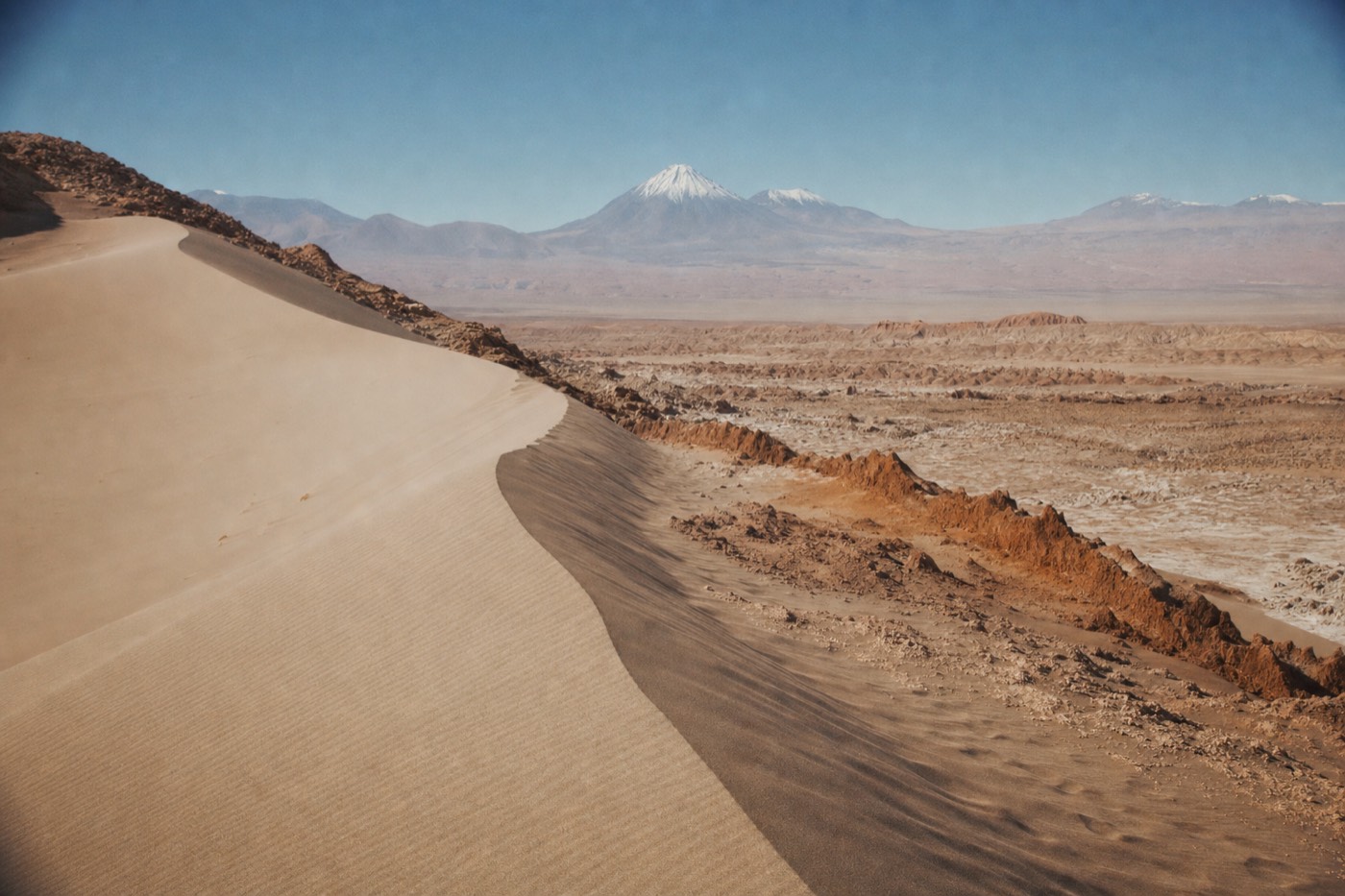
Is it Valle de la Muerte or Valle de Marte?
Both names are in daily use for the same valley, and the origin is genuinely unsettled. Signs, maps and tour listings around San Pedro use them interchangeably. Do not book two tours thinking you will see two different places, and treat any confident explanation of where the name came from as a story rather than a fact.
The most repeated account in San Pedro is that a researcher working in the region named it Mars Valley for the colour of the ground, and that the Spanish for Mars, Marte, was misheard or mistranscribed as muerte, death. Repeat that in town and a guide will nod. Repeat it in front of a second guide and you may well get a different version, because other accounts point to the sheer lifelessness of the place, or to older local usage that predates any visiting researcher entirely.
Our team's position is to present the versions and assert none of them. What can be said plainly is easy to verify: the ground is red, the valley holds no water and effectively no life, and both names appear on official signage and commercial listings around town. Anyone who tells you the etymology is settled is telling you more than the evidence supports.
| Name | Where you will see it | What it refers to |
|---|---|---|
| Valle de la Muerte | Most official signage and many tour listings | The same valley |
| Death Valley | English-language listings and guidebooks | The same valley |
| Valle de Marte | Local usage, some maps, many guides | The same valley |
| Mars Valley | English translations of the above | The same valley |
The practical consequence matters more than the linguistics. If your itinerary lists a Death Valley sandboarding session and a Mars Valley visit on separate days, you have double-booked one place. Check the coordinates or ask the operator directly, and see the note in our Vallecito and Cordillera de la Sal guide where the same confusion comes up.
Book The Ride, Or Choose The View
Choose what you want and the time you can give it. The result explains the trade-off before you open the booking page.
Where is the valley, and how close is it to San Pedro?
Very close. It sits just west of town in the Cordillera de la Sal, near enough that people cycle there, and it shares a ridge line with Valle de la Luna. Piedra del Coyote, the viewpoint most Moon Valley tours use for sunset, looks straight down into it.
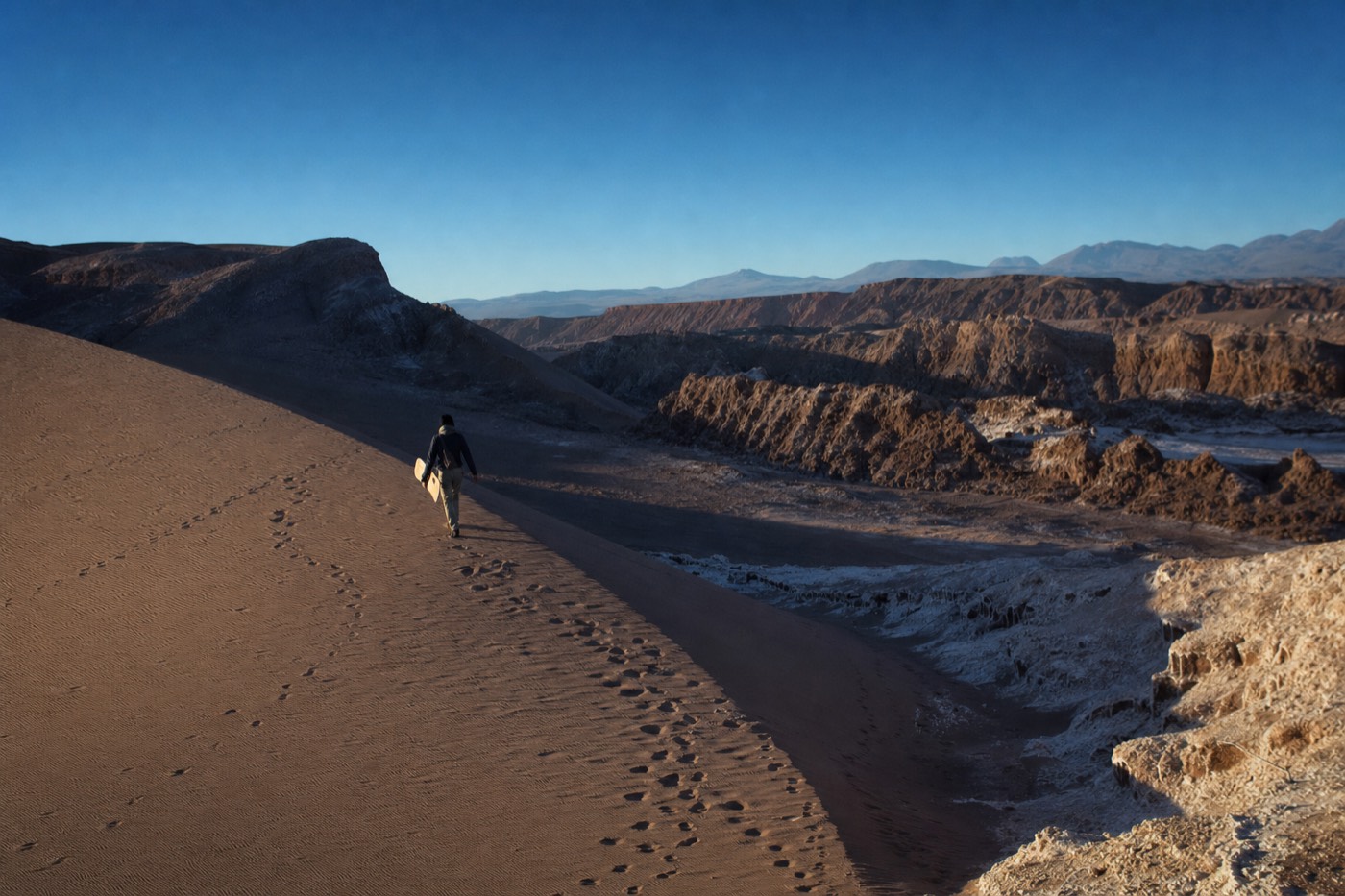
This proximity is the whole reason sandboarding works as a casual afternoon here rather than an expedition. You are not driving into remote country. You leave San Pedro, you are among the dunes within minutes, and you are back in town for dinner. Compare that with Rainbow Valley, which is 90 km north, or El Tatio, which is a pre-dawn start, and the appeal of a low-commitment adrenaline session becomes obvious.
| How you get there | Realistic time from town | Best for | Main drawback |
|---|---|---|---|
| Sandboarding tour with pickup | Minutes by van after collection | Anyone who wants the board, boots and instruction included | You keep the group's schedule |
| Rented bicycle | A short ride from the plaza | Independent visitors on a cooler morning | Carrying a board is impractical |
| Rental car or taxi | Under 15 minutes | Photographers and flexible timing | Graded surfaces, and no board comes with it |
| On foot from town | Not sensible | Nobody | Exposed, no shade, no water |
The geology is the same story told at Valle de la Luna next door: an ancient basin floor of salt, gypsum and clay squeezed upward into a low range and then carved by wind and the very occasional downpour. What distinguishes this valley is the sand. Enormous quantities of it have accumulated against the rock walls into faces steep and long enough to ride, which is exactly what the salt range does not provide anywhere else within reach of town.
General transport options around San Pedro, including bike hire and what the roads are actually like, are in getting around San Pedro.
Does altitude matter for sandboarding here?
Not in the way it matters at El Tatio or on the altiplanic lagoons. The valley sits at broadly San Pedro's elevation, so no acclimatisation is required. What altitude does do is make the climb back up the dune feel considerably harder than the same climb would at sea level.
| Where | Approximate altitude | Roughly what share of sea-level air pressure | Effect on you |
|---|---|---|---|
| San Pedro de Atacama (town) | 2,400 m | about 75% | Mild breathlessness on arrival day |
| Valle de la Muerte floor | about 2,400 to 2,600 m | about 75% | None at rest |
| Top of the dune faces | about 2,500 to 2,600 m | about 75% | Hard breathing on every climb |
| El Tatio geyser field | about 4,300 m | about 59% | Genuine acclimatisation required |
| Miscanti and Miñiques lagoons | above 4,000 m | about 61% | Genuine acclimatisation required |
| Cerro Toco summit | 5,604 m | about 50% | Several days of adjustment first |
Three quarters of sea-level air pressure sounds mild on paper. Carry a board up a soft sand slope in it and the arithmetic becomes personal. People who run half marathons at home arrive at the top of a dune with their hands on their knees, and that is normal rather than a sign of altitude sickness. The correct response is to slow down and keep breathing, not to push through.
Because the valley makes no altitude demand at rest, it belongs in the early part of a trip alongside the other salt-range outings. The sequencing across the whole week is set out in the altitude and tour order guide.
What does sandboarding actually involve if you have never done it?
You are given a board, boots and a helmet, shown how to strap in, how to stand and how to fall, and then you ride a slope of loose sand standing sideways, much like a snowboard. Most people manage a controlled descent within a few attempts. Nobody is elegant on the first run.
The mechanics are close enough to snowboarding that anyone with board experience picks it up almost immediately, and different enough that total beginners are not at a serious disadvantage. Sand is slower than snow and far more forgiving when you fall. It is also less predictable underfoot, since the surface texture changes with the time of day, the wind and how many people have already ridden the line.
| Stage | What happens | What most beginners find |
|---|---|---|
| Kit issue | Board, boots and helmet matched to you | Boots feel stiff, that is correct |
| Waxing the base | The instructor waxes the board and re-waxes through the session | The difference between sliding and stopping dead |
| The briefing | Stance, how to strap in, how to fall safely | Short, and worth actually listening to |
| First descent | A shorter, gentler line to start | Two or three falls, no injuries |
| The climb back | You walk up carrying the board | The genuinely hard part of the afternoon |
| Repeat runs | Progressively steeper or longer lines | Confidence arrives faster than fitness |
| Sitting or lying option | Ride the board seated instead of standing | How nervous participants get their run anyway |
Two things surprise most first-timers. The first is how much the wax matters: an unwaxed board on dry sand barely moves, and a freshly waxed one accelerates fast, so the instructor re-waxing between runs is not a ritual. The second is that falling genuinely does not hurt much. Sand at that angle absorbs a tumble the way snow does, and the helmet handles the rest. The main cost of a fall is a large volume of sand in places you did not expect.
The tour we work with includes quality equipment, board, boots and helmet, a professional instructor, transport, water and food. Its listing does not publish a fixed price in a single currency or a stated duration, so check both on the live listing before you plan the rest of your day around it.
The Direct Fit And Useful Alternatives
Death Valley Sandboarding With Instruction
A four-hour outing with an instructor, board, boots, helmet and transport. This is the activity to book when you want to ride the dunes rather than photograph them.
Not for children under 6, people over 70, pregnancy or mobility impairments. Repeated uphill walks.
Book on GetYourGuideBook My Sandboarding Session ↗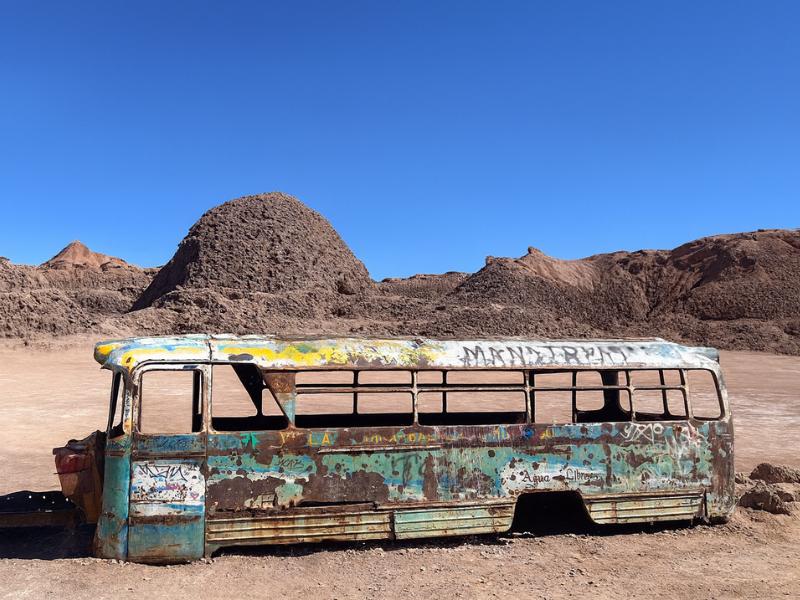
Vallecito And Magic Bus
Give your camera a different desert subject: Vallecito and the Magic Bus. The outing includes snacks, with pickup offered within the operator’s coverage.
Meeting point available outside the pickup area.
Book on ViatorSee The Magic Bus Outing ↗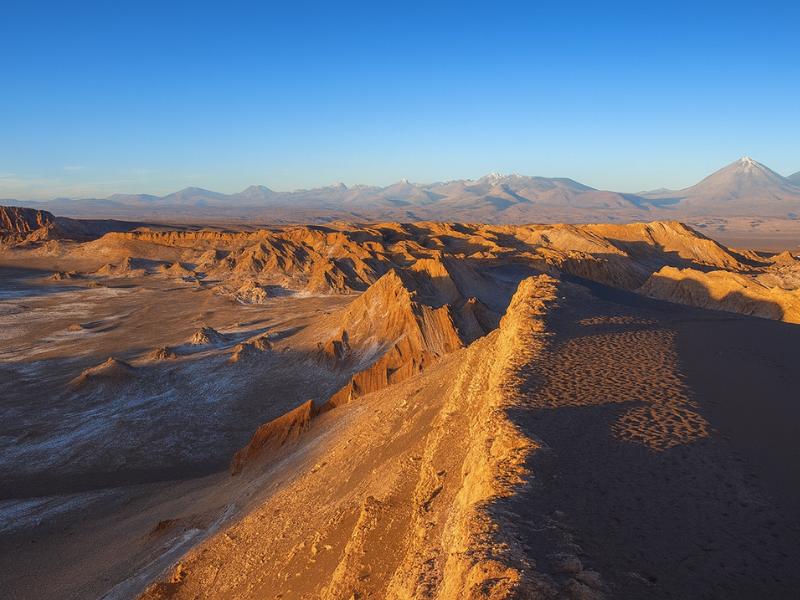
Valley Of The Moon
Make room for a desert landscape outing without committing several days. A guided Moon Valley excursion gives your afternoon a clear destination.
About four hours. Walking is involved; read the participation requirements.
Book on ViatorSee Moon Valley Departures ↗How steep are the dunes, and what does 35 to 50 degrees feel like?
Steep. The slopes used here run roughly 35 to 50 degrees, which is well beyond what a photograph conveys. A 35 degree face already feels like standing on a ladder. At the upper end you are looking down a slope that ends below your feet rather than in front of them.
Angles are hard to picture, so anchor them against things you know. A steep domestic staircase sits in the mid thirties. A black run at a ski resort is often less than 40 degrees. Loose sand cannot generally hold much beyond the high thirties before it starts sliding, so the steepest faces are close to the limit of what the material will support at all. That is why the top of the drop looks alarming from above and much more reasonable once you are moving.
| Slope angle | What it compares to | How it rides | Climbing back up |
|---|---|---|---|
| Around 35 degrees | A steep house staircase | Where beginners start, controllable speed | Hard work, manageable |
| Around 40 degrees | Steeper than most ski black runs | Fast enough to need real edge control | Hands often help |
| Around 45 degrees | A slope that reads as near vertical from the top | Committed riding, falls come quickly | Genuinely strenuous |
| Approaching 50 degrees | At the limit of what loose sand holds | For confident riders only | The hardest climb of the session |
You are not obliged to ride the steepest thing available. Instructors match the line to the rider, and a good session has beginners on shorter, gentler faces while more confident participants take the long ones. Saying you would rather stay on the easier slope is completely normal and costs you nothing but a small amount of pride.
The reason the angle matters for planning is that it sets your effort, not your risk. A steeper face is barely more dangerous on sand. It is dramatically more tiring, because every metre of descent is a metre you carry a board back up.
Why is the walk back up the hardest part?
Because a descent takes seconds and the climb takes minutes, in soft sand, at 2,400 m, carrying a board, with no shade anywhere. Each run costs you one short thrill and one sustained effort. That ratio, not the riding, is what determines how many runs you actually do.
Soft sand is the least efficient surface a person can walk on. Every step slides back part of the distance it gained, so a slope you could stride up on firm ground becomes a grind of half-steps. Add a board under one arm, thinner air than your body is used to, and direct sun with nothing to hide behind, and the climb becomes the defining physical feature of the afternoon.
- Kick steps rather than walking normally. Drive the toe of your boot in and stand on it. It is slower per step and far more efficient overall.
- Zigzag on the steepest faces instead of going straight up. It adds distance and saves effort.
- Follow the line other people have already packed. Compacted sand holds a step where fresh sand collapses.
- Carry the board on your back or drag it rather than holding it out in front of you for balance.
- Rest at the top, not halfway. Stopping mid-slope in soft sand costs you the ground you gained.
- Drink between every run. The air is dry enough that you will not notice how much you are losing.
Set expectations honestly and you will enjoy it more. A typical session for a fit beginner produces a handful of decent runs rather than a dozen, and that is the normal shape of an afternoon here. People who arrive expecting continuous action are usually thinking of a ski lift, and there is no lift on a sand dune.
This is also the honest reason the tour carries a 4.1 rating across 15 reviews rather than the near-perfect scores the sunset tours hold. Sandboarding is physical, dusty and repetitive in a way a pisco sour at a viewpoint is not, and reviews reflect that split. Go in wanting the effort and it delivers. Go in wanting a scenic afternoon and the salt-range sunset tours are a better fit.
What should you wear and bring?
Closed shoes you do not mind ruining, long sleeves and long trousers, sunglasses, a buff or scarf, and far more sunscreen than feels reasonable. Sand gets into everything, the sun reflects off the slope back at you, and the wind picks up in the afternoon.
| Item | Why it matters here | What happens without it |
|---|---|---|
| Closed trainers or boots | You walk up loose sand repeatedly | Sandals fill within one climb |
| Long trousers | Sliding on sand at speed abrades skin | Grazed shins and calves |
| Long-sleeved top | Same abrasion issue, plus sun on your arms | Sunburn and scraped forearms |
| Sunglasses | Glare off pale sand and wind-blown grit | Squinting all afternoon, grit in your eyes |
| Buff, scarf or bandana | Wind lifts sand off the crest | Sand in your mouth on every run |
| High-factor sunscreen | Elevation, thin dry air, reflective surface | Burning far faster than you expect |
| Two litres of water | Repeated hard climbs in very dry air | Headache blamed wrongly on altitude |
| A dry bag or plastic bag | For anything you want to stay sand-free | Sand in your phone, wallet and hotel bed |
| A spare set of clothes in the van | You will be carrying sand home in every seam | A gritty evening |
A note on socks and hair. Sand finds both. Longer socks worn over the trouser cuff keep most of it out of your shoes, and tying hair up or wearing a cap under the helmet saves a long shower later. Nobody finishes a sandboarding session clean, and the goal is to limit the damage rather than avoid it.
The broader packing logic for the region, which is really about layering for a 25 degree temperature swing in a single day, is in what to pack for the Atacama.
How do you protect a camera or phone in a sandstorm of your own making?
Assume the sand will get in and plan around it. Fine desert sand is abrasive, it works past seals, and it destroys zoom mechanisms and lens threads. The safest approach is a sealed bag, a mounted action camera, and no lens changes on the dune at all.
The problem is not a single dramatic gust. It is the constant fine material that a group of people sliding down a slope kicks into the air all afternoon. It settles on everything, and the moment you extend a zoom or open a battery door it goes inside. Camera repair shops know exactly what desert sand damage looks like, and it is not usually covered by warranty.
| Gear | Risk level | What to do |
|---|---|---|
| Action camera with a mount | Low | The right tool, sealed and hands-free on a helmet or chest mount |
| Phone | Moderate | Keep it in a sealed bag, shoot through it or take it out only at the top |
| Mirrorless or DSLR with one lens | High | Bring it only if you accept the risk, never change the lens on the dune |
| Compact zoom camera | High | The extending barrel draws sand straight in |
| Drone | Very high, and often restricted | Ask the guide first, sand and rotors are a poor combination |
Practical habits that work. Keep the bag zipped and on your back rather than open at your feet. Use a blower, never a cloth, on anything with grit on it, because wiping grinds the grit across the glass. Change nothing outdoors. And if you want the aerial shot of the dunes without risking your own equipment, the sunrise balloon flight passes over Death Valley, Moon Valley and the salt range at dawn, which is a perspective no ground position gives you.
Choose A Date For Your Outing
Death Valley Sandboarding With Instruction
Select your date and party on GetYourGuide for the current price and departure options.
Book My Sandboarding Session ↗Who should skip sandboarding?
Anyone with a recent knee, shoulder, wrist or back injury, anyone who cannot manage repeated steep climbs in soft sand, and anyone whose idea of a good afternoon does not include falling over in public. It is genuinely physical, and there is no shame in choosing the sunset tour instead.
| Traveller | Verdict | Reason |
|---|---|---|
| Active adults, any board experience | Strong yes | The learning curve is short and the falls are soft |
| Teenagers | Usually a highlight | Fitness and fearlessness are both on their side |
| Younger children | Check with the operator | Operators set their own minimum age, confirm before booking |
| Recent joint or back injury | Skip it | Falls are frequent even if they are cushioned |
| Pregnancy | Skip it | Repeated falls and hard climbs, not worth the risk |
| Limited mobility | Skip it | The climb, not the ride, is the barrier |
| Anyone still feeling the altitude | Wait a day | Hard exertion is the wrong response to a headache |
| Anyone who wants a scenic afternoon | Book a valley sunset instead | Different day entirely, and no less good |
If sandboarding is out but you want something active, two alternatives sit at a similar effort level with far less falling. The desert bike ride to Devil's Throat covers Catarpe Valley, the Pukará de Quitor ruins and a canyon descent over four hours, and horseback riding through the salt mountains keeps your feet off the ground entirely. Our notes on picking by effort level are in things to do in San Pedro, and by age band in travelling with kids and senior travellers in the Atacama.
Can you do sandboarding and a Valle de la Luna sunset on the same day?
Often yes, and it is one of the better day shapes in San Pedro, because the two sit minutes apart in the same range. The constraint is timing rather than distance: the sandboarding listing does not publish a fixed duration, so confirm the finish time before you book a Moon Valley pickup behind it.
| Part of the day | What happens | What to watch |
|---|---|---|
| Morning | Rest, town, or a short outing | Keep energy back for the dune climbs |
| Early afternoon | Sandboarding session in Valle de la Muerte | Duration is not published, confirm with the operator |
| Gap between the two | Shower, change, remove sand | The step people forget to allow for |
| Late afternoon | Moon Valley or Vallecito pickup | Pickup times move with sunset across the year |
| Sunset | Ridge viewpoint, then alpenglow east | Bring the warm layer, the drop is fast |
The gap is the part people underestimate. You finish a sandboarding session covered in fine sand, and getting into a van for a four-hour sunset tour in that condition is unpleasant for you and for everybody sitting near you. Build in time to go back to your accommodation. If the two schedules do not leave room for that, split them across two days instead.
Sunset timing here swings by well over two hours across the year, and Chilean daylight saving moves it again, so pickup times are not fixed. The seasonal detail is in the best time to visit and the season comparison. Note also that the ridge viewpoint most Moon Valley tours use for sunset looks down into the same valley you spent the afternoon riding, which makes the pairing more satisfying than it sounds on paper.
Which tours cover Death Valley and the dunes?
One dedicated sandboarding session runs on these slopes, and several other tours pass through or above the valley without stopping to ride. If sandboarding is the point, book the sandboarding tour, because no sunset itinerary will hand you a board.
| Tour | Listed price | Rating | Duration | What defines it |
|---|---|---|---|---|
| Death Valley Sandboarding Tour | Not published in a single currency, check the live listing | 4.1 from 15 reviews | Not stated on the listing | Board, boots, helmet, instructor, transport, water and food included |
| Valley of the Moon Tour | $35 | 4.7 | 4 hours | Sunset from the ridge above Death Valley, no boarding |
| Desert Bike Tour to Devil's Throat | $85 | 5.0 | 4 hours | The other active half-day, Catarpe Valley and a canyon descent |
| Vallecito & Magic Bus Adventure | $50 | 4.9 | 4 hours | Quieter salt-range sunset, small group, drinks included |
| Sunrise Balloon Flight | $350 | 4.6 | 3 hours | Floats over Death Valley, Moon Valley and the salt range at dawn |
Two honest notes on that first row. The 4.1 rating across 15 reviews is a smaller and lower score than the sunset tours carry, which reflects the nature of the activity as much as the operation: sandboarding is tiring and gritty, and a proportion of participants discover mid-session that they wanted a scenic drive. The second note is on the missing figures. The listing localises price by currency and does not state a duration, so any article quoting a firm number for either is guessing. Check the live listing.
If you are deciding between booking now and sorting it out when you arrive, the trade-offs are in booking in advance versus on arrival, and the wider budget picture in trip costs and budgeting.
How does Valle de la Muerte fit into the wider Cordillera de la Sal?
It is one of three named valleys in the same salt range, alongside Valle de la Luna and Vallecito, and the only one where the sand is deep enough to ride. Together they make up almost everything San Pedro offers within half an hour of the plaza, and none of them requires acclimatisation.
| Valle de la Muerte | Valle de la Luna | Vallecito | |
|---|---|---|---|
| Distance from town | A few kilometres west | About 13 km west | A short drive into the range |
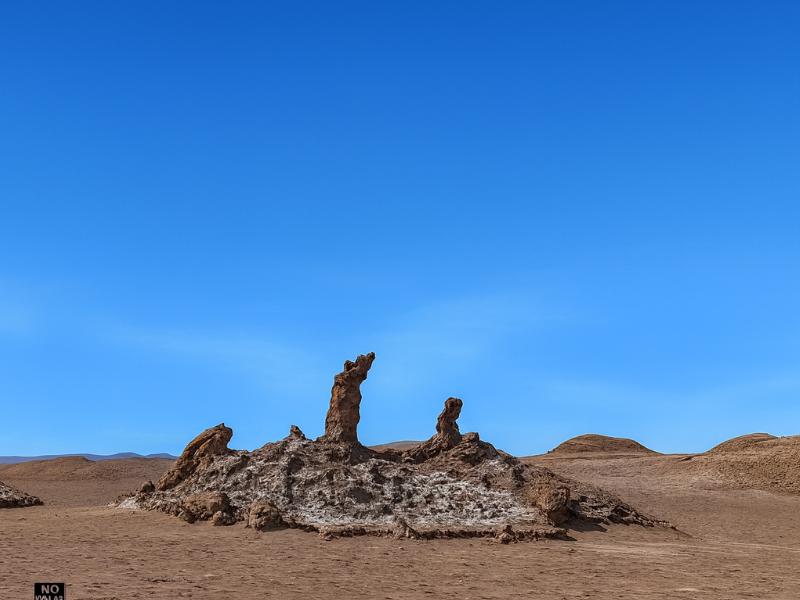
| Signature feature | Huge sand faces, sandboarding | Gran Duna, Tres Marías, salt caverns | The Magic Bus and narrow valleys |
| Typical time of day | Afternoon session | Afternoon into sunset | Afternoon into sunset |
| Physical demand | The highest of the three | Moderate, one sand climb | Gentle |
| Crowds | Moderate | Heaviest in the region | Lightest |
| Altitude demand | None | None | None |
The whole range is a folded remnant of an ancient evaporating basin, and the surface behaves accordingly. Salt crust crunches underfoot, crystals grow in shaded overhangs, and on cool evenings the ground makes faint ticking sounds as the salt contracts. The wider desert context, including why researchers use this region as a stand-in for Mars, is set out at Britannica's Atacama Desert entry, and the reserve system is administered by CONAF together with local Atacameña communities.
For a trip of three days or more, doing all three valleys is not repetitive if you space them and change the activity: sandboarding one afternoon, a Moon Valley sunset another, Vallecito on a third if you have the days. For a two-day trip, take the Moon Valley sunset and leave the dunes for next time. The worked plans are in the two-day itinerary, the 3 to 4 day classic itinerary and five days in the Atacama. If you want the colour-and-archaeology counterpoint on a morning, our Rainbow Valley and Yerbas Buenas guide covers the trip 90 km north.
Make It Part Of Your Trip
The dedicated session supplies the board, boots and helmet and teaches the basics. Expect repeated uphill walks.
Death Valley Sandboarding With Instruction
A four-hour outing with an instructor, board, boots, helmet and transport. This is the activity to book when you want to ride the dunes rather than photograph them.
Book My Sandboarding Session ↗